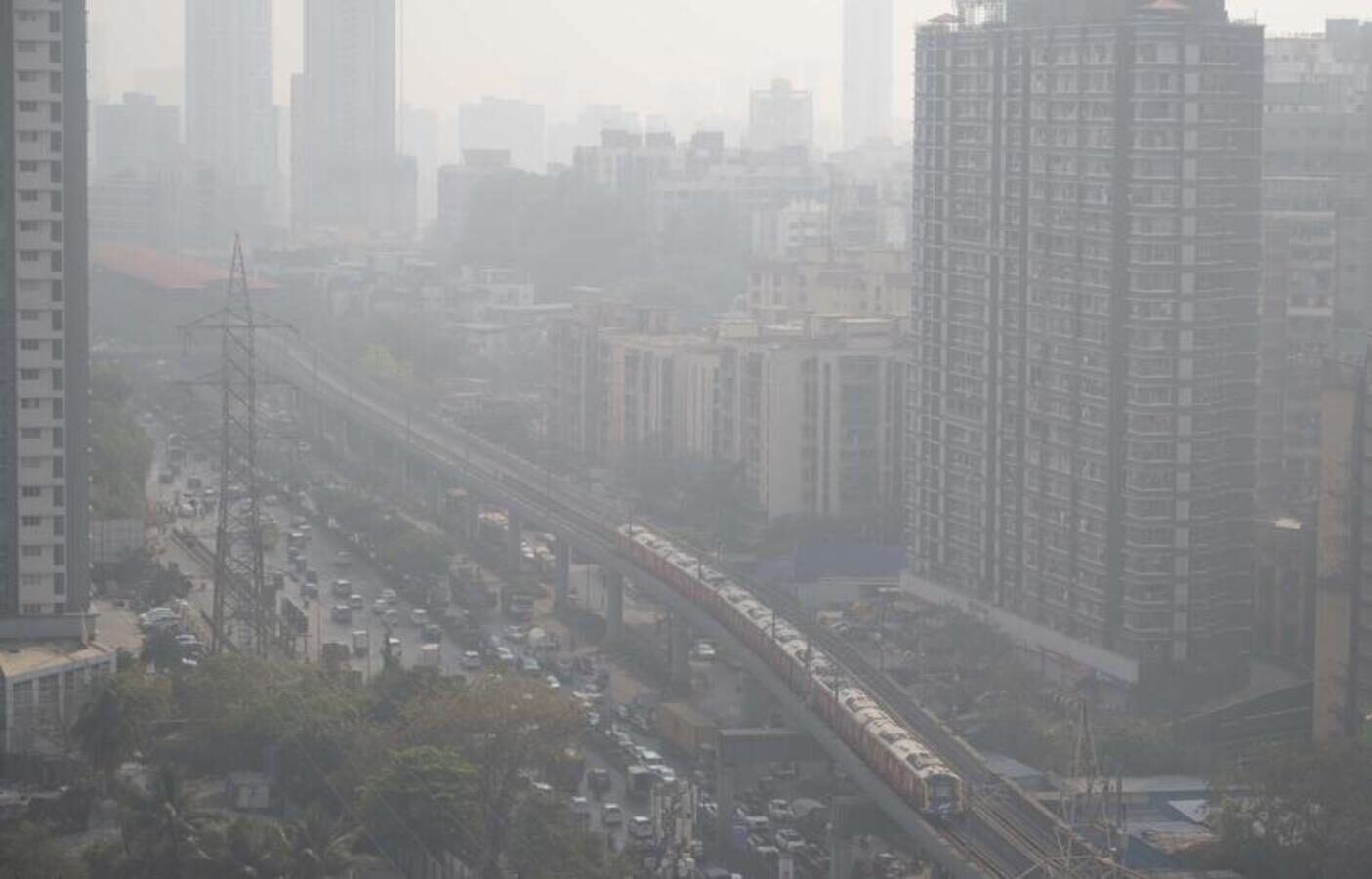
Mumbai began the week with bright winter sunshine and relatively mild temperatures, but the visual calm quickly gave way to renewed concern as haze and poor air quality returned across large parts of the city. While weather conditions remained favourable on December 22, pollution levels underscored a deeper urban challenge tied to infrastructure growth, construction intensity and environmental management.
According to the India Meteorological Department, Mumbai experienced clear skies and light winds through the morning, with temperatures expected to range between 20°C and 33°C. However, reduced visibility was reported across multiple neighbourhoods as fine particulate matter lingered in the air. Early commuters and pedestrians noted hazy conditions, reflecting the city’s ongoing struggle to translate favourable weather into sustained air quality improvement. Data from air quality monitoring platforms showed Mumbai’s average Air Quality Index at 181 during morning hours, categorising it as ‘poor’. While this marked a marginal improvement compared to pollution spikes recorded in late November, the air remained unhealthy for children, elderly residents and individuals with respiratory conditions. A public health expert noted that intermittent weather relief cannot offset continuous exposure to particulate pollution, particularly in dense urban environments.
Several eastern suburbs and industrial-adjacent zones emerged as pollution hotspots. Chembur recorded AQI levels exceeding 300, entering the ‘severe’ category, while Wadala Truck Terminal, Deonar and Govandi remained firmly in the unhealthy range. Urban planners point out that these areas face compounded risks due to freight movement, landfill proximity and large-scale construction activity. In contrast, select western suburbs showed moderate readings, though experts caution against viewing these pockets as indicators of citywide improvement. The primary contributor to Mumbai air quality deterioration continues to be construction dust and vehicular emissions. Ongoing metro rail corridors, flyover construction, coastal road works and real estate redevelopment have intensified particulate generation. A senior environmental consultant observed that while infrastructure expansion is essential for economic growth, the absence of stringent dust mitigation and last-mile enforcement undermines sustainability goals.
For a city positioning itself as a global financial and urban hub, the persistence of poor air quality raises concerns beyond public health. Productivity losses, healthcare costs and declining liveability increasingly influence real estate valuations and workforce mobility. Urban economists argue that cleaner air is now a competitive advantage for cities attracting long-term investment. Experts suggest that Mumbai’s pathway forward lies in stricter construction norms, cleaner mobility adoption, and integrated air quality governance. As cities across India aim for low-carbon, inclusive growth, managing pollution alongside development will be critical to ensuring that urban expansion enhances, rather than erodes, quality of life.
Mumbai Wakes To Sunny Skies Haze Persists AQI Remains Poor Today City