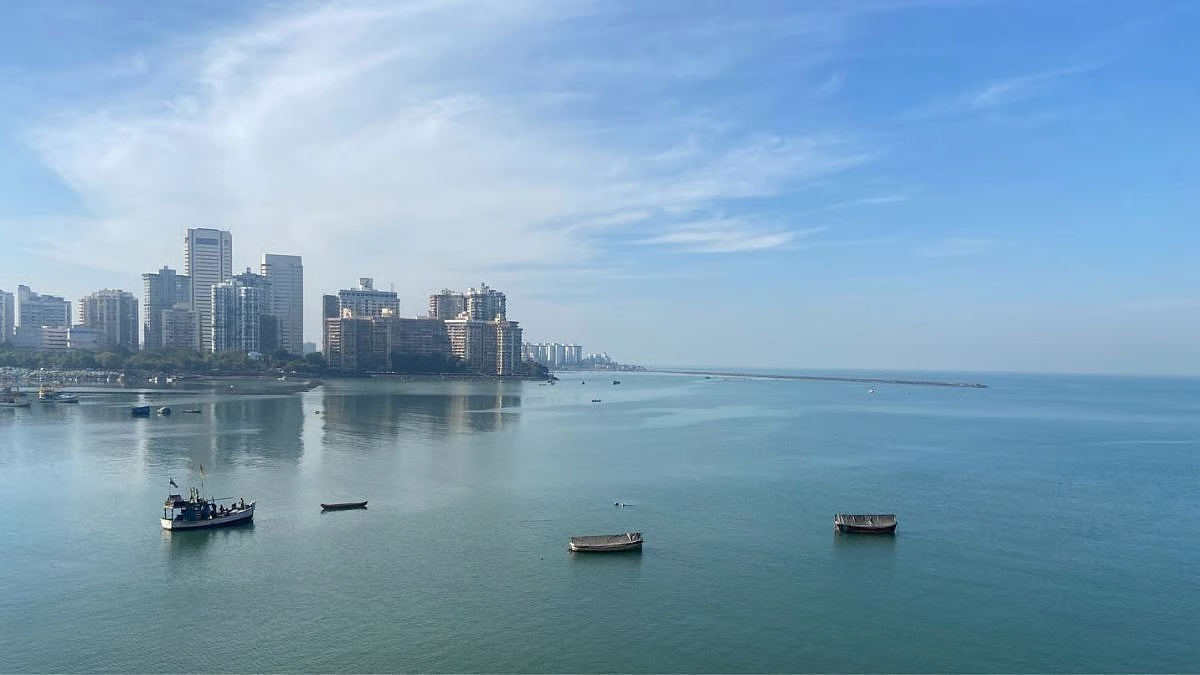
Mumbai experienced an unusually cool start to the day on Friday, offering residents a brief break from the city’s typical heat and humidity. Minimum temperatures slipped below 22 degrees Celsius across several locations, creating a crisp, winter-like feel that early commuters described as unexpected for this time of year. However, the pleasant conditions were accompanied by a lingering layer of smog, reminding the city of its persistent air-quality concerns.
Meteorological data indicated a noticeable contrast between neighbourhoods. The coastal belt recorded a minimum of around 22 degrees Celsius with comparatively higher humidity, while suburban monitoring stations captured temperatures dipping to nearly 17 degrees Celsius. Officials attributed this variation to the city’s well-documented microclimatic differences shaped by built density, vegetation cover and proximity to the coastline. Despite the improved morning conditions, pollution levels remained a recurring challenge. The citywide Air Quality Index (AQI) touched the ‘moderate’ range, reflecting broader environmental pressures linked to vehicular emissions, construction dust and limited winter-time dispersion. Experts noted that while the cool breeze provided temporary relief, it did little to disperse the fine particulate matter that accumulates through the week. Areas with dense traffic and industrial activity continued to report comparatively poorer air quality.
Urban planners emphasised that Mumbai’s recurring winter smog episodes underline the need for cleaner mobility, decentralised construction management and stronger local monitoring frameworks. According to one expert, the city’s seasonal changes should be leveraged to push structural reforms rather than rely on short-lived meteorological advantages. They added that improving walkability, reducing dependency on private vehicles and strengthening public transport networks remain crucial to ensuring healthier urban environments. The India Meteorological Department expects clear skies through the day, with maximum temperatures likely to reach 34 degrees Celsius by afternoon. Climate analysts noted that such wide temperature fluctuations — cool mornings followed by warm afternoons — are becoming more common as urban heat patterns evolve. These swings highlight the complex relationship between built-up areas, shrinking green zones and shifting wind behaviour.
In comparison, the National Capital Region continued to experience far more severe air quality levels on Friday. Official readings placed several neighbourhoods in the ‘very poor’ and ‘severe’ categories, highlighting a stark contrast in seasonal pollution intensity between northern and western India. While Mumbai does not experience winter inversion at the same scale, experts caution that complacency could erode the gains achieved through coastal ventilation and favourable geography. For residents, the brief cool spell was a reminder of what a more climate-sensitive city could feel like. Urban researchers suggest that consistent investment in low-emission transport, breathable public spaces and sustainable infrastructure is essential to ensure that such comfortable mornings become the norm rather than an anomaly. As the city plans its long-term climate strategy, strengthening resilience against pollution and heat remains central to building an inclusive and healthier Mumbai.
Mumbai Wakes To Cool Morning As City Records Moderate Air Quality Levels