


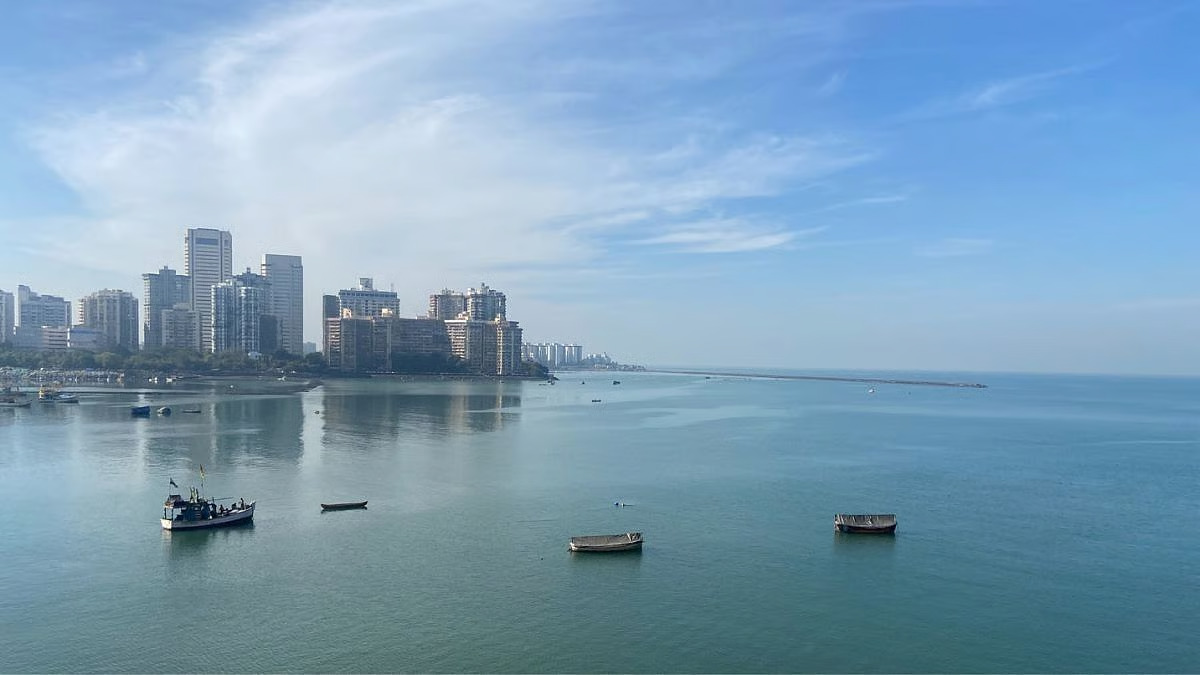
Mumbai woke up to cloudy skies and fresher air on Saturday morning after a brief but widespread spell of unseasonal rain on Friday evening. The showers, triggered by a low-pressure system over the Arabian Sea, not only cooled the city’s rising temperatures but also improved its deteriorating air quality — offering much-needed respite to residents.
According to the India Meteorological Department (IMD), the city is expected to witness partly cloudy conditions throughout the day, with a chance of moderate rain or thunderstorms. The maximum temperature is forecast to hover around 33°C, while the minimum could dip to 24°C. Officials stated that the unseasonal rainfall has helped disperse accumulated dust and pollutants that had been affecting the city’s air quality in recent weeks. Data from AQI.in showed that Mumbai’s overall Air Quality Index (AQI) stood at 50 on Saturday morning — a level classified as ‘Good’. This marks a significant improvement compared to the ‘Unhealthy’ category recorded earlier in October. The air clarity was particularly noticeable in southern and eastern parts of the city, with reduced haze and improved visibility reported.
Among the city’s key monitoring locations, Jogeshwari recorded the highest AQI at 63 (Moderate), while Worli (60), Kurla (57), Wadala (57), and Parel-Bhoiwada (55) remained within the moderate range. Cleaner air was reported in Kandivali East (35), Deonar (40), Mumbai Airport (45), Colaba (45), and Sion (45) — all within the ‘Good’ range. Environmental experts said the city’s recent improvement underscores the impact of natural weather cycles on pollution dispersion. “Rainfall events like these help flush out particulate matter and temporarily stabilise air quality,” said an environmental expert, adding that sustained improvements will require long-term strategies such as reducing vehicular emissions and promoting green mobility.
IMD officials attributed the ongoing weather pattern to a cyclonic circulation over the Arabian Sea that has kept the Konkan coast, including Mumbai, under a Yellow Alert. The Santacruz weather observatory recorded a maximum temperature of 30°C on Friday, nearly 5°C below normal, indicating a drop in heat intensity following intermittent rain and cloud cover through the week. While the temporary dip in pollution levels offers relief, officials cautioned that the city’s air quality could deteriorate again once dry conditions return. Experts have emphasised the need for sustainable urban air management through better public transport, stricter emission control, and green cover expansion — measures that align with Mumbai’s broader climate resilience goals.
Also Read: Mira Bhayandar Traffic Police Implements NH48 Road Closures And Diversions Till November 8
