


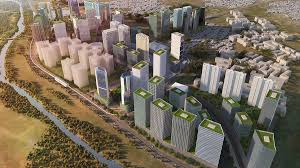
Mumbai’s central-eastern corridor is witnessing a renewed wave of large-scale residential investment, as a listed real estate developer advances a high-density redevelopment project in Wadala with a projected gross development value of approximately Rs 5,000 crore. The project reflects a broader market pivot toward centrally located, infrastructure-rich neighbourhoods capable of absorbing both end-user demand and long-term capital.
Planned on a land parcel exceeding five acres, the development will introduce multiple high-rise residential towers offering mid-to-large configuration homes, alongside retail, recreational and community facilities. Industry observers note that such integrated formats are increasingly replacing standalone residential projects in Mumbai, as developers seek to optimise land use while responding to lifestyle-driven housing demand. Wadala’s growing appeal lies less in speculative pricing and more in structural connectivity improvements. The area sits at the intersection of several transport upgrades, including arterial road access, mass transit corridors and regional links that shorten commute times to employment districts across the island city and eastern suburbs. Urban planners say this convergence is steadily repositioning Wadala from a transitional neighbourhood into a residential anchor within Mumbai’s evolving polycentric layout. The project also underscores how redevelopment is becoming the primary growth engine in land-constrained cities. Rather than expanding outward, Mumbai’s next phase of housing supply is being carved out through the reconfiguration of underutilised parcels, often combining residential density with open spaces and social infrastructure. This model aligns with municipal objectives of reducing sprawl while improving liveability within existing urban limits.
From a market standpoint, analysts suggest the scale of the proposed development indicates sustained confidence in Mumbai’s premium housing segment, even amid rising construction costs and tighter regulatory scrutiny. Demand, they say, is increasingly concentrated in locations offering certainty of infrastructure delivery and regulatory clarity, rather than peripheral areas dependent on future connectivity promises. Sustainability considerations are also becoming central to such projects. According to regulatory disclosures, the Wadala redevelopment has been designed to meet green building benchmarks, reflecting a gradual shift toward energy efficiency, water management and reduced environmental impact in large residential estates. Urban economists argue that while certification alone does not guarantee climate resilience, it represents a necessary baseline as cities confront heat stress, flooding and infrastructure overload. For residents, the transformation of Wadala could bring both opportunity and challenge. Improved amenities and connectivity enhance housing quality, but rapid densification also places pressure on civic services, public transport capacity and local roads. How effectively these developments integrate with municipal infrastructure will determine whether growth translates into equitable urban outcomes.
As Mumbai’s real estate cycle matures, projects of this nature signal a recalibration away from speculative expansion and toward compact, infrastructure-led city building. The success of such redevelopment-led growth will ultimately be measured not just in sales numbers, but in how well it strengthens the city’s resilience, accessibility and social fabric.
Also Read: Jaisalmer Civic Body Ties Tourism To Infrastructure
Mumbai Wadala Redevelopment Signals New Growth Core
