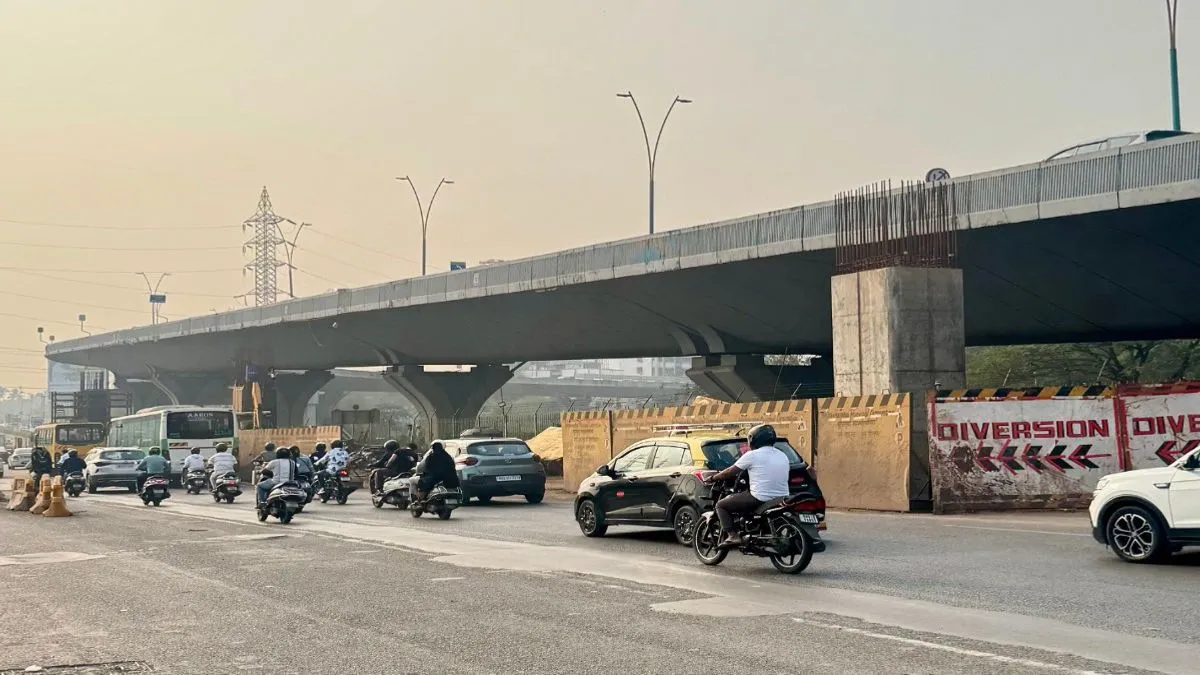
Mumbai’s central traffic arteries — notably the Wadala–BKC and Chunabhatti flyover corridors — experienced acute congestion on Wednesday, disrupting peak-hour commutes and highlighting persistent mobility challenges in India’s densest metropolis. The gridlock, reported across strategic connectors into the Bandra–Kurla Complex and surrounding nodes, underscores how infrastructure capacity and operational management are struggling to keep pace with surging urban travel demand.
Motorists and office commuters faced extended delays during morning and midday hours, with queues forming over multiple intersections and flyover approaches. This stretch, which functions as a key east–west conduit linking Mumbai’s commercial core with residential and suburban catchments, has been a focal point of annual traffic slowdowns, especially as vehicle volumes have grown faster than roadway capacity.Urban transport analysts point to several intertwined factors behind the bottlenecks. The existing elevated link between Wadala, the Bandra–Kurla Complex (BKC) and Chunabhatti was designed to ameliorate chronic congestion by providing direct connectivity from peripheral districts into the financial district. However, the current surge in vehicles — particularly private cars and taxis — has outstripped the corridor’s designed throughput, turning what was once a relief-route into a congestion amplifier during peak hours.
Additionally, regulatory measures aimed at managing traffic flows on new infrastructure have had mixed effects. Restrictions on certain vehicle categories through sensitive junctions, for instance, can improve safety but also divert volumes onto already constrained alternate paths. This dynamic can unintentionally intensify delays on feeder roads and at signalised intersections, complicating city traffic patterns and commuter predictability.Mumbai’s Metropolitan Region Development Authority (MMRDA) and traffic enforcement agencies have acknowledged the broader network stresses and have been revising corridor operations in response. Long-term decongestion plans include widening arterial links, streamlining signal coordination, and reconfiguring priority lanes to balance freight and commuter traffic. Recent institutional discussions have also examined converting underused cycle infrastructure into expanded road capacity in adjoining zones — a contentious but pragmatic attempt to optimise urban street space amid heavy demand.
Experts note that such supply-side interventions must be paired with demand-management strategies — including enhanced public transport services, flexible work arrangements and smart traffic signal systems — to meaningfully reduce peak-period pressure. Without parallel investment in mass mobility options and behavioural incentives, incremental roadway changes risk inducing more private vehicle use, a phenomenon observed in other global megacities.For residents who rely on these corridors daily, recurring gridlocks translate into lost time, elevated travel costs and increased air pollution — affecting quality of life and workplace productivity. Women commuters and shift workers, in particular, report heightened vulnerability to unpredictable travel conditions, reinforcing the need for reliable, inclusive transport planning that centres people as much as vehicles.
Looking ahead, authorities are expected to fast-track parts of a broader traffic decongestion blueprint that integrates new connectors, signal optimisation, and corridor-wide traffic management systems. Ensuring these measures dovetail with Mumbai’s climate resilience goals — cutting vehicular emissions, expanding public transport access and enabling equitable mobility for all residents — remains a critical test for city planners and policymakers alike.