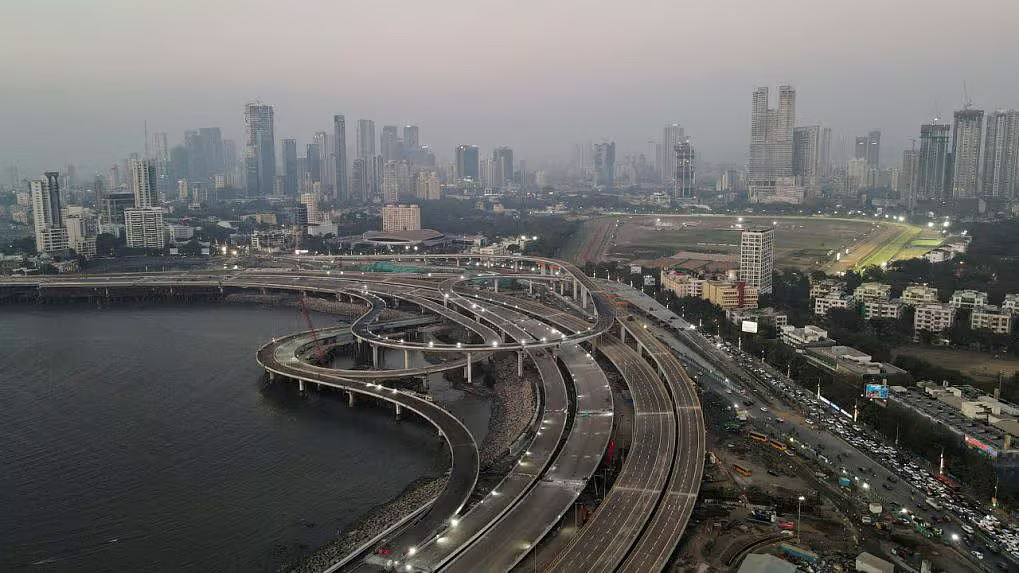
Full‑scale construction on the contentious 26.3‑kilometre Versova‑Bhayandar coastal road has begun following a key environmental clearance from Maharashtra’s mangrove cell, unlocking a crucial phase for a project poised to reshape mobility along the city’s western suburbs and northern periphery. The development marks a pivotal moment in Mumbai’s long‑running infrastructure expansion, merging ambitious transport planning with environmental scrutiny.
The Brihanmumbai Municipal Corporation (BMC) received the final working permission on 20 January, enabling comprehensive construction after months of preparatory work across non‑protected zones. The alignment will extend the operational south coastal road and under‑construction Bandra–Versova sea link northwards to Mira‑Bhayandar, significantly reducing travel time between western sub‑urban nodes.Urban mobility analysts highlight the project’s potential to unclog chronic road congestion on the Western Express Highway and arterial routes that daily choke commuters. By shortening the corridor between Versova and Bhayandar by around 10 kilometres, traffic models predict considerable travel‑time savings and enhanced linkages with peripheral suburbs.
However, the infrastructure advance has unfolded amid intense ecological debate. The coastal road corridor intersects over 100 hectares of mangrove forest — a vital coastal buffer that stabilises shorelines, supports biodiversity, and sequesters carbon. Environmental assessments indicate that nearly 45,673 mangrove trees lie within the project’s zone of influence, a figure that drew rigorous examination before clearances were granted.Legal authorisation followed a Bombay High Court sanction in late 2025, which permitted mangrove diversion on the grounds of public interest, while imposing ongoing monitoring requirements. The court mandated annual compliance reporting and afforestation performance audits over the next decade as conditions for continued project activity.
Compensation frameworks also extend to in‑situ and ex‑situ reclamation. Civic authorities plan to plant mangroves both on‑site where feasible and at designated offsets in the Palghar district, targeting a three‑to‑one replacement ratio for affected trees. Additional plantations are proposed on non‑forest land to meet statutory afforestation obligations.Despite these plans, community voices and environmental groups have voiced reservations, urging greater caution and questioning whether compensatory planting can replicate the complex ecological functions of mature mangrove ecosystems. They argue that protective planning must go beyond net tree counts to safeguard flood resilience and marine habitat integrity in a rapidly changing climate.
Construction packages for the coastal road are set to proceed in parallel, with piers and foundational works already initiated in peripheral suburbs. Municipal planners note that meticulous coordination with utility shifts and land acquisition will define the pace of execution through to the targeted completion deadline in late 2028.
As Mumbai balances mobility improvements with environmental custodianship, the coastal road’s trajectory — from clearance to construction — underscores the complex trade‑offs inherent in expanding urban infrastructure within climate‑sensitive zones.