


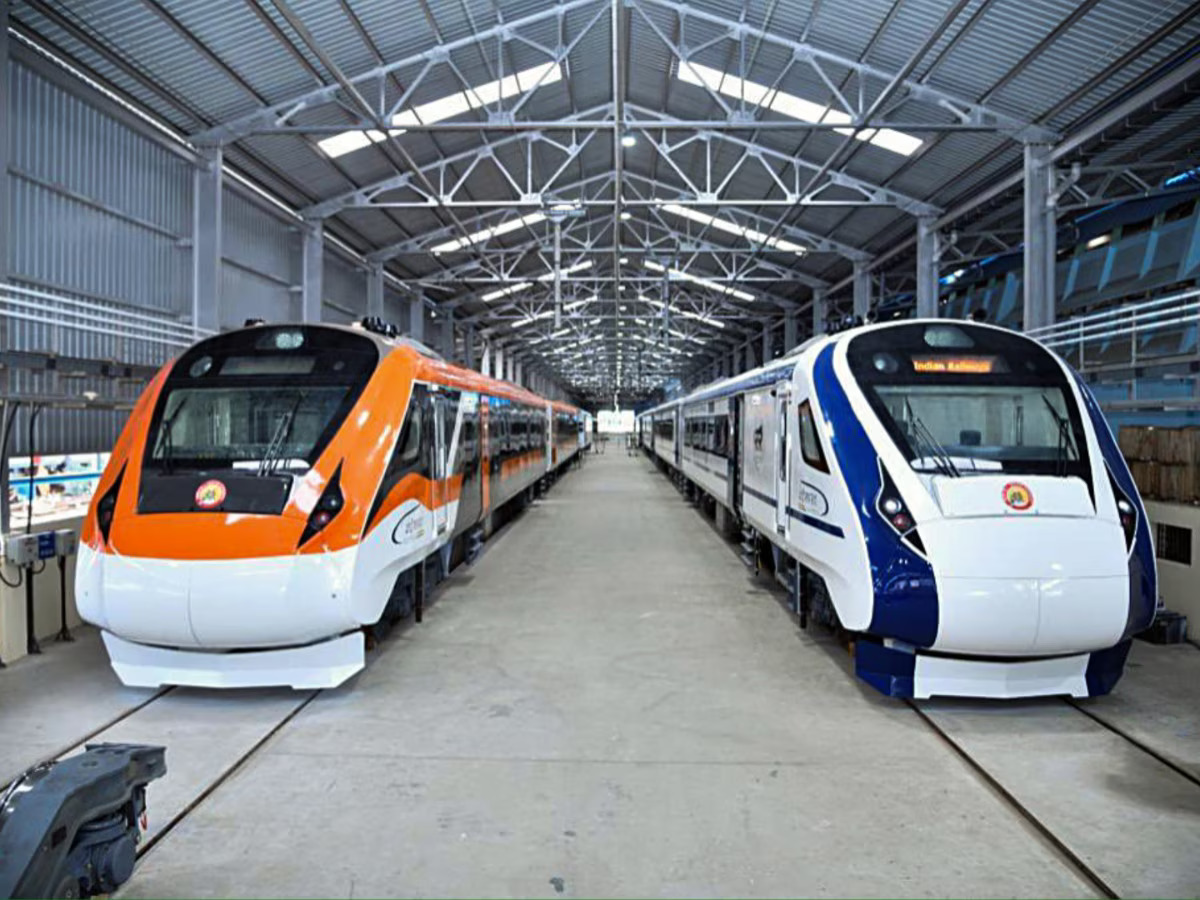
The gleaming Vande Bharat Express, touted as India’s semi-high-speed rail marvel, is revolutionising intercity travel, yet its rapid rollout is sparking crucial conversations regarding equitable access and sustainable urban development. While symbolising national pride and technological advancement, concerns are emerging about its impact on the non-premium traveller and the Indian Railways’ heavily saturated network, necessitating a strategic recalibration for a truly inclusive and eco-friendly future. The current trajectory risks deepening a class divide in rail travel, potentially hindering the mobility of a significant portion of the populace.
The Vande Bharat, with its aerodynamic design and modern amenities, boasts speeds up to 160 kmph and superior acceleration. It represents a significant leap from India’s traditional train services, including the century-old electric multiple units (EMUs) that primarily served suburban and short-distance routes. Inspired by the “Vision-2020” document from 2009, which envisioned train-sets for intercity travel, the Integral Coach Factory (ICF) delivered Train-18, later christened Vande Bharat, in 2019. Its successful trials and impressive performance, including a faster turnaround time due to self-propelled units and an unfettered view for loco-pilots, quickly elevated its status. With 70 pairs now operational across the country, post-COVID, the Vande Bharat has undoubtedly burnished Indian Railways’ brand image, appealing especially to higher-income groups, non-resident Indians, and foreign tourists seeking a premium travel experience.
However, beneath the veneer of modernism, critical concerns are surfacing. Foremost among these is the disproportionate emphasis on air-conditioned services, effectively marginalising the vast majority of non-AC passengers. Historically, non-suburban second and sleeper class travellers constitute nearly 90% of Indian Railways’ patronage. Despite this, capacity for air-conditioned sleeper class has surged by 190% in the last decade, while second-class capacity saw a meagre 15% increase. This trend, exacerbated by the fully air-conditioned Vande Bharat, restricts affordable long-distance travel for low-income working-class individuals, who lack viable alternatives like budget airlines. This deepening class divide in mobility could have adverse socio-economic consequences, impacting livelihoods and accessibility for a significant segment of the population.
Furthermore, the payload and occupancy rates of Vande Bharat services raise questions about optimal resource utilisation. A 16-car Vande Bharat train-set seats 1128 passengers, significantly less than the over 1500 seats and berths offered by conventional LHB coach trains. Compounding this, approximately 60% of Vande Bharat rakes are reportedly operating with just eight cars, further reducing their carrying capacity compared to conventional trains by over 1,000 seats. Introducing these lower-capacity, expensive train-sets (costing approximately INR 120 crores, more than twice a conventional LHB train) as “new and additional” services on already saturated High-Density Network (HDN) and Highly Utilised Network (HUN) sectors poses an operational challenge. These routes, with their mix of trains with varying speeds and stoppages, are prone to overtakes, leading to inefficient line capacity usage and impacting freight traffic – a vital component for economic stability. The Comptroller and Auditor General of India (CAG) has previously highlighted how each overtake consumes about 15 minutes of running time, impacting sectional capacity.
The current maintenance schedule for Vande Bharat trains also contributes to sub-optimal asset utilisation. Operated as daytime intercity services, these trains undergo nightly inspections and weekly mandatory daylight maintenance, leading to their use only six days a week. Given the substantial investment in these train-sets, railway engineers are encouraged to innovate in maintenance practices, perhaps by leveraging modern lighting systems to enable seven-day commercial usage.
For a truly sustainable and equitable railway system, a strategic shift is imperative. Indian Railways must prioritise augmenting line capacity, a long-standing constraint, before introducing new Vande Bharat services. Most new Vande Bharat train-sets should replace existing services rather than adding to congestion. Additionally, existing Vande Bharat sets should be augmented to 20-car configurations and deployed only on routes with assured high demand. Crucially, Indian Railways must re-centre its passenger strategy around the non-AC traveller, who remains the backbone of the system. Ensuring accessible and affordable rail travel for over 90% of the Indian population, for whom Vande Bharat services are currently beyond reach, is fundamental to fostering a truly equitable and sustainable urban and national fabric.
Also Read: Mumbai-Ahmedabad Bullet Trains Vikhroli Shaft Sparks Underground Connectivity Revolution
