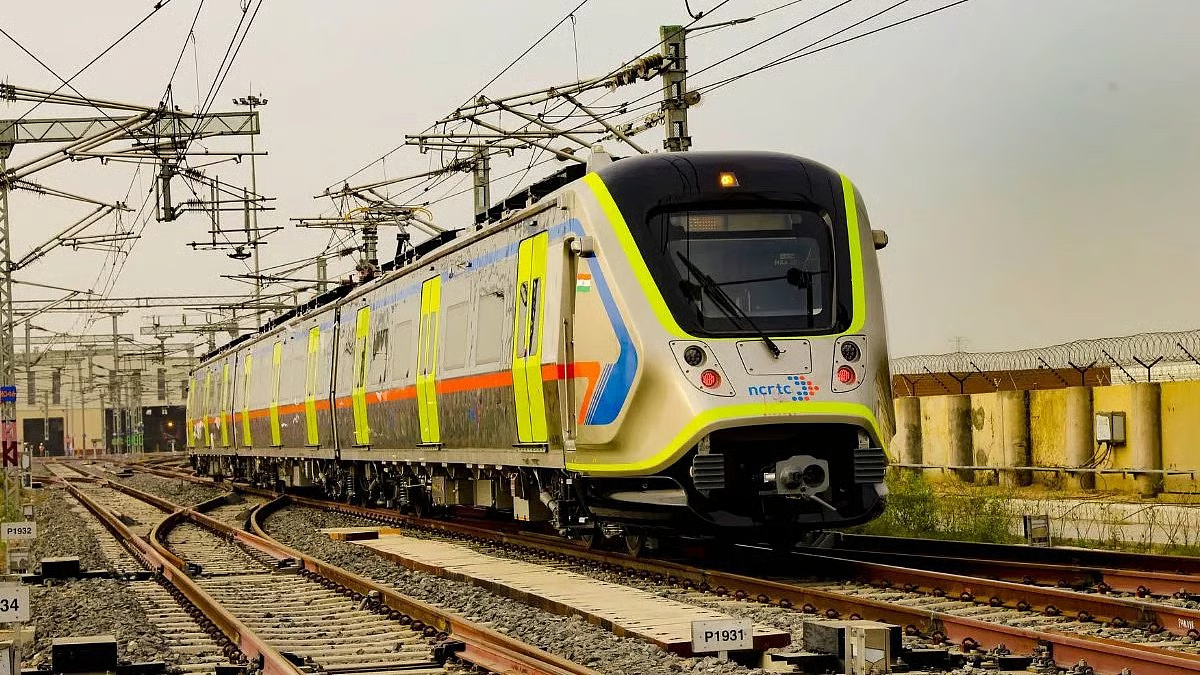
Mumbai’s push for stronger regional connectivity has gained a fresh spotlight as the city’s metro leadership signals the need for a dedicated Regional Rapid Transit System (RRTS) to support emerging industrial and logistics corridors, including the fast-developing Vadhavan port zone in Palghar. Officials argue that Mumbai’s expanding economic geography now requires a high-speed rail network capable of providing faster, more direct travel than existing suburban and metro services.
Speaking on a public platform, a senior metro official noted that the current model of multi-modal travel—often involving long road commutes, packed suburban trains, and multiple interchanges—no longer meets the mobility demands of workers connecting to industrial clusters beyond the municipal limits. The official pointed out that an RRTS corridor with stations spaced wider apart, potentially every 8 km or more, could significantly cut travel times while offering a more reliable and energy-efficient alternative to road-based commuting. Industry observers say the reference to the Delhi–Meerut RRTS, where trains operate at high speeds and offer seamless inter-city mobility, signals an emerging policy direction for the Mumbai Metropolitan Region (MMR). They note that such a network could ease pressure on the suburban rail system, reduce emissions from daily vehicular travel, and connect job-rich zones to the city in a more inclusive manner. As Mumbai intensifies its shift toward climate-resilient and equitable mobility planning, a high-speed rail spine could play a vital role in expanding opportunities for workers living in peripheral districts.
The proposed Vadhavan port is a major driver behind the conversation. Located in Palghar district, the port is expected to catalyse new investments and large-scale employment, creating a travel pattern that current public transport systems are not equipped to handle efficiently. Officials argue that without fast, direct rail connectivity, the region risks replicating the long-distance congestion challenges that already burden Mumbai’s logistics and labour networks. Urban mobility experts note that while the state government remains focused on completing multiple metro lines, strategic planning for an RRTS must begin early due to its long gestation period. They emphasise that integrating such a network with existing suburban rail, metro lines, and bus systems will be essential to ensuring universal accessibility and gender-neutral mobility design—core principles that are increasingly shaping India’s next generation of transport infrastructure.
The official also highlighted the need for a system that supports frontier technology industries seeking to locate near Mumbai but constrained by space within the city. A high-speed corridor, they said, could unlock new industrial zones while reducing dependence on private vehicles, contributing to the region’s broader sustainability goals. While no formal proposal has been announced, the government is reportedly assessing the feasibility of an RRTS network for MMR. If pursued, the corridor has the potential to redefine regional commuting, reduce carbon emissions from long-distance travel, and build a more equitable mobility ecosystem for the workforce connecting Mumbai and its surrounding districts.
Mumbai-Vadhavan Rapid Rail Proposal Gains Momentum As MMRCL Seeks Faster Connectivity