


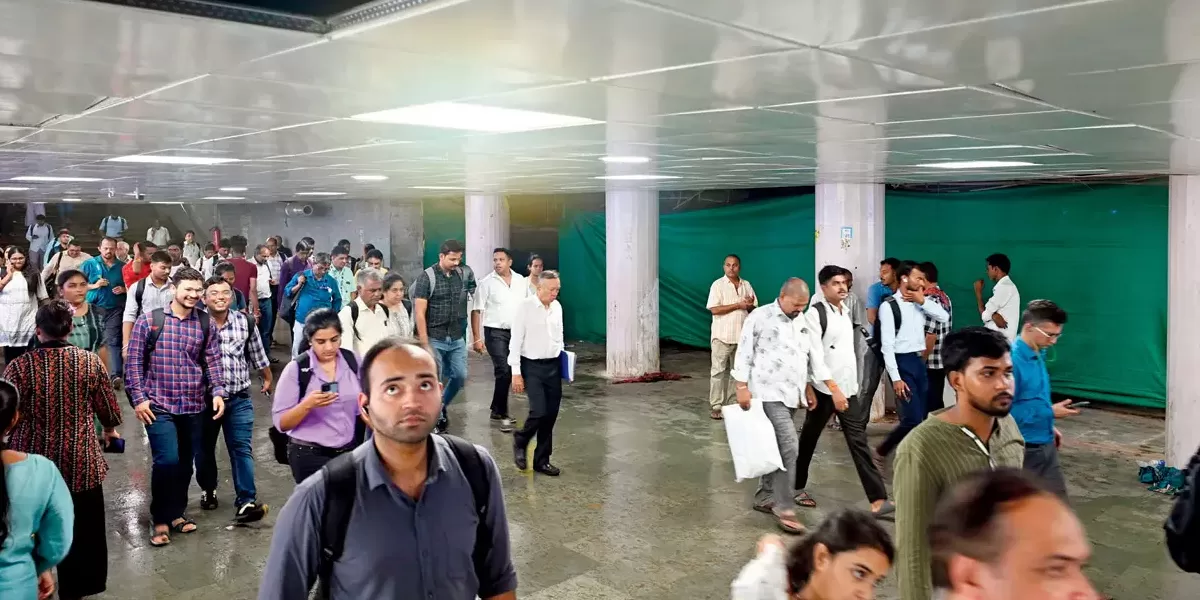
A freshly constructed underground link between the BMC subway at CSMT and the upcoming Aqua Line 3 Metro station has emerged, signalling a major milestone ahead of the corridor’s projected December 2025 inauguration. The pathway, located opposite the BMC headquarters at Azad Maidan, paves the way for seamless connectivity at the bustling terminus, offering commuters convenient, intermodal transfer.
The 33.5 km Aqua Line 3, funded under the JICA-supported Rs 37.28 billion project, will run from Colaba to SEEPZ and is expected to serve 1.7 million passengers daily. Nearly the entire route will be underground, featuring 26 subterranean stations and seamless interchanges with eight railway hubs, MSRTC bus services, and Metro Lines 1 and 2B. Experts from the metro authority highlighted that this linkage reflects a robust commitment to gender-neutral, eco-efficient transit infrastructure designed to meet Mumbai’s dense commuter demands. Construction sources report that the new pathway integrates directly into existing BMC underpass infrastructure, reducing walking times and shelter exposure. “The link offers one of several new entry points that critically ease passenger flow at CSMT station,” noted a senior metro official. This subterranean passage showcases urban engineering precision and accessibility planning, with future-proofing for commuter safety standards and real-time wayfinding displays.
Residents and commuters are sharing early excitement, with local feedback on social media praising the project as a “much-needed relief” for rush-hour navigation. Civic planners anticipate that similar interconnectivity measures will improve equity in access and encourage public transit adoption – a cornerstone of Mumbai’s sustainable mobility roadmap. Funding from JICA, with a Rs 21.28 billion loan, underscores India’s growing climate-aligned partnerships supporting zero-carbon, mass transit innovation. Authorities emphasise that such investments not only mitigate carbon emissions but also foster inclusive urban regeneration in historical districts.
As Aqua Line 3 inches closer to operation, the newly revealed connector marks a critical component in the city’s integrated transit ecosystem. Ongoing works include completion of underground station outfitting, security systems, and passenger amenities, with trial runs expected to commence in late 2025. While timelines and final passenger experiences await validation post-launch, Mumbai’s expanding metro network reflects a clear shift towards modern, equitable public transport designed to serve diverse urban communities.
Also Read : Mumbai Ahmedabad Bullet Corridor Nears Zaroli Tunnel Completion in Gujarat
