


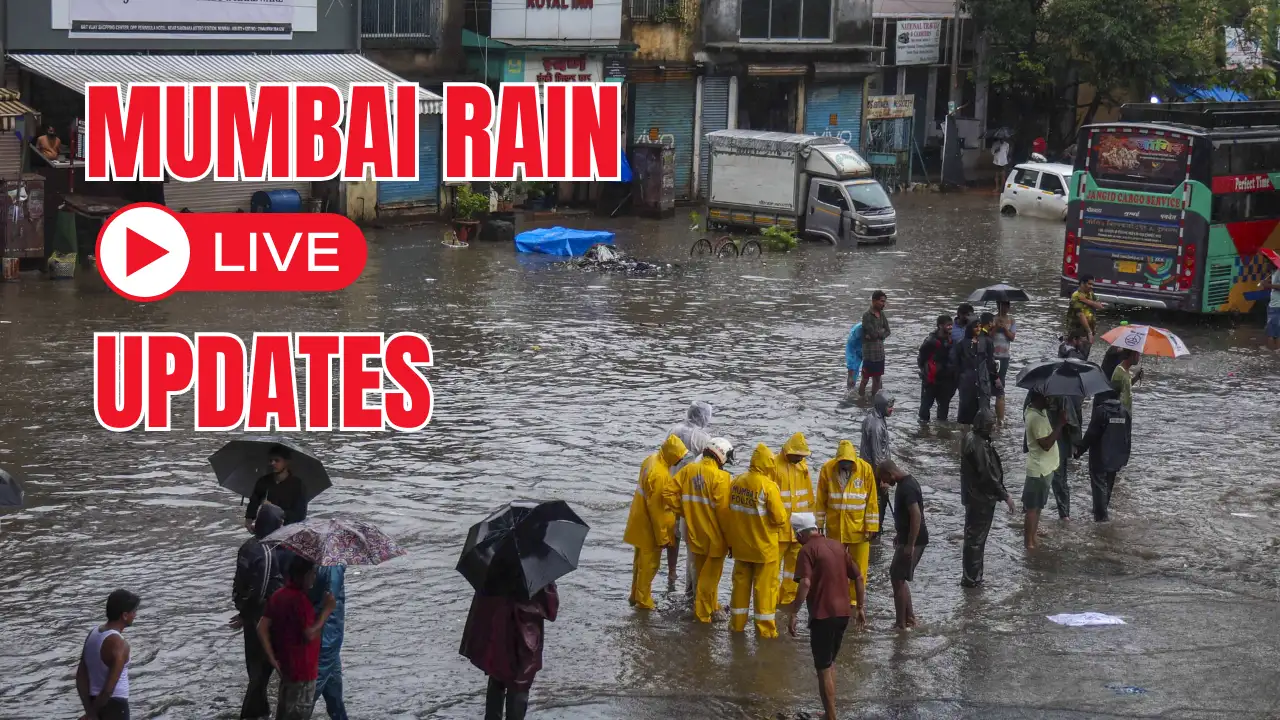
Mumbai woke up under an orange alert on August 20, 2025, as torrential monsoon rains continued to inundate low-lying areas, disrupt suburban train services, and affect daily life across the city. Authorities have urged residents to remain indoors and avoid non-essential travel while emergency services conduct large-scale evacuations along the swollen Mithi River and other vulnerable areas.
Over the past 48 hours, Mumbai has experienced record rainfall, with the India Meteorological Department (IMD) reporting more than 300 mm of precipitation on August 19 alone. The Brihanmumbai Municipal Corporation (BMC) confirmed that over 200 mm fell within an 11-hour period, coinciding with high tide levels reaching 3.75 metres, exacerbating flooding and waterlogging in critical neighbourhoods including Kurla, Dadar, and Matunga. Transport infrastructure remains heavily affected. The Harbour Line between CSMT and Kurla was suspended temporarily due to tracks submerged under nearly 38 cm of water, while the Kurla-Panvel section resumed operations after floodwaters receded. The city’s monorail network also witnessed a major disruption, with over 782 passengers rescued from stalled trains on elevated tracks. Emergency medical teams attended to passengers showing signs of discomfort, ensuring all were stable and discharged safely.
Mumbai’s airports and road networks continue to experience ripple effects from the incessant downpour. Santacruz in the western suburbs recorded the highest rainfall in a six-hour period at 151 mm, while Vikhroli, Juhu, Byculla, Bandra, and Colaba also faced significant water accumulation. The BMC has mobilised pumping units across low-lying zones to mitigate waterlogging, working round-the-clock to restore normalcy. Authorities have also postponed major events, including the annual real estate conclave “Reimagining Maharashtra: Global Alliances to Local Impact,” highlighting the widespread impact on the city’s business and public life. Contrary to viral messages circulating online, schools and colleges remain open, with officials clarifying no closures have been mandated under the current orange alert.
Experts emphasise that Mumbai’s recurring flooding issues underline the need for sustainable urban planning and resilient infrastructure. They advocate for the expansion of eco-friendly drainage systems, green rooftops, and river management initiatives that can reduce flood risk while promoting a climate-resilient, zero net carbon city. While the intensity of rainfall is expected to moderate slightly in the coming days, city authorities continue to maintain a high level of vigilance. Residents are advised to monitor official updates, avoid travel during peak high tide hours, and cooperate with emergency services to ensure safety during the ongoing monsoon crisis.
Also Read : Lucknow launches Rs 31 crore Amausi industrial area infrastructure revamp
