


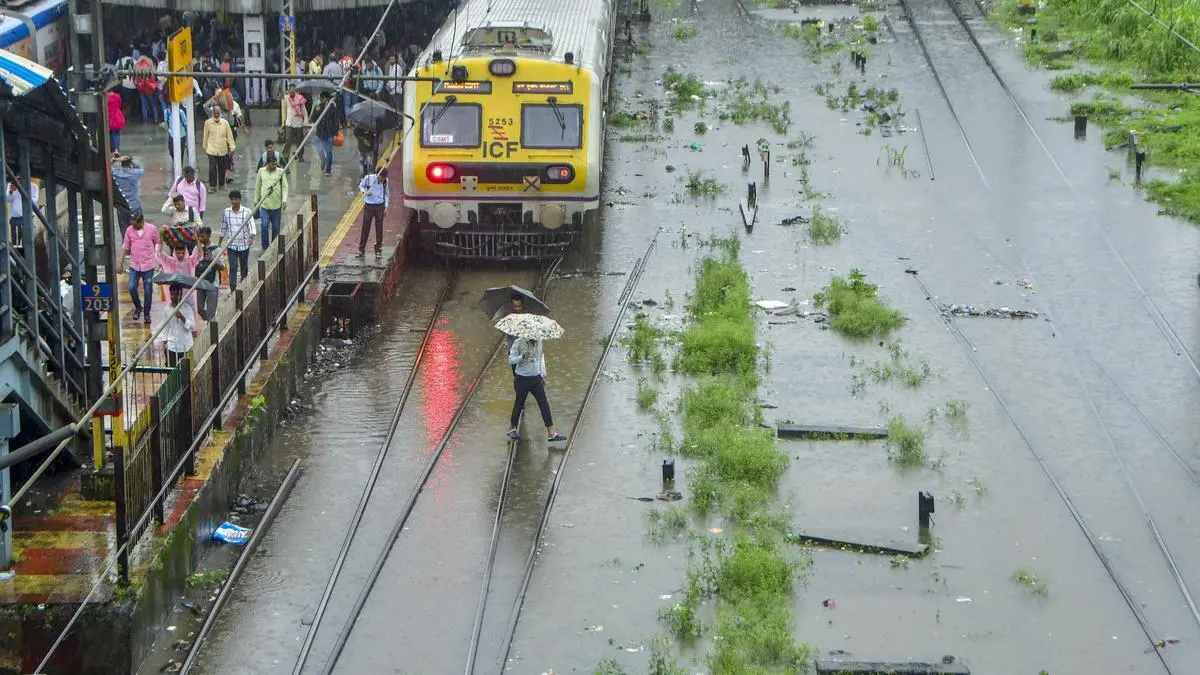
Mumbai once again finds itself under a red alert as heavy rains batter the financial capital and its neighbouring districts. The India Meteorological Department confirmed that August rainfall has already crossed 950 mm at the Santacruz observatory, making it one of the wettest Augusts in a decade. While officials anticipate a gradual reduction in intensity from Thursday, Wednesday remains critical, with widespread disruptions across transport and daily life.
Airlines have sounded travel advisories warning passengers of delays, with operations at the city airport likely to face turbulence due to waterlogging and air traffic congestion. Railway services on Central, Western, and Harbour lines, though operational on Wednesday morning, suffered major setbacks on Tuesday when submerged tracks disrupted suburban mobility. The impact was most felt by commuters who rely daily on these networks, highlighting once again the fragility of Mumbai’s transit infrastructure under extreme weather. The monorail network faced its own crisis when two overcrowded trains broke down mid-journey on Tuesday evening, trapping over 750 passengers. Authorities linked the failure to sudden passenger surges caused by suspended local trains. While all passengers were rescued, the incident underlined the pressing need for robust maintenance and sustainable alternatives to overburdened systems.
The city’s low-lying regions too remained vulnerable, with the Mithi River swelling dangerously close to the 4-metre danger mark. Residents from Kranti Nagar and nearby areas were evacuated overnight as precautionary measures. Experts reiterated that despite two decades since the catastrophic 2005 floods, structural bottlenecks and poor waste management continue to exacerbate waterlogging. According to municipal officials, over 1,600 crore litres of rainwater were pumped out over four days, double the capacity of Tulsi Lake. The human cost of the deluge is sobering. State authorities reported multiple fatalities and several missing persons in rain-related incidents over the last 24 hours. Relief teams from the National and State Disaster Response Forces have been stationed across districts to prevent further tragedy. Schools and colleges, which were closed earlier in the week, remain functional on Wednesday after the civic body dismissed viral closure messages as fake.
Analysts point out that Mumbai’s recurrent urban flooding highlights the urgent need for eco-friendly drainage upgrades, stricter urban planning controls, and investments in climate-resilient infrastructure. As India’s financial hub, the city’s economy cannot afford routine paralysis every monsoon. Ensuring sustainable city systems is no longer an option but a necessity—especially as extreme rainfall events intensify under climate change.
Also Read : Mumbai Schools And Colleges Closed As Heavy Rains Hit Thane Panvel Lonavala
