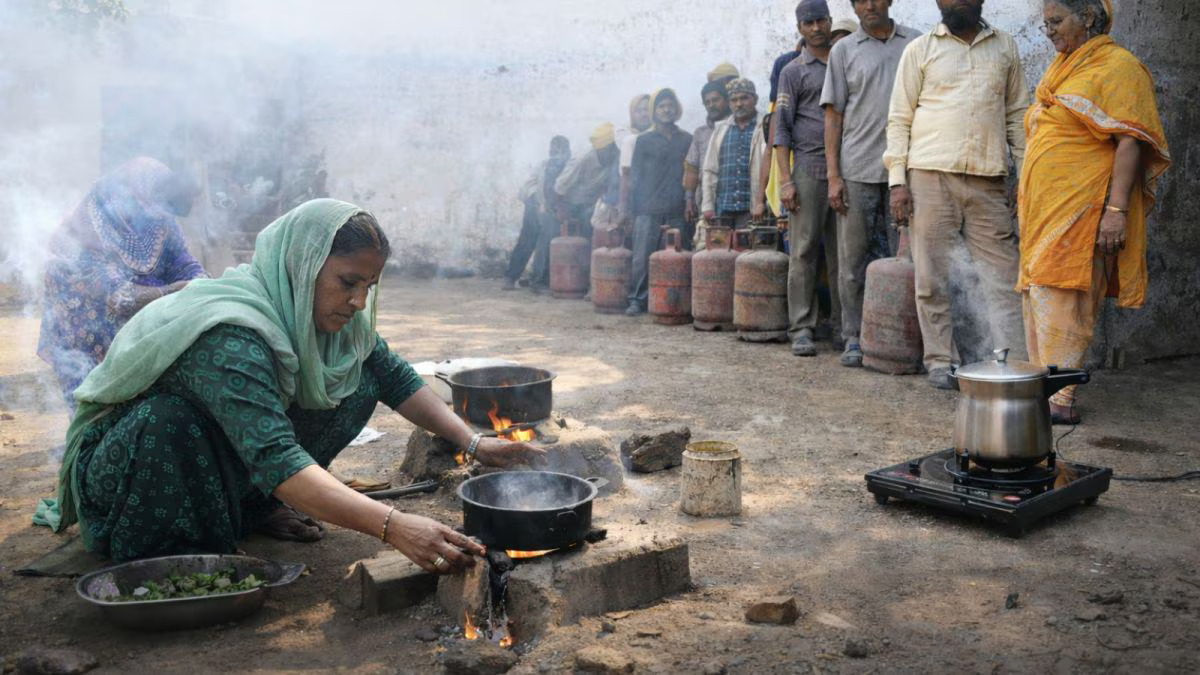
Even as households and eateries across Mumbai grapple with disruptions in the supply of cooking gas cylinders, many indigenous settlements scattered across the city remain largely unaffected. In several tribal hamlets located within forested and peri-urban areas, daily cooking still relies primarily on firewood rather than liquefied petroleum gas, reflecting a long-standing practice shaped by affordability, access, and cultural habits.
Urban researchers estimate that more than half a million residents belonging to indigenous communities live in hundreds of small hamlets, locally known as padas, spread across the metropolitan landscape. Many of these settlements are located within forest zones such as the Sanjay Gandhi National Park in Borivali, as well as in Aarey, Marol, Madh Island, Gorai, and the eastern suburban belt between Ghatkopar and Mulund. In these settlements, cooking fires fuelled by collected firewood remain a common sight outside homes. Residents say gas cylinders are typically used sparingly, often only during busy mornings or when quick preparation is required. For most meals—including staple foods such as flatbreads and rice—traditional stoves continue to dominate everyday kitchen practices.
Community organisers working with indigenous groups say the reliance on wood fuel means that many families have been less affected by the recent Mumbai LPG shortage, which has strained supply chains and increased waiting times for cylinder refills in several neighbourhoods. However, the persistence of wood-based cooking also reflects economic realities. The cost of LPG cylinders has risen significantly over the past decade, making frequent use difficult for households dependent on informal or low-income employment. Several residents working in domestic services or housekeeping roles report that they initially adopted LPG connections under national energy access schemes introduced nearly a decade ago. Those programmes enabled families to obtain gas connections for the first time. Yet, rising cylinder prices and the reduction of subsidies over time have led many households to return to traditional fuels as their primary cooking source.
Urban planners say this trend highlights the complex intersection between affordability, energy access, and cultural practice in rapidly expanding metropolitan regions. While clean cooking fuel is widely promoted for environmental and public health reasons, the transition often remains uneven among communities that maintain close links with surrounding natural ecosystems. In forest-edge hamlets and open rural pockets within Mumbai’s municipal boundary, residents also point to practical considerations. Cooking with wood outdoors reduces concerns about smoke accumulation and eliminates the need for costly refills. Firewood collected from nearby areas remains easily available, reinforcing its continued use.
The persistence of traditional cooking practices has also influenced debates around housing rehabilitation. Indigenous residents living in informal settlements have often expressed concerns about relocation to high-rise apartments under urban redevelopment programmes. Community representatives argue that conventional apartment layouts do not accommodate outdoor cooking or firewood storage. Urban development officials say alternative housing models—such as low-rise row housing—are being explored to better align rehabilitation designs with the lifestyle needs of indigenous communities while maintaining safety and environmental standards.
As Mumbai continues to urbanise and expand infrastructure across forest and coastal zones, the experience of these settlements offers a reminder that energy transitions in cities must balance sustainability goals with cultural realities and economic inclusion.
Mumbai Tribal Hamlets Continue Cooking With Firewood During LPG Shortage