


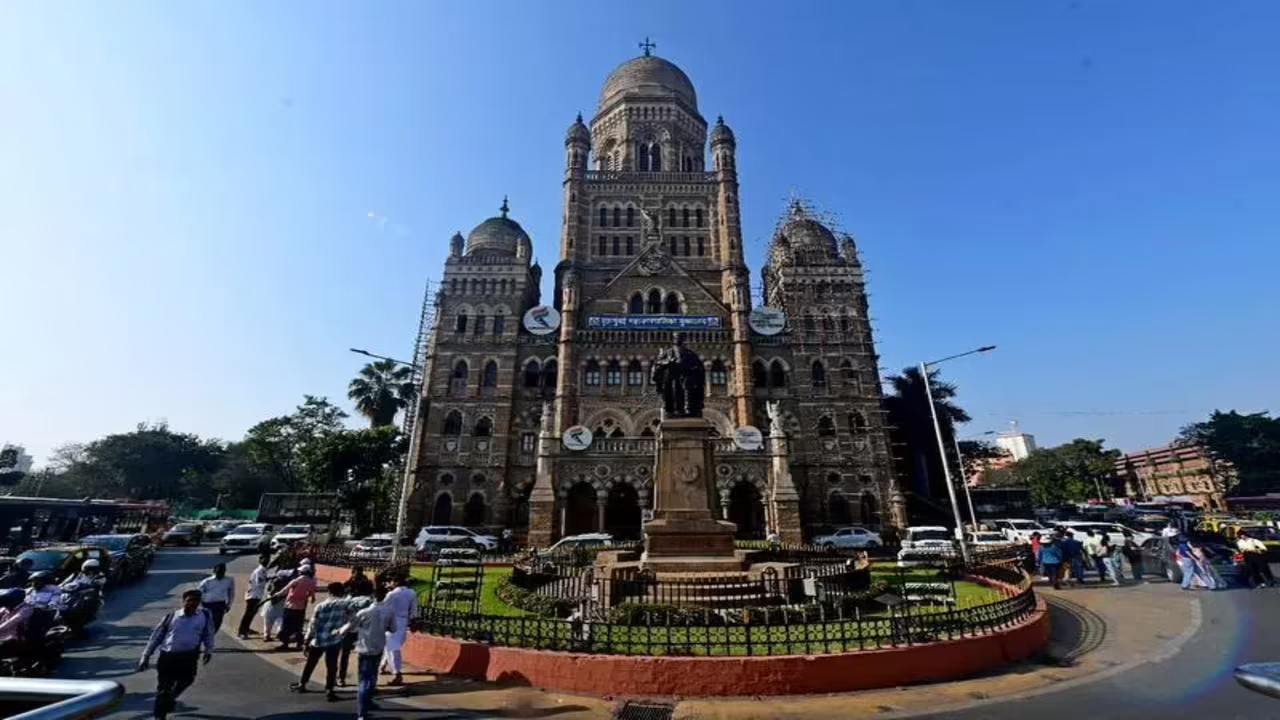
Mumbai’s push to fast-track the Goregaon-Mulund Link Road (GMLR), a vital infrastructure project aimed at easing east-west connectivity, has reached the Supreme Court. The city’s Tree Authority has filed an application seeking judicial clearance to fell 1,134 trees in the ecologically sensitive Film City area to enable construction of twin tunnels that form the backbone of this corridor.
The BMC’s Tree Authority has acknowledged the January Supreme Court order which prohibits any tree cutting within the Aarey region without explicit permission. Although the proposed construction falls within Aarey village limits, officials argue it lies outside the jurisdiction of the Aarey Milk Colony and the Dairy Development Department. A letter supporting this claim from the Aarey Colony CEO has been submitted along with the plea.
The GMLR, which envisions a direct link between Western Express Highway and Eastern Express Highway, is expected to cut travel time between Goregaon and Mulund by nearly an hour. The tunnel portion, stretching approximately 6.2 kilometres, will connect Film City to Khindipada near Amar Nagar in Mulund. According to civic officials, tunnelling was chosen specifically to reduce surface-level environmental damage and preserve as much green cover as possible.
However, the tunnelling process itself requires substantial groundwork. To launch the Tunnel Boring Machines (TBMs), the construction team must first excavate a large shaft, for which land clearance and tree felling are unavoidable. The Tree Authority stated in its application that a total of 95 trees are required to be cut in the initial phase to facilitate this activity.
Interestingly, the original plan was to locate the launching shaft elsewhere, but the site was shifted to avoid displacing the tribal hamlet of Habalepada. This relocation increased the number of trees to be felled by 40, highlighting the complex interplay between human displacement and environmental compromise. The Authority has sought phased approval—requesting permission now for Phase I and committing to return for approval for any additional felling required in Phase II.
This legal step reflects a cautious approach in light of heightened environmental scrutiny over development projects in the Aarey region. Though the Tree Authority has asserted that the land in question is technically outside protected areas, its decision to seek judicial approval nonetheless underscores the project’s sensitivity and the administration’s awareness of potential backlash.
Urban development experts point out that the GMLR project symbolises the growing friction between the need for sustainable mobility solutions and the urgency to protect natural ecosystems within metropolitan regions. While tunnelling does offer a comparatively low-impact alternative to surface road expansion, the removal of over a thousand trees—even with compensatory plantations—poses a significant challenge in maintaining Mumbai’s already depleted green cover.
The Supreme Court’s forthcoming decision will not only determine the fate of these 1,134 trees but could also establish a benchmark for how infrastructure projects in ecologically fragile zones should proceed. It could become a litmus test for governance models that claim to prioritise sustainability while pursuing large-scale urban development.
For now, Mumbai’s residents and environmentalists alike await the court’s verdict, which could tilt the balance between ecological preservation and infrastructure-driven growth in one of India’s most congested cities.
Also Read : Maritime opens new freight link to Northampton terminal
