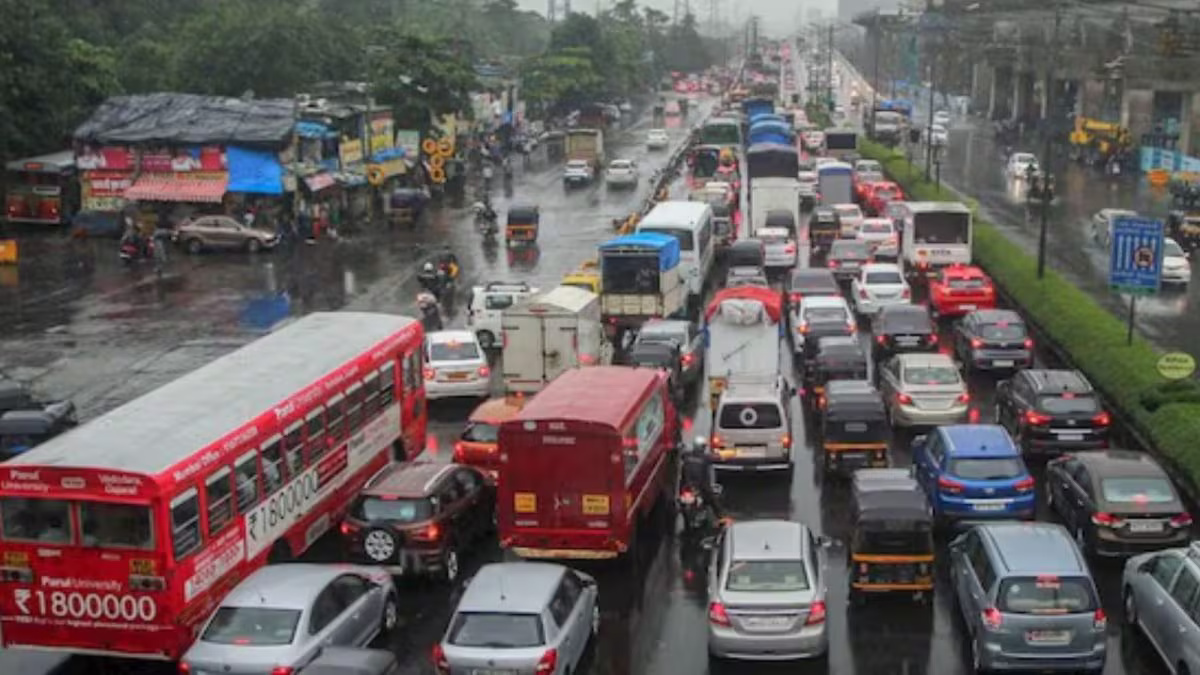
Mumbai’s roads remained a persistent challenge for commuters throughout 2025, despite notable infrastructure upgrades, including new flyovers, metro expansions, and airport connectivity enhancements. From Bandra Kurla Complex (BKC) to Ghodbunder Road, daily travel was often disrupted by traffic bottlenecks, construction work, potholes, and monsoon-related issues, highlighting the ongoing strain on the city’s transport network and its impact on residents’ daily lives.
The Western Express Highway continued to be a key congestion corridor, stretching from Bandra–Santacruz flyover through the airport area up to Kandivali. Industry experts noted that heavy northbound traffic during peak hours often slowed to a crawl near Hub Mall, Goregaon–Aarey, and Nesco, with delays sometimes exceeding an hour. Dahisar Check Naka also remained a pressure point. Despite a minor relocation of the toll booth, commuters reported minimal relief, with traffic congestion persisting between Dahisar East Metro station and Thakur Mall. Officials acknowledged that minor adjustments alone were insufficient to ease the heavy inflow of vehicles from Mira Road.
In Malad West, Bhoomi Mart Junction emerged as another significant bottleneck. Multiple connecting roads, including Jankalyan, Charkop, Mith Chowki, and Marina Enclave, saw recurring gridlocks lasting over an hour, reflecting the need for long-term traffic management strategies and improved urban planning in the western suburbs. Thane’s Ghodbunder Road, connecting the Eastern and Western Express Highways, was highlighted for unsafe conditions and chronic congestion. Deep potholes, poor lighting, and abrupt lane reductions, especially at Gaimukh Ghat, caused lengthy delays. A crane breakdown during Metro Line 12 construction in November created a 12-hour jam, illustrating how minor incidents can cascade into citywide disruption.
The Mumbai–Ahmedabad highway in Palghar district also drew attention after a traffic jam left over 500 schoolchildren and commuters stranded for nearly 12 hours. Villagers in Saunavghar expressed extreme frustration in communications to central authorities, underscoring the human and economic costs of persistent congestion along intercity routes. BKC and Jogeshwari–Vikhroli Link Road (JVLR) remained daily pressure points in 2025. Limited public transport alternatives and spillover from large events, such as the Mood Indigo festival, contributed to severe gridlocks. Authorities are exploring innovative solutions such as pod taxis and better traffic signal coordination to mitigate congestion.
Urban planners emphasise that while Mumbai’s infrastructure growth is substantial, addressing congestion requires integrated mobility solutions, improved last-mile connectivity, and smarter urban design. Sustainable measures like expanded public transport, commuter-friendly streets, and efficient traffic management systems are key to reducing travel times and enhancing the city’s liveability.
Mumbai Traffic Hotspots From BKC To Ghodbunder Road Challenge Commuters Daily