Mumbai Traffic Enforcement Tightens On Coastal Road
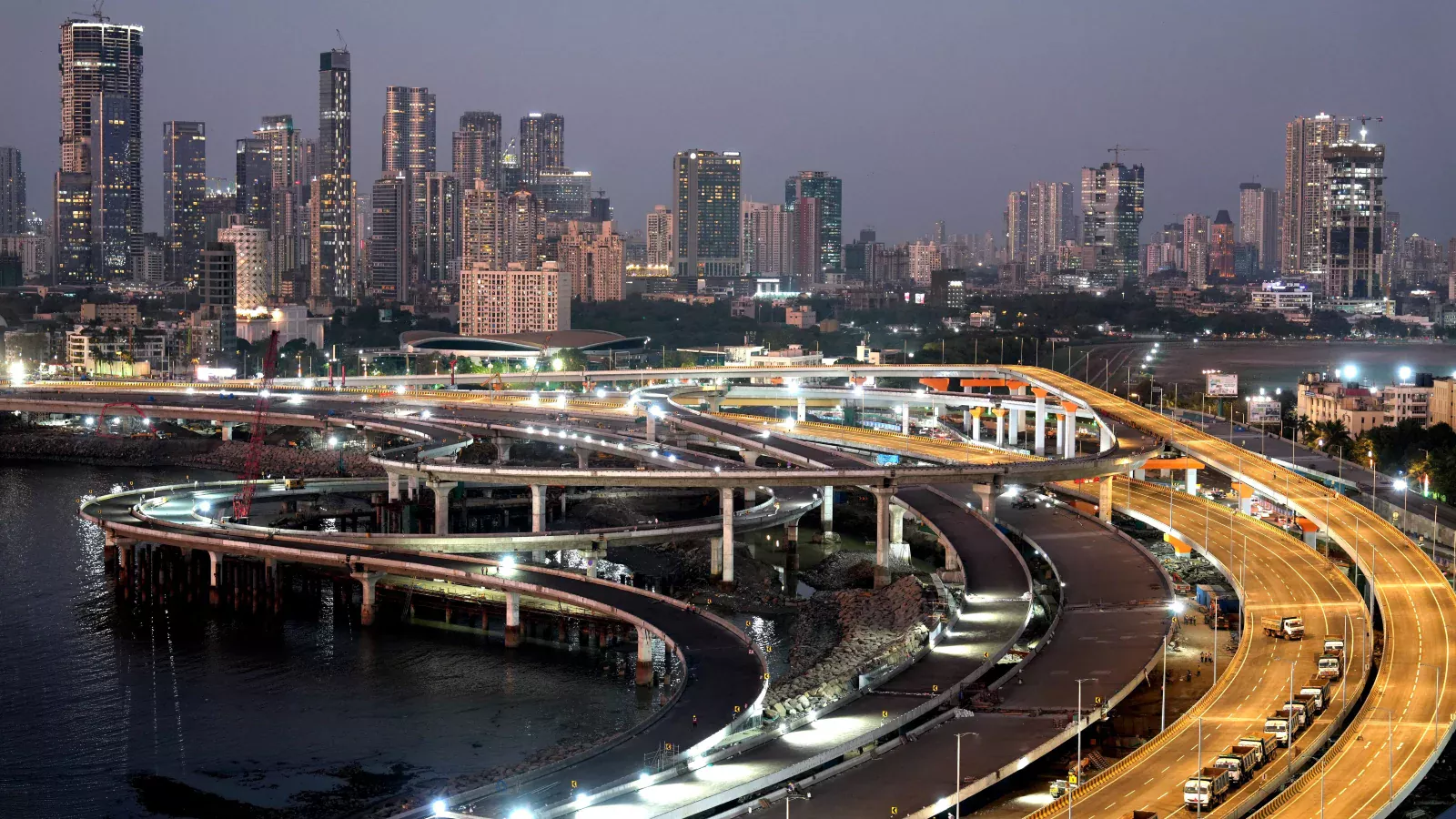
Mumbai’s traffic police have significantly escalated enforcement on the city’s high-speed Coastal Road, issuing nearly 62,000 traffic challans between September 2025 and mid-January 2026 as part of a crackdown on speeding, bus lane misuse and other safety violations. The surge in penalties underscores widening concerns over road user behaviour and infrastructure safety on one of the metropolis’s most prominent expressways — with broader implications for urban mobility governance and public safety frameworks.
The Coastal Road — a roughly 10-kilometre grade-separated corridor linking Marine Drive with Worli and designed to reduce travel times and relieve congestion — has seen concentrated traffic monitoring since its full opening, with Automatic Number Plate Recognition (ANPR) cameras deployed to detect violations. Enforcement actions have aimed chiefly at motorists exceeding posted speed limits and illegally using dedicated bus lanes, both flagged by officials as key contributors to unsafe road conditions.Monthly enforcement statistics reveal October 2025 as the peak period, with nearly 20,000 challans. Officials contend that crash risks and erratic driving prompted stepped-up oversight, especially given the Coastal Road’s role as a flagship urban infrastructure investment to enhance intra-city connectivity. Penalties for offences vary by vehicle type, with fines for repeat racing escalated up to ₹10,000 and first-time racing violations attracting ₹5,000.
Registrations of First Information Reports (FIRs) have also been initiated in instances of excessively high speeds or reckless manoeuvres, signalling a shift from purely administrative fines to more stringent legal responses for serious infractions. Governance experts say this broader toolkit reflects an acknowledgment that prolonged behavioural change on high-capacity corridors requires layered enforcement, not just conventional penalties.Local communities near Worli and adjacent neighbourhoods have raised parallel concerns about noise pollution linked to nocturnal racing and high-speed transit. Residents’ feedback emphasises how infrastructural upgrades such as ambient noise buffers and speed-responsive traffic calming could supplement enforcement in tackling quality-of-life impacts for people living near major urban corridors.
Urban planners note that the Coastal Road’s design — prioritising speed and reduced travel times — carries inherent trade-offs between throughput and safety, especially in dense metropolitan contexts where traffic mixes with local pedestrian and service access. Effective governance thus hinges on synchronising engineering, enforcement and community engagement to balance mobility gains with lived-environment quality.
As Mumbai’s traffic police pledge enhanced night patrols and sustained monitoring, the enforcement drive prompts broader reflection on how rapid infrastructure expansion must be matched with robust road safety ecosystems — including digital enforcement, real-time data sharing and targeted behaviour-change campaigns. The unfolding approach on the Coastal Road could offer precedent for other large Indian cities grappling with similar expressway safety and compliance challenges.