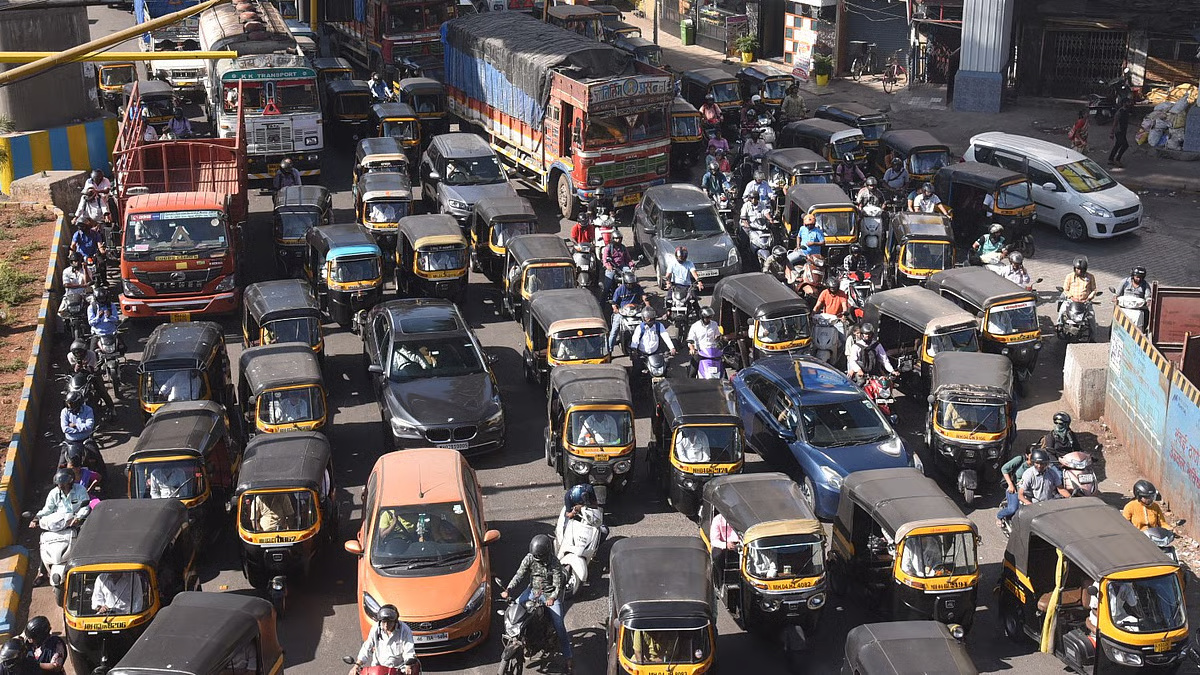
Mumbai’s evening commute was severely disrupted on Thursday as long traffic queues formed simultaneously on the Eastern Freeway, the Coastal Road corridor and parts of South Mumbai, leading to widespread delays during the city’s peak-hour movement. Motorists reported being stationary for more than ten minutes on multiple stretches, highlighting once again the strain on the city’s transport infrastructure and the urgent need for more resilient, sustainable mobility systems.
The most prominent bottleneck emerged on the Chembur-bound side of the Eastern Freeway, where vehicles slowed to a crawl due to heavy convergence of traffic moving towards P D’Mello Road. According to traffic personnel deployed on-site, the brief but intense congestion required immediate intervention, with the Wadala division instructed to manage lane discipline and restore flow. A traffic official said that the volume of vehicles exceeded expected evening capacity, adding that ongoing construction and lane restrictions across the city often amplify peak-hour pressure. Simultaneously, South Mumbai experienced its own gridlock as traffic crawled along Peddar Road and K.K. Road. According to officials, a large event at the Mahalaxmi Racecourse contributed to the congestion, reducing vehicle speed to a near standstill for several minutes. Many commuters shared their concerns online, pointing out that insufficient advance planning and limited diversions further intensified the situation. Responding on social media, traffic authorities assured that the issue had been relayed to wireless control teams for immediate coordination.
Mobility experts note that Mumbai’s traffic patterns have grown increasingly unpredictable due to overlapping infrastructure works, expanding vehicle ownership and limited space for road widening. Sustainable mobility planners have emphasised that the city’s long-term solution lies in strengthening public transport systems, improving multimodal integration, and encouraging equitable, low-carbon travel choices. “High-dependency on private vehicles in a constrained urban environment will continue to create episodic disruptions unless public transport becomes the default mode,” a senior urban mobility expert said. In another update relevant to motorists in the northern suburbs, the Dahisar toll plaza was shifted slightly ahead from its original position. The shift, however, spanned only around twenty metres, disappointing residents who had anticipated a more substantial relocation to ease the longstanding chokepoint at the Mumbai–Gujarat entry corridor. Several daily users expressed frustration, noting that such minimal changes would have little effect on travel time or congestion.
The city’s recurring bottlenecks underscore the need for a holistic mobility strategy—one that supports efficient traffic management today while advancing long-term sustainable alternatives such as mass transit, non-motorised transport, and smoother regional connectivity. While temporary measures continue to provide short-term relief, planners argue that structurally reducing vehicular load is essential for building an equitable and climate-resilient transport ecosystem.
Mumbai Traffic Crawls On Coastal Road And Eastern Freeway Amid Major Congestion