


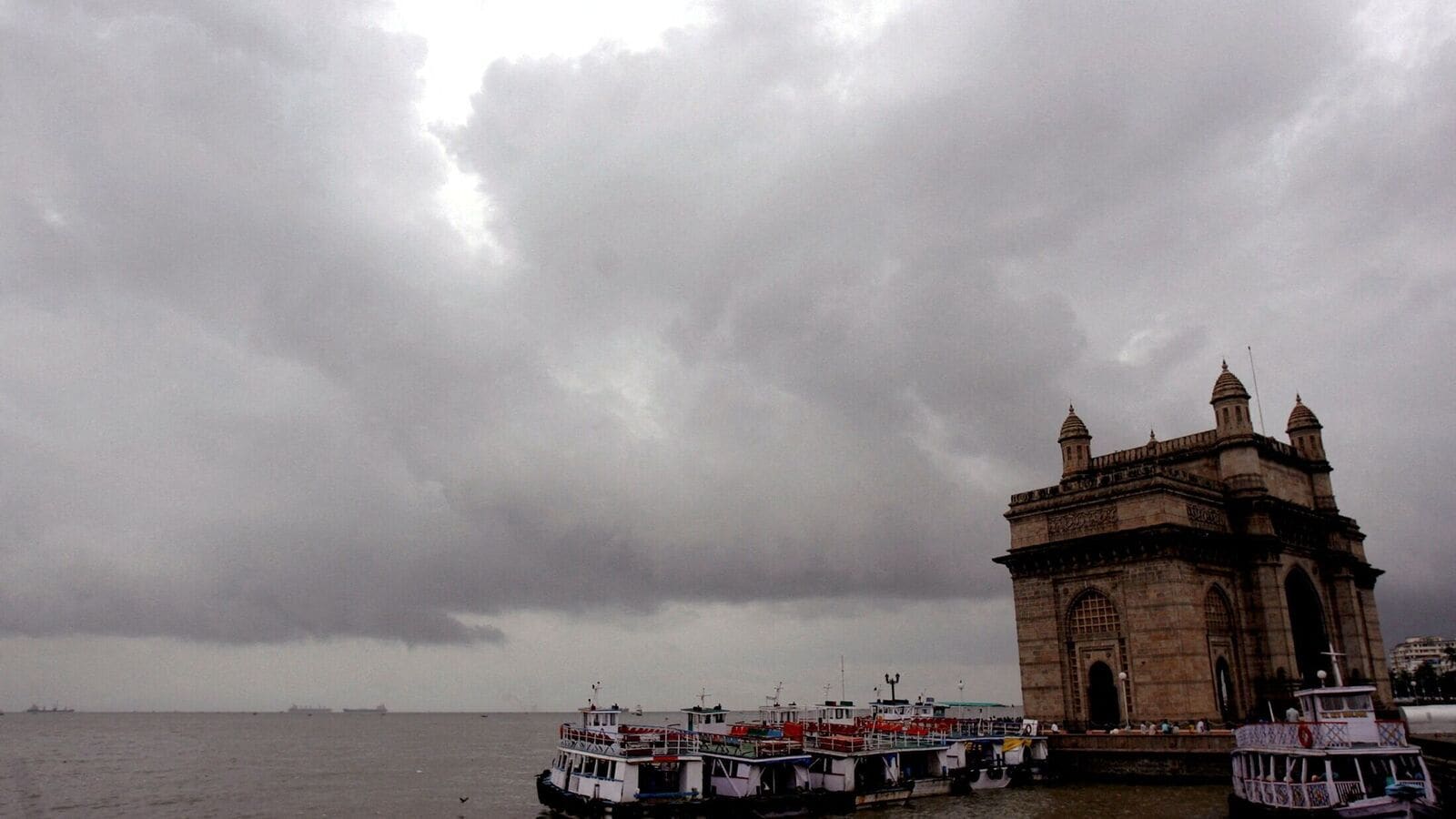
Mumbai began the week under grey skies and light showers, but weather officials have warned of more intense spells ahead. The India Meteorological Department (IMD) has predicted heavy rainfall in the city and suburbs on September 3 and 4, marking a fresh turn in a monsoon season that has so far alternated between dry spells and scattered rains.
The past few days have seen intermittent rainfall across Mumbai, with cloudy mornings and light to moderate showers in select pockets. While the city has avoided extreme conditions, the uneven pattern has offered temporary relief from heat, bringing daytime temperatures marginally down. On Sunday, Santacruz recorded a minimum of 26 degrees Celsius and a maximum of 29 degrees Celsius, reflecting slightly cooler afternoons but a persistently warm night. High humidity levels, touching 85 percent, have left residents grappling with sticky and uncomfortable conditions despite the rain. Weather experts noted that while Monday is expected to bring only patchy showers, the scenario is likely to change midweek. By Tuesday, the city may experience a rise in temperature to around 30 degrees Celsius, but the real concern lies in the IMD’s heavy rain alert for September 3 and 4. Such alerts typically signal a possibility of waterlogging, traffic delays, and disruptions in daily life, particularly in low-lying parts of the city.
The broader state forecast suggests a mixed weather pattern across Maharashtra. While some regions may witness dry and humid conditions, the Konkan belt—including Raigad, Ratnagiri and Sindhudurg—is bracing for moderate to heavy rainfall. The IMD has also issued a yellow alert for parts of Konkan and Vidarbha, where showers may intensify in the coming days. Temperatures across the state are expected to remain stable, ranging between 24 and 26 degrees Celsius at night and hovering around 33 to 35 degrees Celsius during the day. Officials emphasised that Mumbai’s rainfall is consistent with broader climate shifts that have made monsoon patterns increasingly erratic. Short bursts of heavy rainfall, alternating with long dry spells, are becoming more frequent—a phenomenon linked to global warming and changing oceanic cycles. This has raised urgent questions about the city’s preparedness in terms of drainage, housing resilience, and sustainable infrastructure.
For a metropolis like Mumbai, where millions depend on smooth transport and uninterrupted workdays, such forecasts are not merely about weather—they are about urban resilience. As the city gears up for September’s heavy showers, the call for eco-friendly planning and sustainable stormwater management systems grows louder. How well Mumbai manages these recurring monsoon challenges will continue to shape its future as a climate-resilient city.
Also Read : Bullet Train To Link Hyderabad Chennai Bengaluru Boosting Travel And Economic Development
