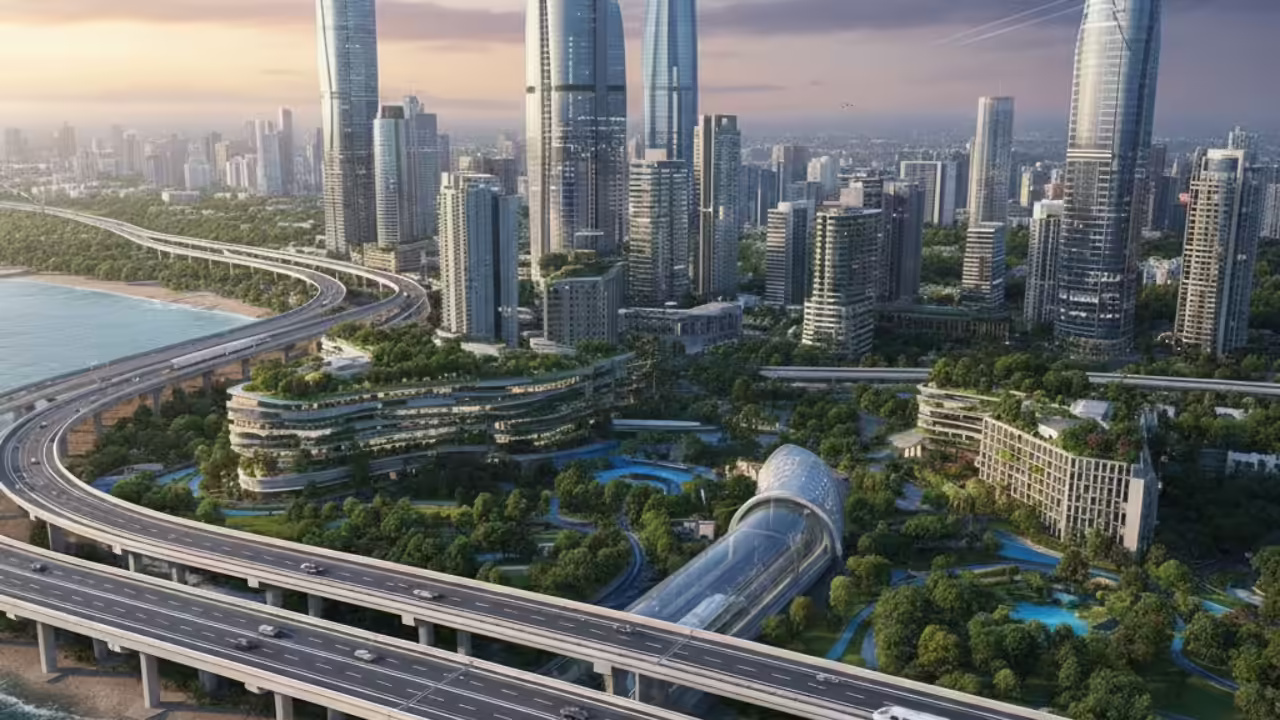
Mumbai’s long-delayed mobility overhaul is expected to accelerate over the next few years, with the state leadership outlining an ambitious plan to complete several major transport projects by 2032. The announcement, made during a public interaction in Worli, positions the city for one of its most extensive infrastructure transformations in decades, aimed at easing congestion and improving both east–west and north–south connectivity.
According to officials, the timeline aligns multiple urban transport systems—metro corridors, sea links, coastal roads, and underground tunnels—into a coordinated development programme intended to support a denser, more resilient and future-ready Mumbai. The strategy also responds to the growing need for climate-conscious mobility solutions, particularly as the city faces rising emissions and increasing pressure on its road network. A senior government representative noted that the combined impact of these projects will be felt most by daily commuters, who currently depend heavily on overburdened arterial roads and suburban rail lines. By diversifying mobility options, the city aims to reduce travel times, ease bottlenecks and encourage a shift towards cleaner, mass-transit systems. Experts say that this integrated approach is essential for Mumbai to evolve as a competitive global metropolis capable of supporting future economic expansion.
Several flagship projects are at advanced stages of construction. Key among them are the coastal road network, additional sea links connecting western suburbs, new metro lines designed to extend deeper into the city’s eastern belt, and high-capacity underground tunnels intended to shorten existing road travel times. Urban planners believe that these efforts will not only reshape movement patterns but also influence land use, housing decisions and commercial activity across the metropolitan region. Industry specialists emphasise that the long-term success of the transformation depends on how effectively the new infrastructure encourages mode shift. For a city aiming to cut emissions and build climate resilience, improved public transport capacity remains critical. They argue that combining high-speed corridors with pedestrian-friendly zones and green public spaces can help deliver a more inclusive, low-carbon urban environment.
While the pace of construction has raised concerns around road closures and temporary disruptions, officials maintain that these are short-term challenges in a large-scale renewal effort. They underscore that the end goal is a simplified, accessible, and multi-modal transport ecosystem capable of accommodating projected population and economic growth. If executed within the stated timelines, Mumbai’s transport transformation could create a more equitable mobility landscape, giving residents faster and safer travel options across the city. The focus on integrated networks, reduced congestion and sustainable design principles positions these upgrades as a cornerstone for building a resilient Mumbai by the next decade.
Mumbai To Undergo Massive Upgrade With New Sea Links, Tunnels, Metros By 2032