


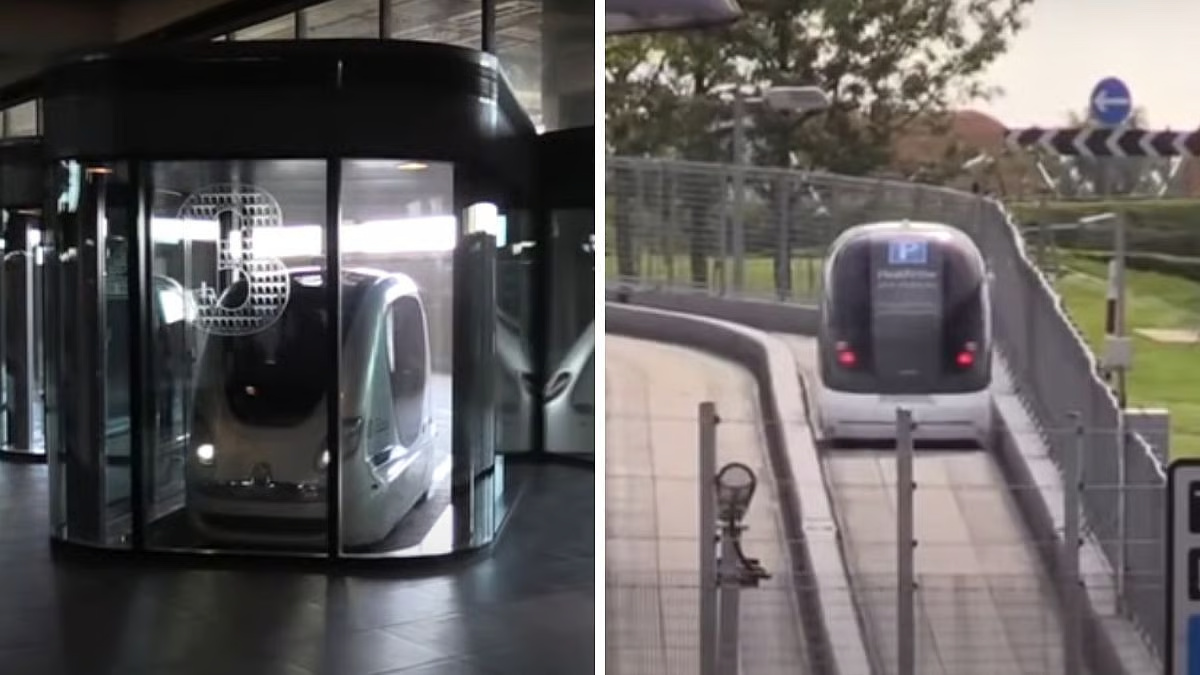
The Maharashtra government has asked the Mumbai Metropolitan Region Development Authority (MMRDA) to conduct a detailed feasibility study for introducing pod taxi systems in Thane, Navi Mumbai and Mira-Bhayandar, expanding on its ongoing pilot proposal in Bandra Kurla Complex (BKC). The move signals a growing push towards compact, low-emission transport models to decongest urban corridors and support sustainable last-mile connectivity across the Mumbai Metropolitan Region (MMR).
Officials from the urban development department confirmed that MMRDA has been designated as the nodal agency for these assessments. The authority has been directed to complete surveys and submit feasibility reports within a month. The study will examine passenger demand, available corridors, integration with metro and suburban rail, and the potential environmental benefits of deploying lightweight elevated systems in dense urban areas. The proposed system, officially known as the Automated Rapid Transit System (ARTS), is already being planned for BKC with an estimated project cost of ₹1,016 crore. The network aims to link the business district with Bandra and Kurla railway stations, offering a faster and greener alternative to road-based transport modes such as taxis, rickshaws and buses. Thousands of commuters currently face bottlenecks while travelling between the stations and offices in BKC, prompting officials to test pod taxis as an urban mobility solution.
According to transport planners, pod taxis—compact driverless cabins operating on elevated guideways—can serve as a bridge between metro networks and neighbourhood destinations. “Such systems require minimal land, create negligible noise, and offer zero tailpipe emissions. They could redefine how short-distance commutes operate in high-density cities like Mumbai,” said a senior official. Experts also note that pod taxis align with India’s emerging sustainable mobility goals, offering an energy-efficient feeder option that complements major public transport networks rather than competing with them. Pilot systems abroad have demonstrated high passenger throughput with lower operational costs, making them a potential model for Indian cities striving for cleaner air and reduced congestion.
The government’s decision to extend the feasibility exercise to three additional cities underscores its intent to decentralise business activity within the MMR while ensuring seamless connectivity. A similar pilot is expected to be demonstrated soon in Vadodara, which could inform the design and deployment strategy for Maharashtra’s network. If implemented effectively, the initiative could help reimagine daily travel in the Mumbai region — prioritising climate-friendly, inclusive, and efficient mobility for its rapidly growing urban population.
Also Read: Pune Residents Complain Over Poor Water Supply Bad Roads And Unfinished Civic Works
