


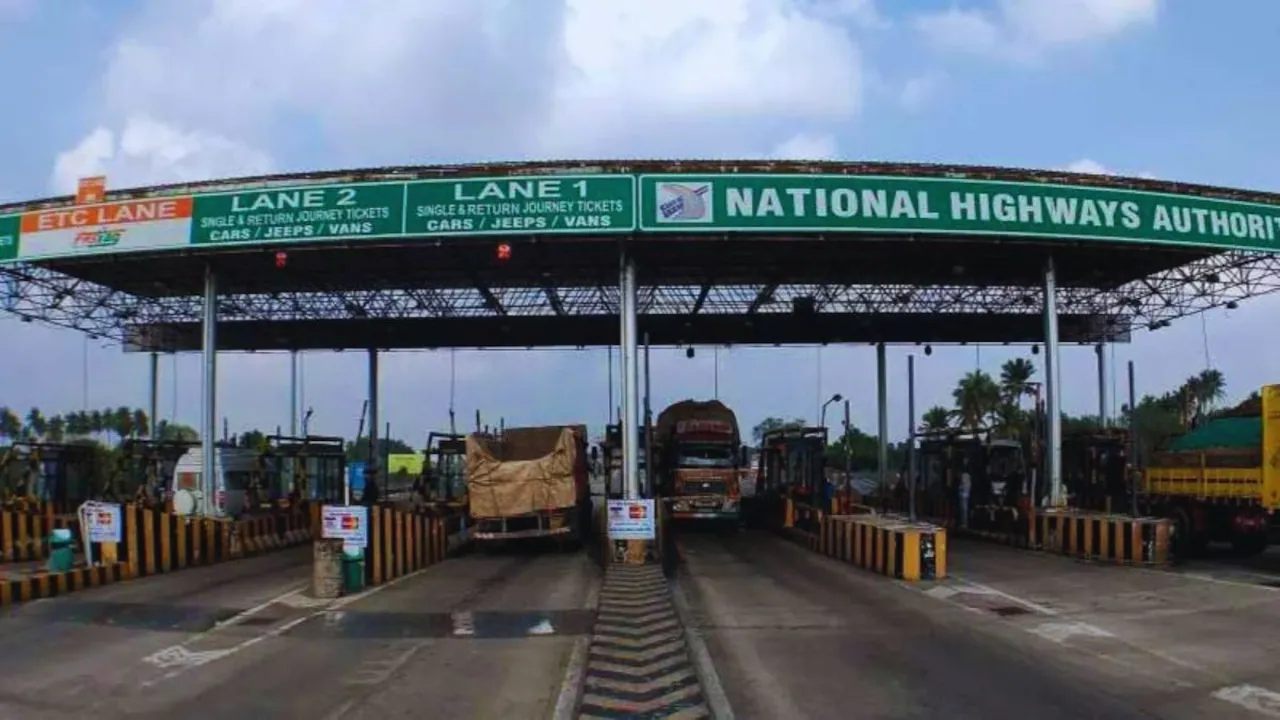
India’s national highways are on the cusp of a technological transformation as the Ministry of Road Transport and Highways prepares to introduce a barrier-free tolling system across 25 plazas. The Multi Lane Free Flow (MLFF) system is being rolled out to modernise toll collection, reduce congestion, and create a more sustainable, fuel-efficient road network.
The MLFF model works through advanced RFID readers and automatic number plate recognition cameras that scan FASTags and vehicle registration numbers without requiring vehicles to stop. Officials say this seamless process will sharply cut traffic snarls at toll plazas, improve commuter convenience, and lower fuel wastage caused by idling engines. Transport experts argue that this innovation will reshape road mobility in India. The country’s highway network currently spans over 1.46 lakh kilometres, a sharp rise from 91,287 kilometres in 2014. With traffic volumes expanding rapidly, traditional toll booths are increasingly viewed as outdated. By adopting MLFF, India is aligning itself with global best practices where smart tolling has already become standard.
The National Highways Authority of India plans to launch the system in FY 2025-26, beginning with Gujarat’s Choryasi Fee Plaza. The site has been chosen as the first pilot project to demonstrate how barrier-free tolling can be integrated across the country. Senior officials indicated that once the system proves effective, it will be scaled up in phases to cover more high-density corridors. The implications of this shift extend far beyond faster commutes. Analysts highlight that smooth tolling will cut logistics costs, improve efficiency in freight corridors, and give a boost to India’s supply chain competitiveness. For commuters, reduced travel time and improved air quality along highways will directly impact quality of life.
However, questions remain about execution. Integrating MLFF with the existing FASTag framework, ensuring accuracy of number plate recognition, and dealing with defaulters are seen as key challenges. Experts emphasise that robust enforcement, transparent revenue collection, and reliable system performance will be critical to building public confidence. Despite these hurdles, the move is seen as a forward-looking step towards sustainable mobility. By eliminating stoppages at toll plazas, India will not only accelerate journeys but also curb carbon emissions from unnecessary fuel burn. For a country balancing rapid infrastructure growth with climate commitments, MLFF offers a promising balance of efficiency and sustainability.
As implementation begins, the success of India’s first barrier-free toll plaza in Gujarat will serve as the model for a nationwide rollout. For millions of daily highway users, this could signal the end of long queues and the beginning of a smarter, cleaner travel experience.
Also Read : Delhi PWD Selects Seven Sites For Major Infra Redevelopment Push
