


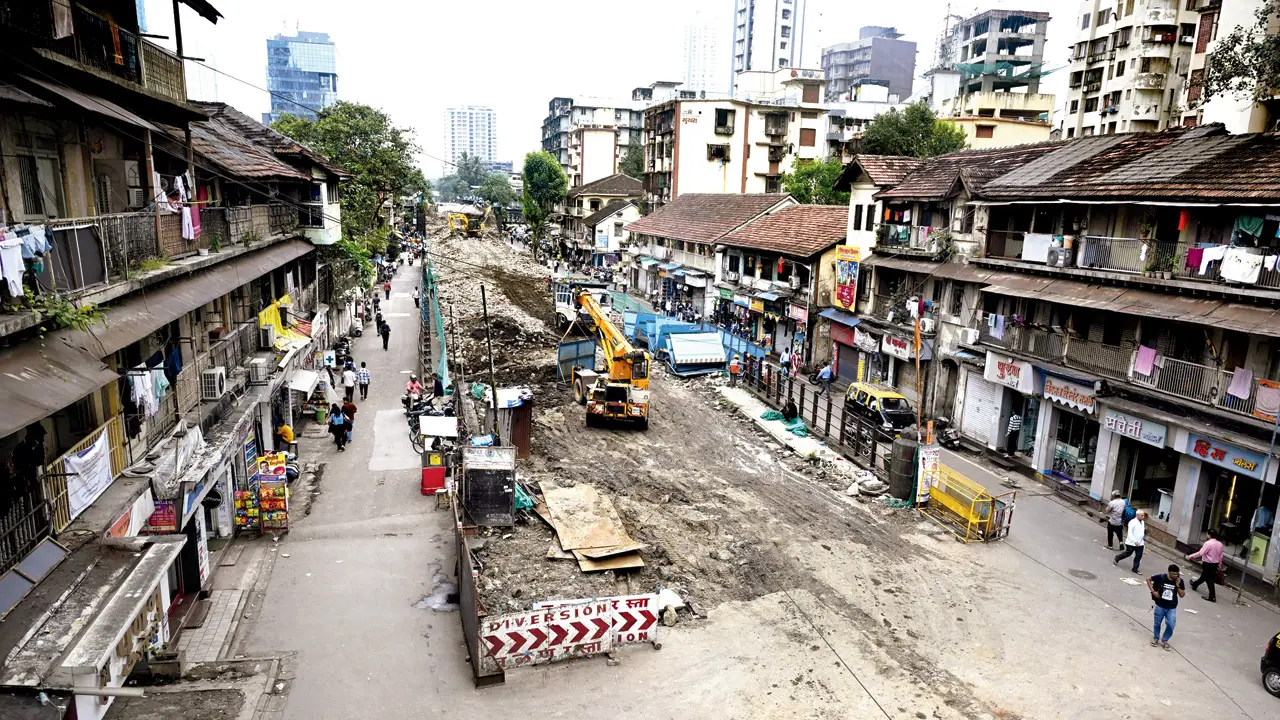
After more than a century of service, Mumbai’s 112-year-old Elphinstone Bridge — the historic iron link between Parel and Prabhadevi — will be dismantled this November to pave the way for a new double-deck connector. Officials from the Maharashtra Rail Infrastructure Development Corporation (MRIDC) confirmed that clearances from both Central and Western Railways have been secured, marking the beginning of a major urban renewal project aimed at easing traffic congestion and improving east-west connectivity.
The Elphinstone Bridge, first completed in 1913 under the Great Indian Peninsula Railway, was once a proud marker of early industrial-era engineering in Mumbai. For generations, it served as a critical passage for pedestrians and vehicles traversing the dense railway corridor that divides central Mumbai’s neighbourhoods. But years of heavy vehicular load, exposure to the elements, and limited capacity have rendered the bridge structurally obsolete. According to MRIDC officials, the dismantling will be executed in carefully planned stages during rail blocks — short windows where train traffic is halted to allow cranes to remove large steel girders safely. The remaining 132-metre steel span will be brought down systematically to ensure minimal disruption to the city’s suburban rail network. The authority is also negotiating the final clearances and land-use charges with Western Railway to complete the removal from the western side.
The bridge’s removal is part of a broader mobility plan that envisions a modern double-deck overbridge by 2027. The new structure will have two levels, each with four lanes, providing a seamless link between the city’s key road corridors — the Western suburbs, the Coastal Road, the Atal Setu, and the Eastern Expressway. Once operational, it is expected to decongest critical arterial routes and cut travel times significantly across the central districts. Residents and local commuters have expressed mixed emotions — nostalgia for a landmark that has defined the cityscape for decades, tempered with hope for better infrastructure. Long-time residents recall the bridge as a vantage point from which generations watched trains thunder beneath, even as the structure became a bottleneck in the era of rapid urban growth.
Urban planners note that the project reflects Mumbai’s ongoing challenge — to balance heritage with modernity. Replacing ageing infrastructure with new mobility corridors, while ensuring safety and sustainability, remains a core task in transforming Mumbai into a resilient, connected metropolis. As the city prepares for the November demolition, the focus now shifts to ensuring that the construction of the new connector follows swiftly and adheres to environmental and safety standards. For many citizens, the dismantling of the Elphinstone Bridge is both the end of a historic chapter and the beginning of a modern era in Mumbai’s urban evolution.
Also Read: MMRDA Cancels Metro 9 Depot Project At Uttan Dongri To Protect Ecology
