


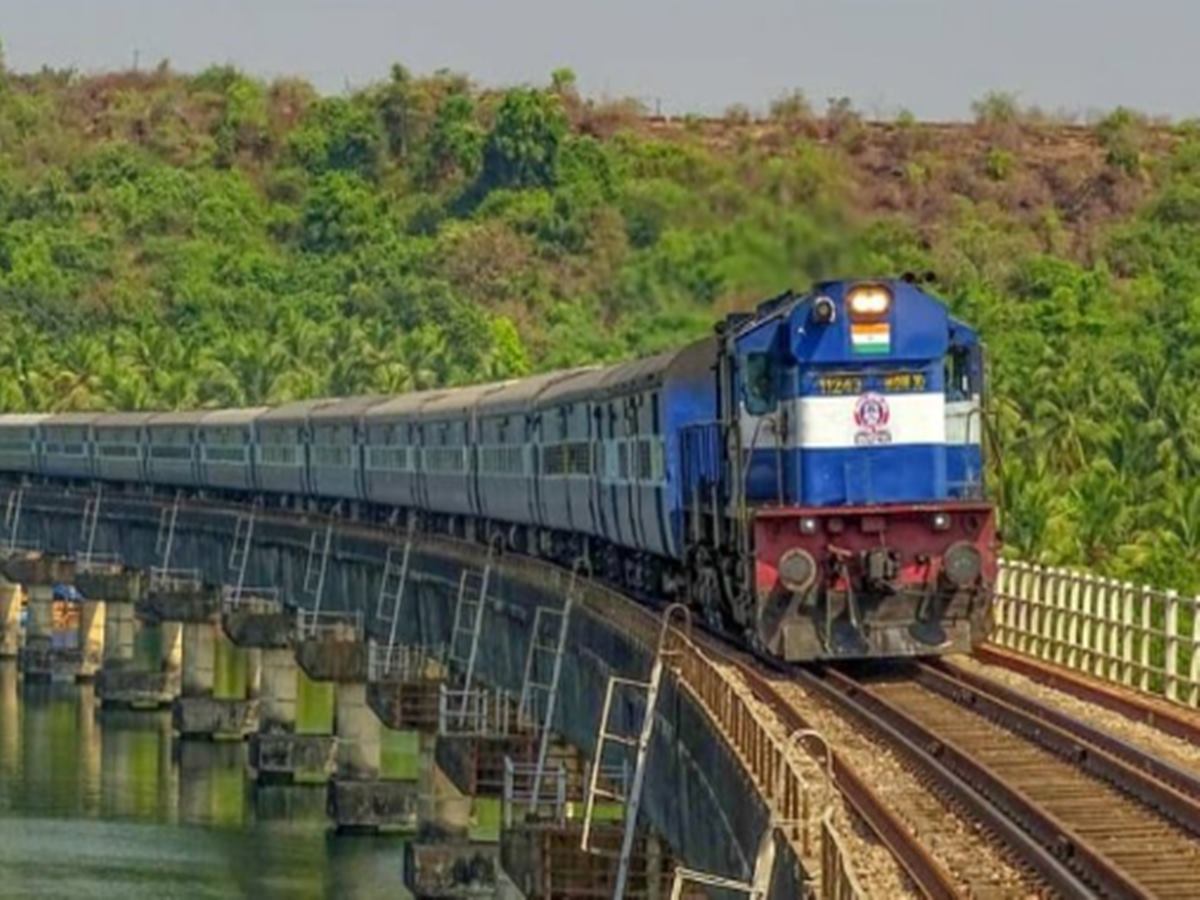
Mumbai is set to witness one of its largest festive travel operations as Indian Railways rolls out 380 Ganpati special trains ahead of Ganesh Chaturthi 2025. With the festival scheduled from 27 August to 6 September, the additional services are aimed at easing the massive rush of devotees travelling to Mumbai, Pune, Ratnagiri and the Konkan belt to seek blessings of Lord Ganesha.
This year’s deployment marks a new high, surpassing the 358 trains operated in 2024 and 305 in 2023. Officials said that the move reflects both the rising demand for safe, affordable mobility during the season and the growing emphasis on shifting bulk travel from road to rail to reduce congestion and emissions.Central Railway will shoulder the heaviest load, operating 296 trains to meet the extraordinary surge in passengers across Maharashtra and the Konkan coast. Western Railway will contribute 56 services, while South Western Railway and Konkan Railway will together run 28 trains. The extensive schedule includes daily, weekly and MEMU specials, connecting urban centres like Mumbai and Pune with towns such as Sawantwadi, Ratnagiri, Madgaon, Chiplun, Sindhudurg and Karwar.
Also Watch: An Exclusive Interview with Sanjeev Jaiswal (IAS), CEO MHADA
Railway planners have mapped halts strategically along the Konkan Railway stretch, covering smaller towns like Kolad, Khed, Sangameshwar Road, Vaibhavwadi, Kankavali and Udupi. Transport experts note that this network not only ensures accessibility for smaller communities but also cuts dependence on private vehicles and long-haul buses, both of which carry a higher carbon footprint.The scale of services also signals the transformation of Indian Railways into a greener backbone of festival mobility. Railway officials emphasised that enhanced scheduling and load balancing will lower per capita energy use while ensuring punctuality and affordability. In a city like Mumbai, where urban emissions spike during festival periods due to road congestion, the shift to railways underpins the wider sustainability agenda.
The festival trains began operations as early as 11 August and will scale up progressively until the peak travel window. Analysts underline that these early starts provide staggered travel opportunities, preventing overcrowding and making the system more inclusive for senior citizens, women travellers and differently abled devotees.Ganesh Chaturthi, which has long been a defining cultural moment in Maharashtra, is also evolving into a barometer of how India balances tradition with modern mobility solutions. The record deployment of trains reflects both cultural respect and logistical foresight. As thousands embark on journeys across the Konkan, the emphasis on efficient public transport brings the festival a step closer to being both joyous and sustainable.
