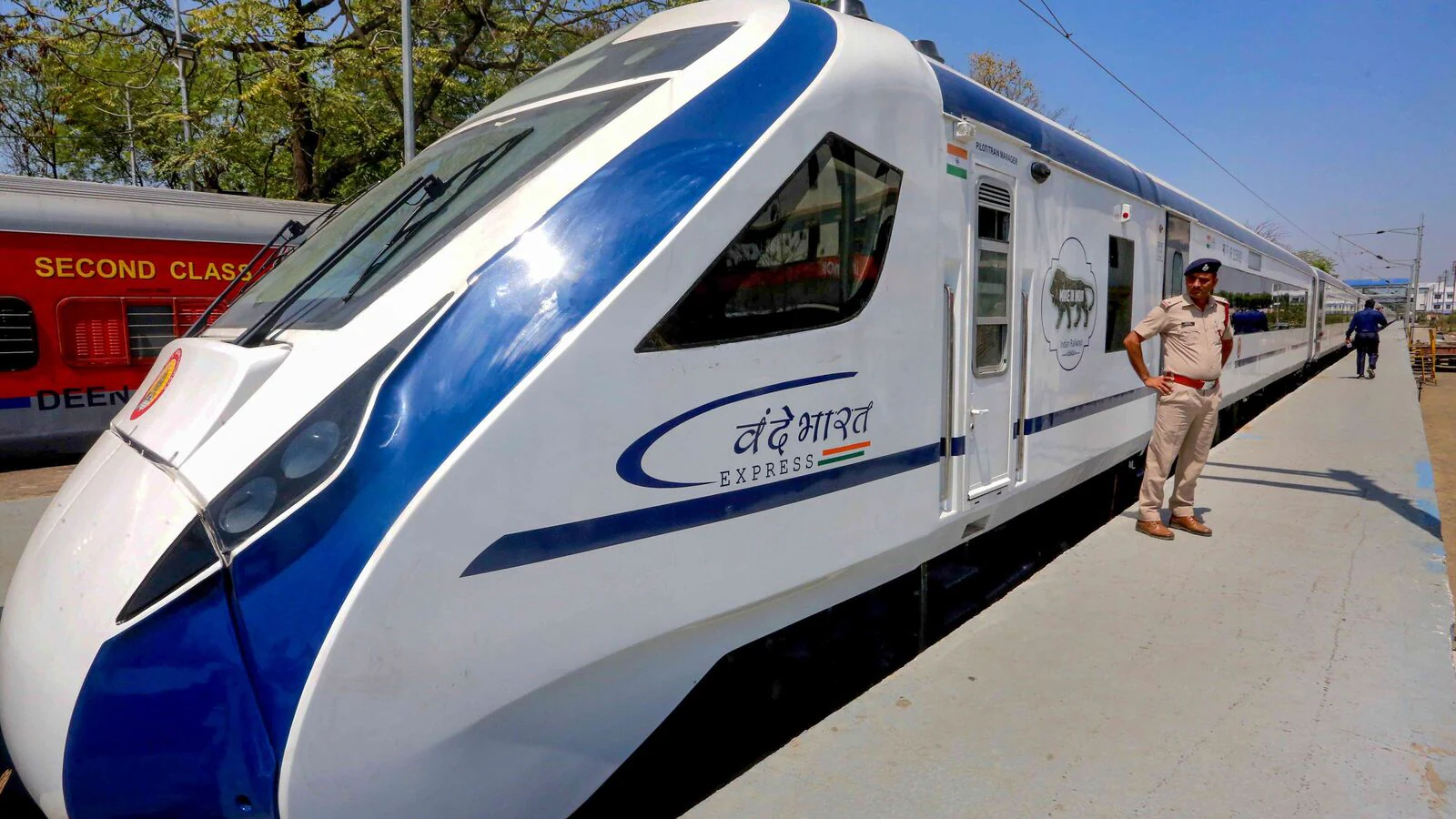
Mumbai to Get First Vande Bharat Depot at Ram Mandir
Mumbai’s transformation into a high-speed rail hub has taken a decisive leap forward with the Western Railway earmarking a long-neglected stretch of land near Ram Mandir station for the city’s first dedicated Vande Bharat depot.
This critical infrastructure project, set between Jogeshwari and Ram Mandir stations, is designed to support the maintenance, stabling, and eventual expansion of India’s fastest-growing fleet of semi-high-speed trains. The six-acre site, currently an eyesore littered with derelict rail coaches, overgrown shrubs, and construction debris, will soon be revitalised into a modern rail facility capable of housing up to 50 Vande Bharat and Vande Bharat Sleeper trains. Officials confirm that initial civil groundwork is imminent, setting in motion a plan that aligns seamlessly with the city’s goal of greener, faster, and more sustainable public transport. The site’s selection is no coincidence.
Located adjacent to the Western Express Highway and directly linked to the soon-to-be operational Jogeshwari Terminus, the location offers strategic advantages in connectivity, logistics, and future scalability. This makes it a linchpin in Indian Railways’ broader strategy to phase out conventional premium trains in favour of electric, faster, and more efficient Vande Bharat models. Western Railway officials said that the depot is being designed to initially service five to ten trains, with infrastructure capable of scaling operations as demand rises. With track upgrades allowing for 160 kmph speeds between Mumbai and Ahmedabad by August, this facility is positioned to become central to rail operations in the region.
The upcoming Jogeshwari Terminus, a ₹77 crore greenfield project, will complement the depot by easing pressure off congested nodes like Dadar, Bandra, and Mumbai Central. With three platforms capable of handling 24-coach trains and integrated parking for last-mile connectivity, the terminus aims to accommodate at least 24 long-distance trains daily, many of which could eventually be Vande Bharat variants.
Beyond speed and capacity, the underlying narrative is one of urban transformation. This project reclaims and repurposes neglected infrastructure for future-ready transit, supporting India’s climate commitments and reducing dependency on short-haul flights. If successful, overnight routes like Mumbai to Delhi or Indore could become viable rail alternatives to aviation, combining comfort with sustainability. Central Railway, not far behind, has shortlisted Wadi Bunder near Chhatrapati Shivaji Maharaj Terminus (CSMT) for a similar Vande Bharat facility, underlining a pan-Mumbai vision for smart, high-speed, and integrated rail solutions.
However, challenges remain. Progress on the sixth line between Kandivali and Borivali, crucial for decongesting suburban tracks and boosting intercity train throughput, has faced setbacks due to encroachments and utility relocation. Officials now expect its completion by December, while expansion on the Virar–Dahanu corridor and development at Palghar into a future logistics hub is also underway. This new depot doesn’t merely serve the trains; it symbolises a shift in how India’s financial capital is preparing for the mobility demands of tomorrow. By turning forgotten railway land into a gateway for cleaner and faster travel, Mumbai is laying track for a more equitable and sustainable urban future.