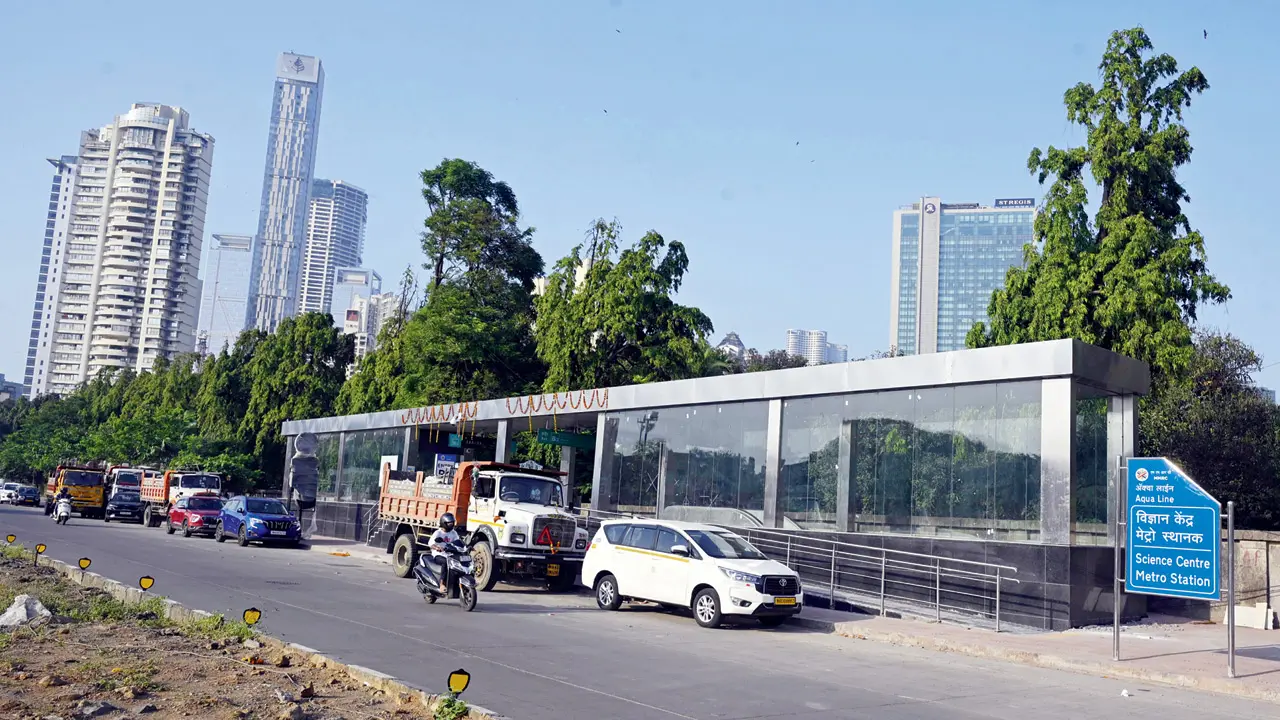
Mumbai is exploring an expansion of its pedestrian infrastructure with plans to develop an underground walkway network connecting key Metro stations to commercial and public destinations across Bandra Kurla Complex (BKC) and Worli. The initiative, linked to the operationalisation of the Metro Line 3 corridor, is aimed at improving last-mile connectivity while reducing surface congestion in some of the city’s busiest business districts.
Authorities are evaluating nearly three kilometres of underground pedestrian corridors that would extend from stations such as BKC and Science Centre, linking commuters directly to office complexes, cultural institutions, and the Worli seafront. The proposed network is expected to function as an integrated access system, allowing seamless movement between transit nodes and surrounding urban spaces. Urban mobility experts view the project as a critical step in strengthening public transport usage. One of the persistent challenges in Mumbai’s transit ecosystem has been the disconnect between stations and final destinations, often forcing commuters onto crowded roads or informal pathways. By creating sheltered, direct routes, the underground walkway network could significantly improve commuter experience and encourage a modal shift away from private vehicles.
The concept also aligns with global models where pedestrian infrastructure is treated as an extension of transit systems rather than an afterthought. Cities such as Tokyo have demonstrated how extensive underground networks can support not just mobility but also economic activity, with integrated retail, services, and public amenities. Replicating elements of this approach in Mumbai could open up new revenue streams while optimising the use of high-value urban land. From a real estate perspective, improved pedestrian access tends to enhance the attractiveness of commercial districts. Direct connectivity to transit hubs can increase footfall, support higher occupancy rates, and drive demand for mixed-use developments. In business zones like BKC, where land availability is constrained, such infrastructure can play a pivotal role in sustaining growth without adding pressure on road networks.
However, the success of the initiative will depend on design quality and inclusivity. Experts emphasise that underground spaces must be well-lit, ventilated, universally accessible, and secure to ensure they are widely used. Integrating features such as retail kiosks, wayfinding systems, and climate-controlled environments could further enhance usability, particularly in Mumbai’s extreme weather conditions. The project also carries sustainability implications. By promoting walking and reducing dependency on short vehicle trips, the walkway network could contribute to lower emissions and improved urban air quality. It aligns with broader efforts to build compact, transit-oriented districts that prioritise people over vehicles.
As planning progresses, authorities are expected to focus on detailed design, stakeholder consultations, and execution timelines. If implemented effectively, the underground walkway network could redefine how commuters navigate Mumbai’s dense commercial hubs, setting a precedent for pedestrian-first infrastructure in the city’s future development.
Mumbai To Develop Tokyo Style Walkways Connecting Key Metro Areas