


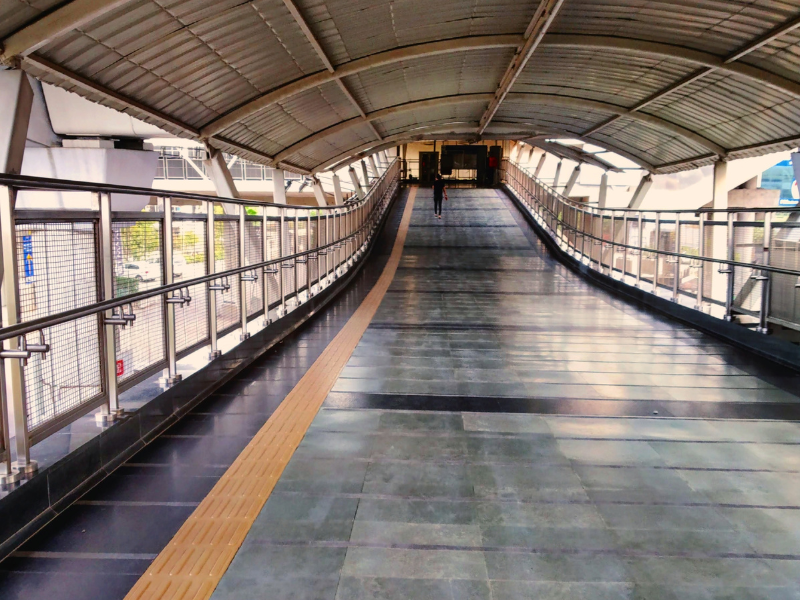
As Mumbai’s Metro Line 3, the city’s first fully underground metro corridor, nears its complete launch in August, city planners are envisioning a future that goes beyond just underground transportation. The aim is to create an integrated, seamless network that allows commuters to easily transition from metro stations to major commercial hubs, residential areas, parks, and even the coastline through a system of pedestrian subways.
On Monday evening, top officials from various civic bodies, including the Brihanmumbai Municipal Corporation (BMC), the Mumbai Metro Rail Corporation Limited (MMRCL), MMRDA, and the Indian Railways, met to discuss the development of pedestrian infrastructure in and around Metro stations. The focus of the discussions was on creating a citywide network of subways that will improve last-mile connectivity for metro users, linking stations to the surrounding commercial, residential, and leisure zones. Metro Line 3, also known as the Aqua Line, spans 33.5km and connects key commercial and transport hubs across the city, from Aarey in the north to Cuffe Parade in the south. The corridor will include 27 stations, passing through prominent areas like Mumbai Central, Mahalaxmi, Churchgate, CSMT, and BKC. Currently operational from Aarey to Acharya Atre Chowk in Worli, the line already sees nearly 60,000 daily passengers. With the full corridor opening in August, planners are now shifting their focus to connecting metro stations to surrounding neighbourhoods in a way that promotes walking and reduces surface-level congestion.
One of the first subway projects in this vision is a 1km pedestrian tunnel planned to link the underground Acharya Atre Chowk Metro station to the Mahalaxmi Racecourse and the Coastal Road’s parking facility near Haji Ali. This 160-metre branch arm will also connect to open spaces in the vicinity. Officials from BMC and MMRCL have been collaborating on the alignment of this subway since June, with a detailed project report (DPR) expected to be ready in the next four months. The idea is to ensure that high-density areas, such as malls, corporate parks, and office hubs, are seamlessly connected to Metro stations within a 500-metre to 1km radius. The subways will be equipped with escalators and elevators, ensuring accessibility for all, including the elderly and differently-abled. This vision, if implemented on a citywide scale, could transform Mumbai into a more connected, pedestrian-friendly metropolis.
City officials believe that pedestrian subways are key to reducing traffic congestion on the surface and creating safer, more efficient walking routes for commuters. The pedestrian tunnels will not only improve convenience for everyday commuters but also enhance the city’s sustainability by encouraging people to walk more, thereby reducing reliance on personal vehicles. These subways will be designed to integrate with Mumbai’s expanding underground transit system, ensuring smooth transitions between modes of transport. In doing so, they will contribute to a more sustainable urban ecosystem, aligning with the city’s broader goals of reducing carbon emissions and improving overall quality of life for its residents.
If successful, this initiative will redefine the way Mumbai moves, offering a glimpse into a future where people can effortlessly navigate the city from one destination to the next, with greater ease and less environmental impact.
Also Read : Mumbai Increases Fine to Rs 15000 Per Hole for Road Digging
Mumbai To Build Pedestrian Subways Linking Metro Stations
