


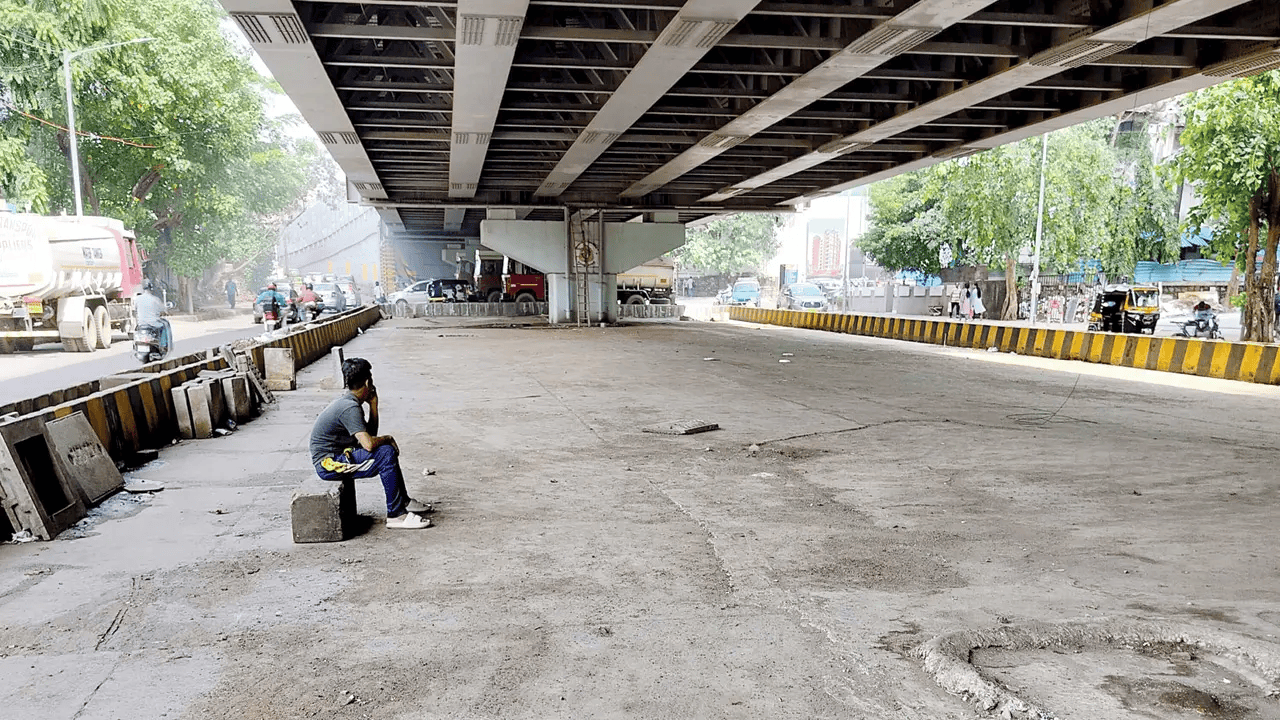
Mumbai’s Teli Gali flyover in Andheri has undergone a long-awaited transformation, as civic authorities swiftly cleared dozens of abandoned vehicles from beneath the structure. The cleanup, carried out within 48 hours, follows mounting public concern over both the safety hazards and environmental impact of the decaying cars parked haphazardly under the flyover for years.
While local residents had long flagged the eyesore created by the “khatara” or scrap vehicles, the tipping point came with renewed awareness about the fire risks posed by residual fuel left inside many of the abandoned cars. In a high-density urban setting like Andheri, the threat of a potential fire incident has underscored the urgency of such neglected spaces being repurposed for safer and more inclusive use. After on-site inspections by civic, traffic and transport officials, a joint directive was executed for the removal of the vehicles, leading to a thorough cleanup of the previously misused space. The move has garnered widespread appreciation from citizen groups and local residents alike, not only for its swiftness but for what it symbolises—a shift towards proactive governance and sustainable urban management.
Local communities are now looking beyond the cleanup to what comes next. The newly vacated space under the flyover has sparked hopes of a more functional transformation. Proposals are being considered to convert the area into a green pocket with an open-air gym and community garden—elements that align with the city’s growing need for inclusive public infrastructure in underutilised spaces. Several citizens’ collectives and NGOs have welcomed the development initiative, seeing it as an opportunity to reclaim lost space for the public. Members of local housing societies have already expressed interest in contributing design proposals, while others are pushing for native tree plantations to offset the area’s urban heat.
Residents from nearby areas, particularly senior citizens and working professionals, have called for the establishment of a well-lit, walkable recreational space. “The idea of an open gym and garden will not just deter future misuse, but also add life to an otherwise neglected under-flyover zone,” said a local civic group member. Such repurposing aligns with global urban best practices where cities are converting dead zones under flyovers into vibrant community spaces to improve urban livability. From a planning and policy standpoint, the case of Teli Gali marks a significant example of what timely intervention, supported by political will and citizen involvement, can achieve. It also brings into focus the urgent need to identify and map similar under-flyover spaces across Mumbai, many of which remain encroached upon or left in a state of urban decay.
While the long-term plans for the space are still under review, the momentum for redevelopment appears strong. Initial talks between citizen associations and city authorities indicate a willingness to co-create, marking a step towards participatory urban planning. As Mumbai continues to grow vertically and sprawl horizontally, creative reimagination of public land—especially in densely packed suburbs like Andheri—will be crucial for sustainable, inclusive urbanisation. In a city often overwhelmed by unplanned growth and bureaucratic delay, the swift action at Teli Gali offers a moment of optimism. Whether this transformation becomes a precedent for other neighbourhoods will depend on how quickly ideas turn into action—and how consistently authorities and citizens collaborate to ensure spaces serve the people, not hazards.
Also Read :Madurai to Get ₹1.17 Cr Road Upgrade in Two Wards
