


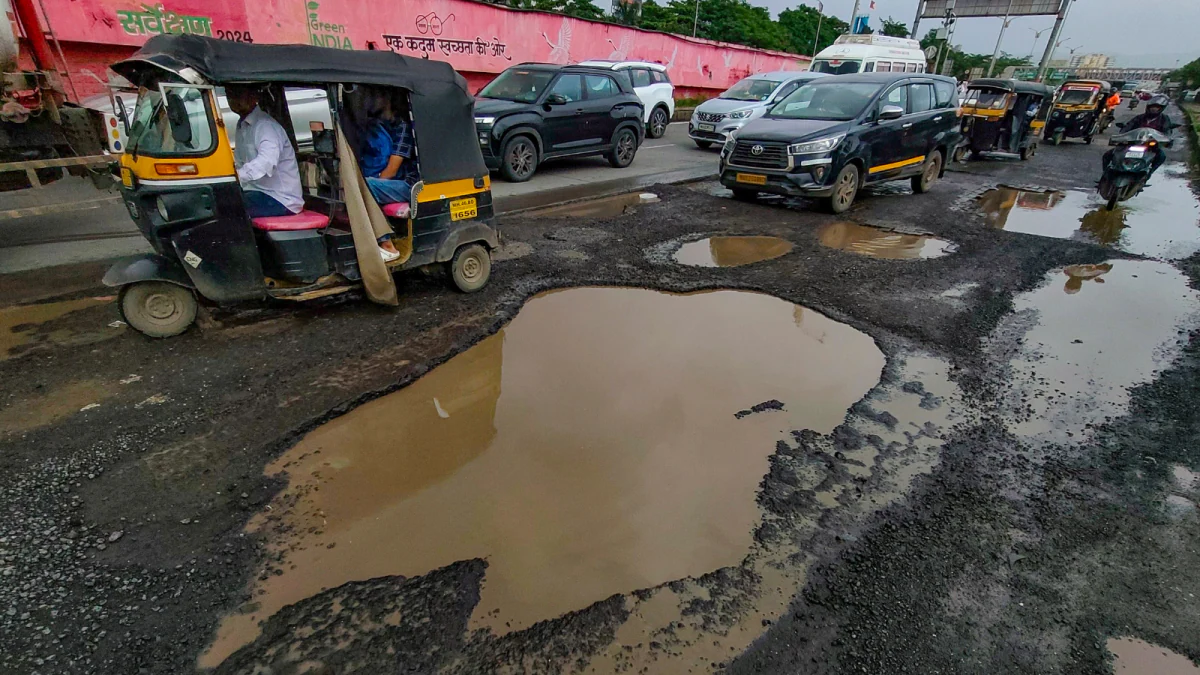
As the monsoon continues to lash the city, Mumbai’s fragile road infrastructure is once again under scrutiny. More than 7,100 pothole complaints have been registered since the start of the rainy season, with suburban areas bearing the brunt. Despite promises of pre-monsoon preparedness, data from the civic administration’s pothole tracking system reveals a worrying uptick in public grievances.
According to officials from the Brihanmumbai Municipal Corporation (BMC), the highest number of complaints have emerged from the eastern suburbs. Bhandup alone has recorded a staggering 1,555 complaints, followed by Ghatkopar with 874, Andheri East with 658, Malad with 645, and Mulund with 635. The data was sourced from the BMC’s integrated complaint redressal platforms, including the Fixit mobile app and online portal. The civic body claims that its roads department is working round the clock to address the issues, but the relentless rain has hampered repair work and turned several stretches into dangerous patches. Local residents, particularly in densely populated suburbs, say they are not only facing disruptions to daily commutes but also risking accidents due to water-filled craters.
Transport and civic experts argue that this recurring issue reflects deeper structural problems in Mumbai’s road management system. Inconsistent quality of roadworks, poor drainage planning, and lack of accountability in maintenance contracts are some of the key challenges flagged over the years. Experts suggest that merely reactive repairs during monsoon seasons cannot replace long-term solutions rooted in sustainable urban design. The financial and ecological cost of short-term patchwork repairs also raises serious concerns. Frequent use of bitumen and other carbon-heavy materials for repeated fixes adds to the city’s emissions load, while doing little to address core infrastructural decay. Calls for green alternatives—such as use of eco-friendly road materials and water-sensitive urban planning—have largely remained confined to policy papers.
Public pressure is mounting, with citizen groups and transport safety activists demanding better transparency on road audits and performance of contractors. A civic official acknowledged the spike in complaints and attributed it partly to increased public engagement through digital platforms. However, they maintained that the volume of rain and legacy road conditions continue to challenge the city’s repair capabilities. In a city that aspires to be a global financial hub and a model of sustainability, poor road conditions during monsoons are not just a civic inconvenience—they are a fundamental governance and planning failure. If Mumbai is to evolve into a resilient, inclusive and net-zero city, robust and sustainable road infrastructure must become a civic priority, not just a seasonal concern.
As the rains show no signs of abating, suburban residents brace themselves for another bumpy ride through what has become an annual monsoon ordeal.
Also Read : Jabalpur – Mumbai Indigo Flight Delayed Four Hours Due To Flat Tyre
