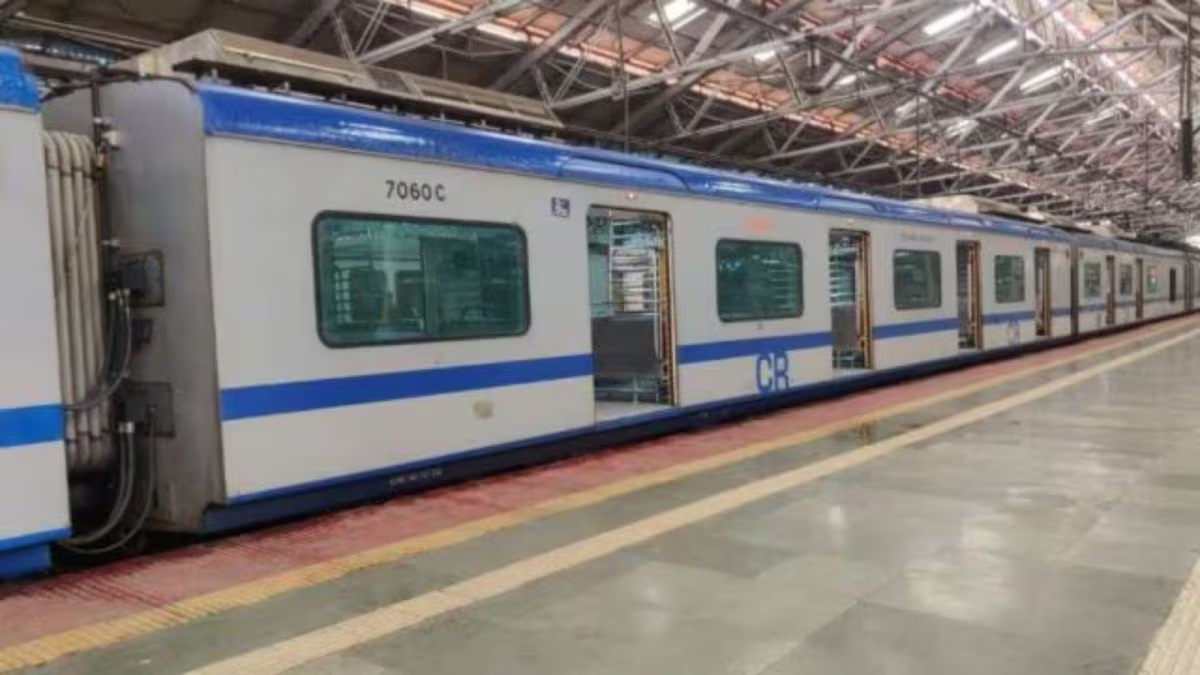
Mumbai’s centuries‑old suburban railway,the city’s primary public mobility backbone has taken a significant step towards modernising commuter rail services by launching 26 new air‑conditioned (AC) local train services, deployed across both Central Railway (CR) and Western Railway (WR) corridors from Republic Day 2026. This expansion marks one of the largest additions of AC services at a time when climate resilience, commuter comfort and capacity constraints are intensifying across the Mumbai Metropolitan Region.
Urban mobility experts characterise the move as a strategic response to heat‑wave stress and overcrowding during peak hours, particularly in the leadup to summer months. By reallocating rolling stock and deploying additional AC Electric Multiple Unit (EMU) services, the railways aim to balance thermal comfort with operational efficiency on routes that together serve millions daily. Of the 26 new AC services, 14 operate on CR’s Harbour Line — linking central Mumbai to its rapidly growing peripheral hub of Panvel — while 12 services have been introduced on key Western Railway suburban sections. These AC trains replace select non‑air‑conditioned services rather than increasing the total number of trains on the network, ensuring continuity in scheduling while layering in enhanced comfort options for commuters.
For daily travellers, the expansion addresses both physical strain and health considerations. AC services are particularly sought after for journeys lasting more than 45 minutes, where non‑AC compartments can become stifling in heat and humidity. “Climate‑adaptive transport options like AC EMUs may help reduce heat exposure and commuter stress,” says a senior urban planner familiar with metropolitan railway operations, referring to the broader climate resilience context in transit design. Improved thermal comfort can especially benefit vulnerable groups, including older commuters and gender‑diverse passengers for whom extreme heat remains a deterrent to regular ridership.Economists highlight that service enhancements on critical transport corridors can also influence residential and commercial real‑estate demand. Upgraded comfort and predictability on suburban lines often shift residential preferences towards well‑served nodes such as Kurla, Dadar, Thane and Panvel, where accessibility improvements are already driving property interest. “Incremental upgrades like AC trains tend to support sustainable urban growth, aligning commuter quality of life with market development patterns,” notes an infrastructure economist.
However, commuter response has been mixed. Early social media feedback suggests passengers appreciate the comfort but urge higher frequency and broader coverage to ensure these services meaningfully reduce crowding during rush hours. Urban mobility analysts argue that comfort gains must be paired with expanded scheduling and capacity enhancements — such as platform extensions to support 15‑coach formations — to fully meet the megacity’s exponential travel demand.
Looking ahead, experts urge transport authorities to integrate these AC services into a broader suburban rail modernisation strategy that includes infrastructure for electric rolling stock, climate‑resilient station design and data‑driven schedule optimisation. As Mumbai’s population continues to grow, the success of these AC services will hinge not just on comfort, but on whether they can reliably improve accessibility and efficiency across one of the world’s most intensively used commuter networks.