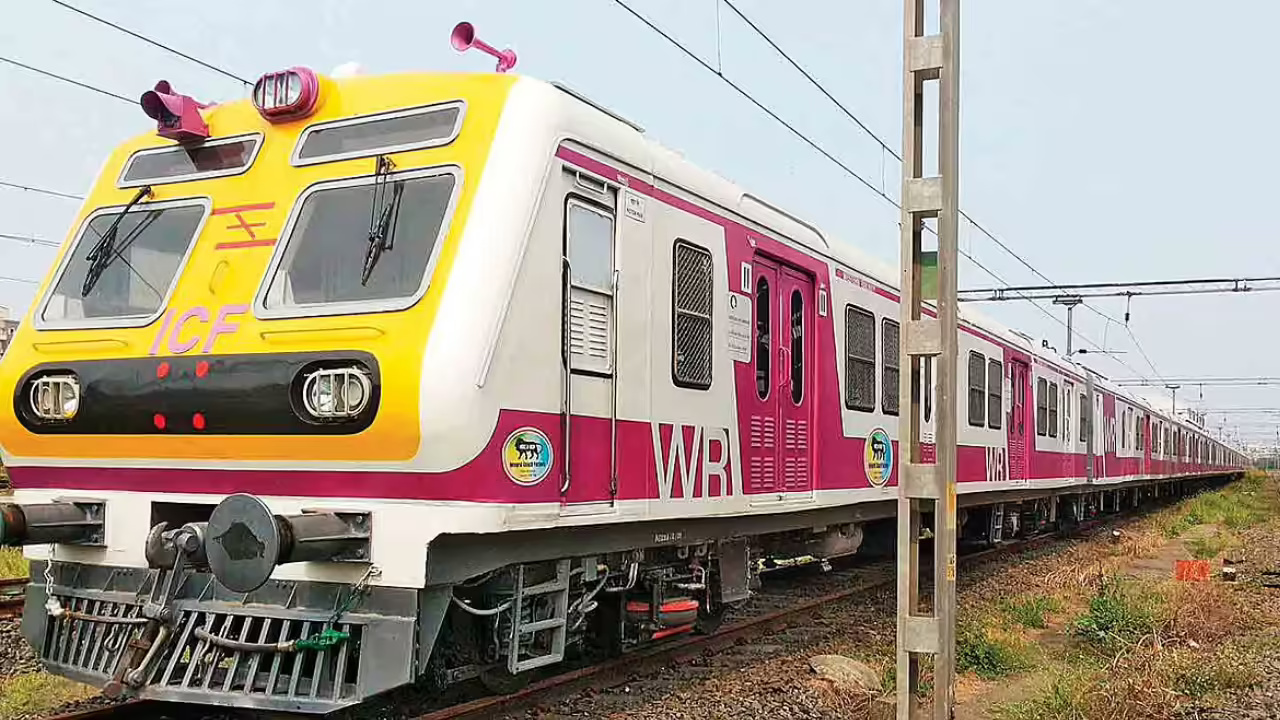
Mumbai’s busiest suburban rail stretch is undergoing a critical safety transformation as work progresses on an advanced automatic train protection system along the Virar–Churchgate corridor. The 60-kilometre route, which carries millions of daily commuters across the western suburbs, has reached the halfway mark in the deployment of the KAVACH safety framework, with full commissioning targeted later this year.
Railway officials tracking the project confirm that physical execution has crossed 50 per cent, placing the corridor among the most advanced suburban sections adopting indigenous train protection technology. The upgrade is part of a broader shift towards automation-led risk reduction in India’s high-density rail networks, where human dependency and operational intensity have historically amplified safety challenges. KAVACH functions as an independent safety layer that continuously monitors train movement parameters, including speed, signal compliance and authorised track occupancy. If operational thresholds are breached, the system intervenes automatically by initiating braking, thereby reducing the likelihood of collisions or signal overruns. Unlike conventional signalling, which governs traffic flow, this technology focuses exclusively on enforcing safety limits.
Officials overseeing implementation indicate that preparatory groundwork across the corridor is largely complete. Communication tower locations have been finalised, with most structural foundations in place and erection activity progressing steadily. Station-level installations have begun across multiple nodes, while fibre-optic cabling — essential for real-time data transmission — has advanced well beyond the halfway stage. Precision mapping and identification components, including sensor-based route profiling and train recognition systems, are also being rolled out in phases. Trial runs involving locomotives have already been completed on select sections, allowing engineers to calibrate system responses under live suburban operating conditions. These trials are considered crucial for adapting the technology to Mumbai’s tightly scheduled, high-frequency rail environment.
Urban transport planners view the project as more than a safety upgrade. By reducing reliance on manual intervention during critical moments, KAVACH is expected to stabilise operations, minimise cascading delays and enable more predictable service during peak hours. This is particularly significant for Mumbai, where suburban rail remains the backbone of low-carbon daily mobility for the city’s workforce. From a sustainability perspective, improving rail safety and reliability supports long-term modal shift away from private vehicles, easing congestion and emissions. Infrastructure experts note that incremental technology upgrades on existing corridors often deliver higher climate and economic returns than capacity expansion alone, especially in land-constrained megacities.
The project also reflects a growing emphasis on domestically developed rail technologies, aligning operational resilience with local manufacturing and technical expertise. Officials maintain that the system complements, rather than replaces, existing signalling assets, allowing cities to enhance safety without disrupting established networks. With completion expected by September, attention will soon turn to system integration and staff familiarisation. For Mumbai’s commuters, the upgrade signals a quieter but consequential improvement — one that strengthens trust in everyday public transport while laying foundations for safer, more resilient urban mobility.
Mumbai Suburban Line Sees Major Rail Safety Upgrade