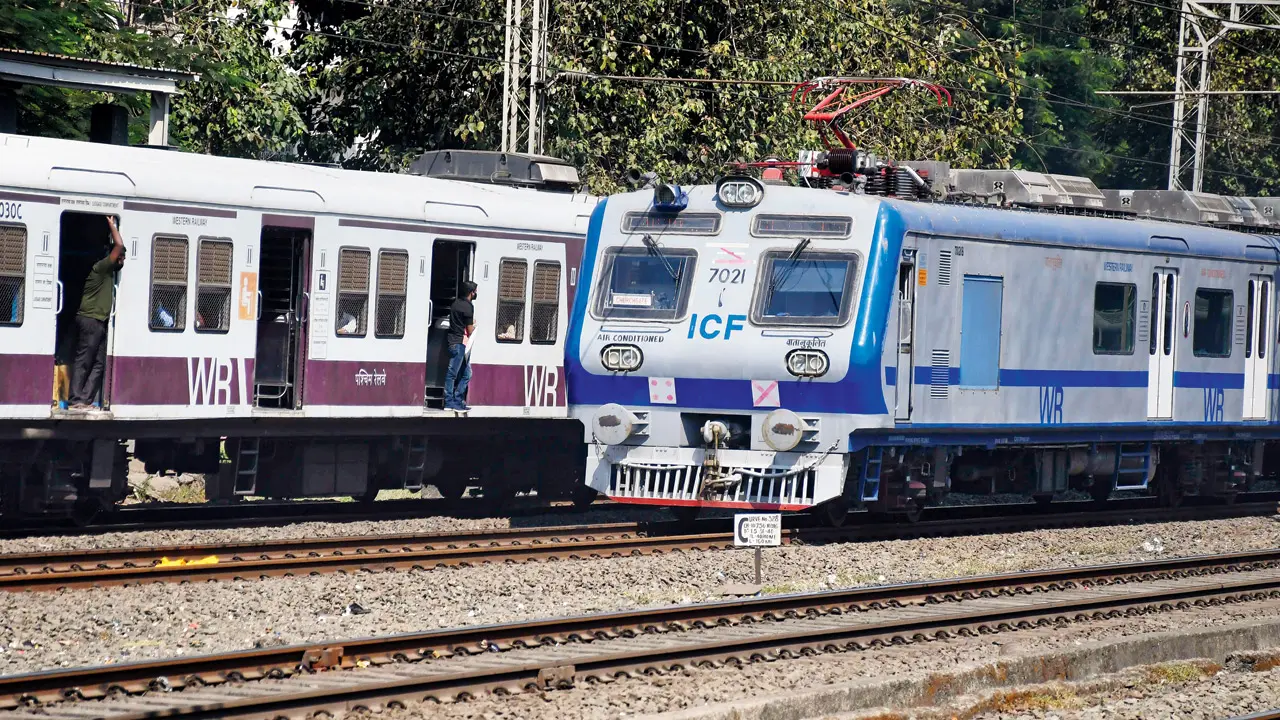
Mumbai’s suburban railway network is poised to take a major step in capacity enhancement as the Western Railway prepares to conduct trials for 18-car electric multiple unit (EMU) trains on the Virar-Dahanu Road corridor in mid-January. The trials, set for January 14–15, will evaluate braking efficiency and structural integrity, signalling a potential expansion in commuter capacity along one of the city’s busiest suburban routes.
The tests will focus on two types of 18-car formations: Bombardier-class rakes capable of speeds up to 110 kmph and Medha Electricals rakes tested at 105 kmph. Officials explained that the trials will include Emergency Braking Distance (EBD) and coupler force assessments, both critical safety measures required before regular passenger operations. EBD tests measure the stopping distance under emergency conditions, while coupler force evaluations monitor the longitudinal stress between coaches, which is particularly important for longer, heavier train formations. Industry experts and urban transport planners note that expanding to 18-car trains addresses chronic overcrowding during peak hours and supports more efficient mass transit in a city where suburban rail carries millions daily. The Virar-Dahanu corridor was chosen for trials due to its relatively uncongested track conditions, which allow sustained higher-speed runs necessary for precise performance measurement.
Railway authorities emphasise that these trials will provide key operational insights, including the comparative performance of different rolling stock technologies in India’s suburban context. By running parallel evaluations of Bombardier and Medha rakes, the tests will inform future fleet planning, maintenance protocols, and energy efficiency strategies, contributing to long-term urban transport sustainability. The potential introduction of 18-car locals could also have wider economic and social implications. Analysts suggest that increasing train lengths without adding more services can improve commuter experience, reduce overcrowding, and optimise energy use per passenger, aligning with broader goals of low-carbon urban mobility. Longer rakes also support inclusive urban planning by accommodating diverse commuter groups, including women, senior citizens, and differently-abled passengers, without compromising safety or comfort.
Urban transport authorities indicate that successful trials would pave the way for regulatory clearance, operational deployment, and eventual network expansion across other high-demand Western Railway corridors. The move is seen as part of a wider strategy to modernise Mumbai’s suburban rail, enhance service reliability, and integrate infrastructure with sustainable urban development goals. As Mumbai prepares for this next phase, the emphasis remains on ensuring that increased capacity does not compromise safety and efficiency. The outcome of these trials is expected to influence suburban railway operations for the next decade, potentially setting a benchmark for longer and faster commuter services in other metropolitan rail networks across India.
Mumbai Suburban Introduces 18 Car Services Soon