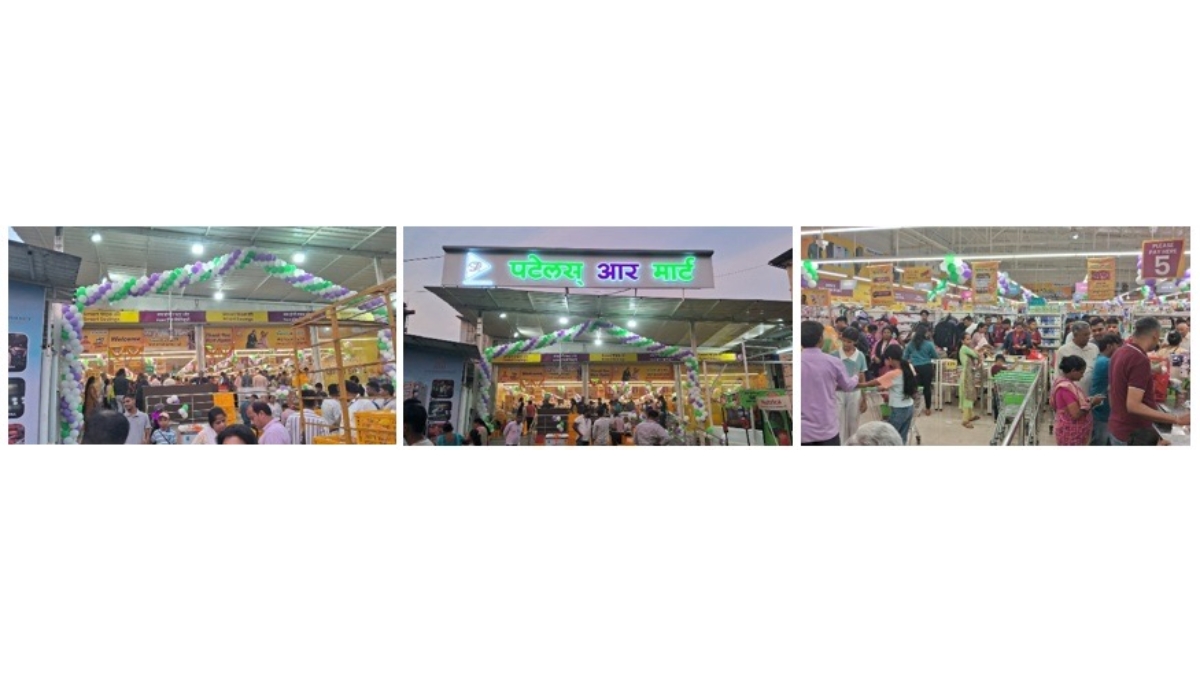
Patel Retail Limited has expanded its footprint in the Mumbai Metropolitan Region (MMR) with the opening of its latest outlet in Dombivli East, marking the company’s 48th store across the region. The launch reflects the company’s continued push to strengthen access to organised retail in fast-growing suburban clusters where population density and evolving consumption patterns are reshaping local commerce.
The new store, located near Nilje Station Road, adds another node to the company’s broader regional strategy of entering emerging residential catchments that are witnessing rapid housing development. Industry experts note that suburbs such as Dombivli, Kalyan, and Vasai-Virar have become strategic locations for retailers due to rising apartment-led growth, increasing working-class settlements, and improving rail connectivity. For households in these areas, expanded retail access often translates to better affordability, shorter travel times for daily necessities, and more predictable pricing. Executives associated with the expansion said the company’s steady scale-up is supported by a strong backend ecosystem, including integrated sourcing, in-house packaging, and controlled logistics. This level of backward integration not only reduces supply-side volatility but also supports cost efficiencies that can be passed on to consumers. Retail analysts add that such integration is becoming increasingly important for Indian retailers positioning themselves as value-driven players catering to middle- and lower-middle-income families.
The company’s leadership said the new store reaffirms its commitment to serving communities that have historically relied on fragmented neighbourhood markets. According to the leadership team, Dombivli’s growing residential clusters offer an opportunity to strengthen essential retail accessibility, particularly for families dependent on walkable or near-home shopping options. Urban planners observe that the spread of organised retail in suburban regions such as MMR can play a wider role in shaping sustainable consumption behaviour. When essential goods are available within short distances, residents are less dependent on long commutes or private transport for everyday shopping, helping reduce congestion and emissions. Moreover, modern retail outlets with standardised hygiene norms and structured employment practices contribute to more equitable economic participation by creating stable jobs and safer working environments.
However, they also emphasise the need for retailers to integrate resource-efficient operations—such as energy-optimised lighting, waste reduction measures, and local sourcing—as suburban markets expand. With urban peripheries absorbing much of MMR’s future population growth, strengthening sustainable retail ecosystems will be critical to reducing the environmental footprint of daily consumption. The new Patel Retail outlet in Dombivli East reinforces a broader trend of retail formalisation across MMR’s suburban belt. As the company continues to add stores, industry observers expect greater competition in the essential retail segment, potentially improving affordability and service levels for millions of residents. For rapidly urbanising communities, such expansion represents more than just additional shopping options—it contributes to the building blocks of accessible, inclusive, and resilient neighbourhoods.
Mumbai Suburb Sees Patel Retail Open Its 48th Store Strengthening MMR Presence