


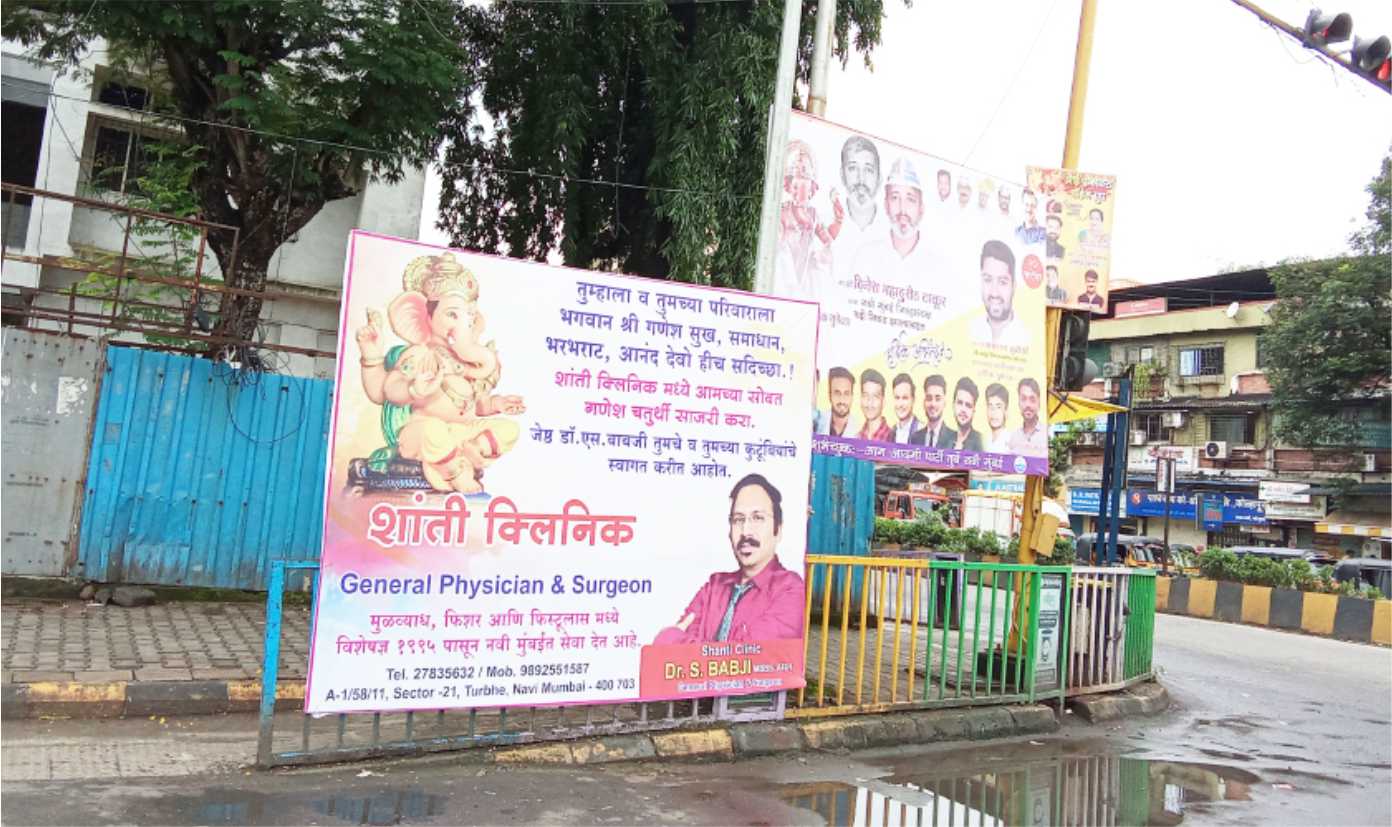
Ganeshotsav in Mumbai has once again exposed the city’s persistent struggle with unauthorised hoardings, banners and flexes that flood public spaces during the festive season. Despite repeated warnings from civic authorities, such hoardings continue to mushroom across busy junctions, footpaths and heritage precincts, raising concerns around public safety, urban aesthetics and governance accountability.
Citizens across neighbourhoods, from Colaba to Andheri and Ghatkopar to Juhu, have flagged widespread obstruction of footpaths, traffic visibility and even public monuments by these towering displays. Several pedestrian zones have been rendered nearly unwalkable, with makeshift structures forcing residents to manoeuvre dangerously around them. Complaints filed with the municipal corporation have often gone unanswered, fuelling anger among residents who see the proliferation of hoardings as both civic negligence and political opportunism. Officials from the city’s licensing department admit that political parties and private groups often install these structures overnight, making it difficult for the civic body to monitor in real time. While enforcement teams remove dozens of illegal banners daily, new ones emerge almost immediately, creating a cycle of defacement and removal. Notices issued under the Maharashtra Prevention of Defacement Act, 1995, threaten fines and penal action, but deterrence has been weak.
Urban experts argue that unchecked hoardings do more than mar Mumbai’s skyline. They compromise structural safety, particularly during monsoon winds, and divert public attention from traffic signals, posing direct risks to motorists and pedestrians. They also highlight a deeper urban governance issue: the inability of civic bodies to enforce existing laws equitably. This has long-term implications for Mumbai’s sustainability goals, as equitable and eco-friendly urban planning depends on disciplined use of public space. A few citizen associations have taken legal recourse, urging the courts to push the municipal corporation towards stronger enforcement. Their arguments point to lost civic revenues, as sanctioned hoardings generate advertising tax while illegal ones bypass regulatory frameworks altogether. Activists are calling for technology-driven solutions, including geo-tagging, AI-led surveillance of public spaces and a challan-style penalty system that directly fines the individuals or organisations whose faces or names appear on these banners.
Civic officials stress that citizen participation is essential. Without collective vigilance, illegal hoardings are likely to continue resurfacing. They argue that sustainable cities cannot rely solely on municipal sweeps but must integrate community-driven monitoring and stricter accountability for repeat offenders. The issue underscores a larger debate about Mumbai’s path towards becoming an equitable, gender-neutral and environmentally conscious metropolis. Public spaces, experts emphasise, should remain accessible and uncluttered, particularly during festivals that symbolise community spirit and inclusivity. Unless stricter enforcement and innovative deterrent mechanisms are put in place, Mumbai risks normalising a culture of impunity that undermines both the city’s visual fabric and the principles of sustainable urban living.
Also Read: Mumbai Braces For Heavy Rain As IMD Issues Yellow Alert
