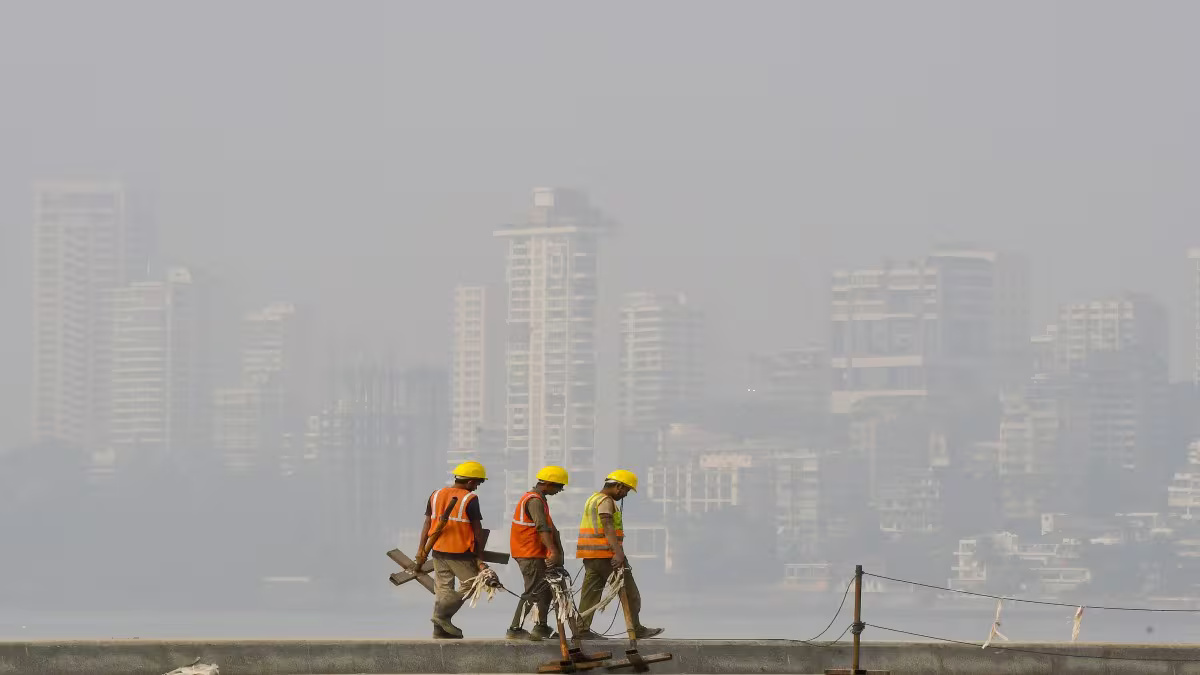
Mumbai woke up to a cooler morning on Thursday, with temperatures hovering just below 23°C. While the city initially experienced mild weather, residents soon found themselves navigating a thick blanket of smog, reducing visibility and causing irritation in eyes and throat. Commuters reported breathing discomfort, underscoring the persistence of the city’s air-quality challenges.
Meteorological data from the India Meteorological Department (IMD) indicated clear skies throughout the day, with afternoon temperatures expected to rise to around 33°C. However, light winds offered little relief, failing to disperse pollutants that have accumulated over the past weeks, highlighting the structural nature of Mumbai’s air pollution issues. The city’s overall Air Quality Index (AQI) touched 250 on Thursday, placing it in the ‘unhealthy’ category. This marks a notable increase from earlier in November when many neighbourhoods were recording moderate levels. Coastal regions, high-density residential areas, and industrial pockets were particularly affected, demonstrating that pollution has spread across Mumbai’s central, western, and eastern corridors.
Key pollution hotspots included Wadala Truck Terminal, recording a hazardous AQI of 348, followed by Mazgaon at 316 and Worli at 301. Suburban areas, while marginally better, still struggled to remain within safe limits. Deonar logged 280, Bandra-Kurla Complex 277, Powai 210, Kandivali East 223, and Borivali West 227, all in the poor-to-unhealthy range. The city’s lowest AQI reading was observed in Parel–Bhoiwada at 173, still above safe thresholds. Experts highlighted that Mumbai’s dense population, high vehicular emissions, and industrial activity contribute significantly to the citywide deterioration. “Air quality management requires integrated planning across transport, industrial zones, and urban development,” an environmental official said. Studies show that particulate matter, particularly PM2.5, remains a major health hazard in the region, aggravating respiratory conditions and increasing long-term health risks.
While authorities continue to monitor the situation, immediate mitigation measures such as restricting heavy vehicular traffic in sensitive zones and promoting green infrastructure are seen as essential. Urban planners stress that sustainable urban design, tree cover expansion, and improved public transport can play a crucial role in reducing pollution levels over the long term. Mumbai’s air-quality crisis underscores the need for sustained policy intervention and community awareness. With much of the city now registering unhealthy levels, citizens are urged to limit outdoor exposure, particularly during early mornings and evenings, until cleaner air conditions are restored.
Mumbai Struggles Under Thick Haze Despite Sunshine Overall Air Quality Unhealthy