


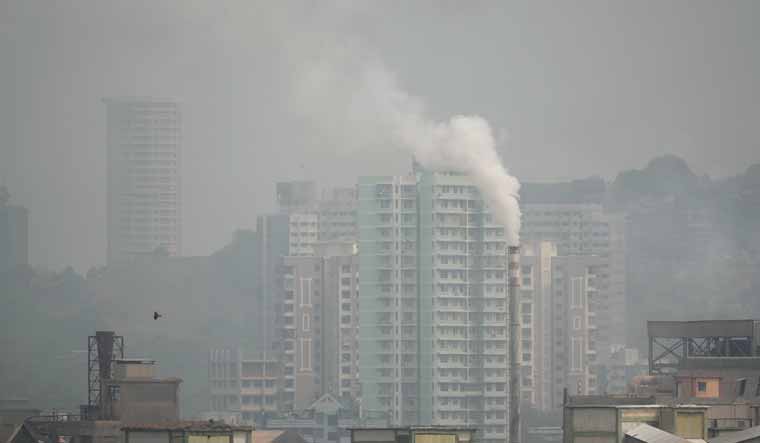
Mumbai’s winter air is deteriorating once again, with the city recording a moderate Air Quality Index (AQI) of 172 on Monday, while Mazgaon slipped into the “very poor” category at 304. The spike has renewed concerns about how construction dust, stagnant winds and delayed compliance at project sites continue to burden one of India’s most densely populated urban regions.
Recent data from the national air-quality dashboard showed wide variation across the city, with several neighbourhoods drifting from moderate to poor levels within a day. Locations such as Navy Nagar, Deonar, Chakala, Malad West and Powai all posted elevated readings, underscoring what officials describe as “early-season volatility” driven by particulate build-up. A municipal official said the pattern is consistent with post-monsoon conditions, when humidity drops and suspended dust becomes harder to disperse. Senior civic authorities from the Brihanmumbai Municipal Corporation (BMC) and the Maharashtra Pollution Control Board (MPCB) are preparing to meet this week to review the situation.
Officials confirmed that the average AQI has climbed from around 150 last week to well above 170—an early sign that the winter curve may steepen unless interventions are accelerated. The city’s long-term mitigation plan identifies construction activity as the single largest controllable source of particulate emissions, particularly in dense growth corridors. To strengthen hyperlocal monitoring, the BMC mandated earlier this year that private developers install real-time air-quality sensors on all active project sites. However, municipal officers estimate that more than half of the ongoing sites have not complied. “Dust from construction continues to determine the everyday experience of air quality in Mumbai.
Without complete sensor coverage, our capacity to intervene swiftly is limited,” said a civic engineer familiar with the enforcement drive. The 30-day deadline for builders to complete installation ends this month, after which non-compliant sites will face penalties. Joint teams are being deployed across all 24 municipal wards to track violations, issue notices and verify whether dust-control measures—such as site barricades, water spraying and covered transport of debris—are actually being implemented on ground. In Mazgaon, where AQI levels have worsened steadily over the past week, ward officials have begun intensified street-level dust suppression. Experts in urban climatology point to the early onset of La Niña-like conditions this year, which tend to reduce wind speeds along the west coast.
Lower dispersion rates allow fine particulate matter to linger, creating pockets of poor air even in coastal cities traditionally viewed as ventilated. Urban planners argue that Mumbai’s air-quality challenge must be seen as both a public-health risk and a development issue. As India’s financial capital continues to densify, managing construction dust, strengthening regulatory compliance and improving neighbourhood-level monitoring will be central to building healthier, more equitable and climate-resilient urban environments.
Also Read: Thane Announces Ten-Day Traffic Diversions As Kalyan East–West Bridge Undergoes Repairs
Mumbai struggles as Mazgaon leads pollution spike
