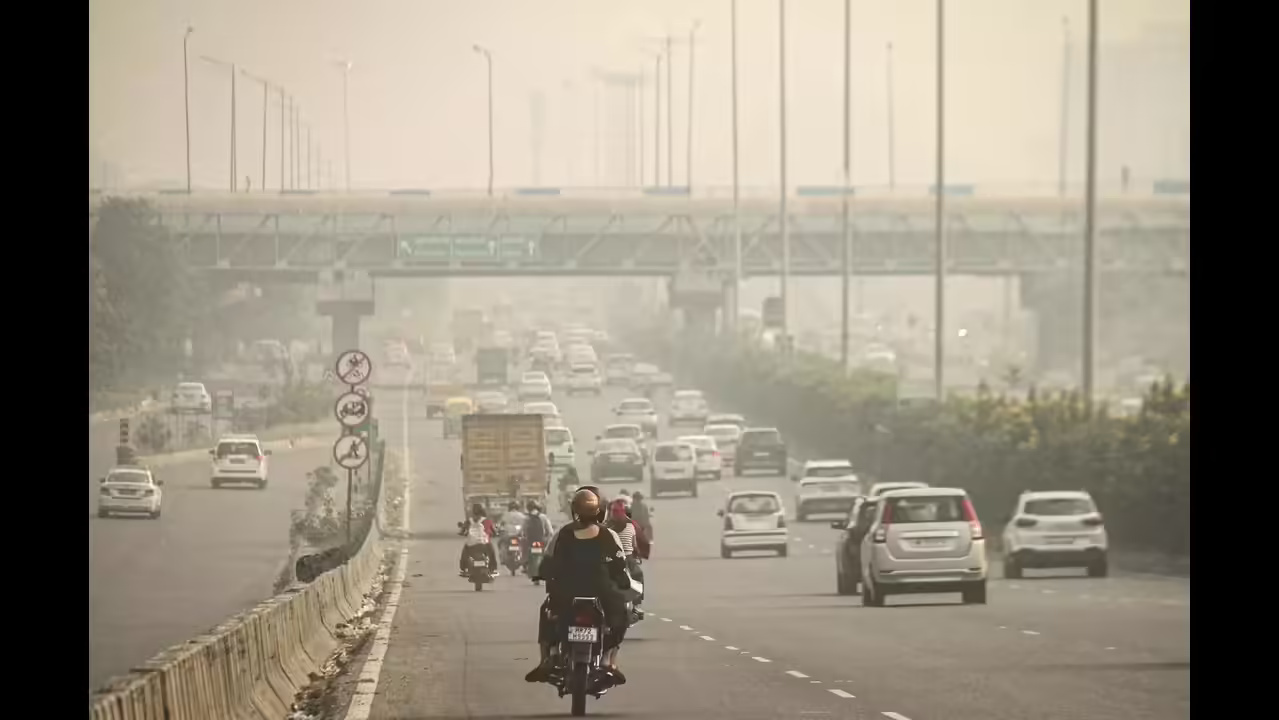
Mumbai began the week under bright winter skies, but the city’s residents were quickly reminded of a persistent challenge: deteriorating air quality. While the India Meteorological Department (IMD) forecast temperatures between 19°C and 34°C, early morning commuters and schoolchildren faced a thick haze that sharply reduced visibility and highlighted the city’s ongoing pollution concerns.
According to data from AQI.in, the overall Air Quality Index (AQI) in Mumbai registered 188 in the early hours, placing the metropolis in the ‘poor’ category. Children, the elderly, and individuals with respiratory conditions remain particularly vulnerable. Despite marginal improvements compared with last month, the air quality remains a pressing public health issue. Environmental experts attribute the city’s elevated pollution levels largely to construction and urban infrastructure projects. Metro corridors, flyovers, coastal road extensions, and road-widening initiatives, combined with private real estate developments, generate dust and fine particulate matter that exacerbate the smog. Several locations recorded alarming AQI readings: Wadala Truck Terminal reached 345 (‘severe’), while Goregaon and Chembur registered 277 and 267 respectively (‘unhealthy’). Vashi and Colaba also reported hazardous levels, at 263 and 237.
Suburban districts displayed comparatively lower pollution, with Charkop at 65, Kandivali East 82, and Govandi 93 (‘moderate’). However, areas such as Malad West and Jogeshwari East still hovered at 127 (‘poor’), indicating that even outer regions remain affected by urban activity. City planners and environmental authorities have highlighted that long-term exposure to such pollution can affect lung health, cardiovascular functions, and overall urban livability. An official from the municipal environmental department noted that comprehensive mitigation strategies are needed, including stricter construction dust control, green buffer zones, and enhanced monitoring of traffic emissions.
While the pleasant winter morning offered clear skies and mild winds, the persistence of smog underscores the urgent need for sustainable urban solutions. Experts emphasise that integrating low-emission transport, green infrastructure, and effective pollution management will be crucial to protecting public health and ensuring Mumbai’s growth aligns with zero-carbon, equitable city planning objectives.
Mumbai Starts Week With Sunny Skies And Poor Air Quality Levels