


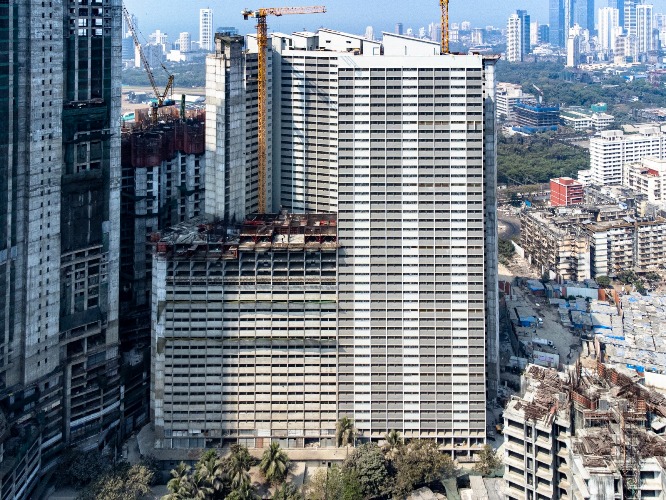
Mumbai’s complex slum redevelopment ecosystem has seen the addition of a new joint development partnership, highlighting the continued reliance on private-sector participation to unlock stalled or underutilised land parcels in the city’s high-density neighbourhoods.
A city-based development agreement has been signed for a Slum Rehabilitation Authority (SRA) project in Mumbai, bringing a listed education-focused company into the capital-intensive housing redevelopment space. The agreement provides for joint development of an SRA-designated land parcel, subject to statutory approvals and compliance with rehabilitation norms mandated under Maharashtra’s slum redevelopment framework. Urban planners note that such collaborations are increasingly common as traditional real estate developers face rising costs, longer approval cycles and tighter financing conditions. For non-core real estate players, SRA projects offer an entry route into Mumbai’s land market, albeit with higher execution and regulatory risk. SRA developments are designed to replace informal settlements with formal housing, offering free rehabilitation units to eligible slum dwellers while allowing developers to monetise a portion of the land through saleable components. While the model has delivered housing at scale, it has also been criticised for delays, disputes and uneven quality outcomes when governance and financing are weak. Officials familiar with the project said the joint development structure aims to combine land access with funding and execution capacity, enabling the project to move forward after prolonged preparatory stages.
The agreement is expected to outline revenue-sharing, construction responsibilities and timelines, though final outcomes will depend on environmental clearances, tenant eligibility verification and municipal sanctions. From a city-building perspective, SRA projects remain central to Mumbai’s housing strategy. Nearly half the city’s population lives in informal settlements, many located near transport corridors and employment centres. Redevelopment of these areas, if executed responsibly, can reduce overcrowding, improve living conditions and bring residents closer to essential services. However, urban policy experts caution that the success of SRA projects depends less on scale and more on governance. Past experiences have shown that misaligned incentives, weak oversight and inadequate rehabilitation planning can lead to prolonged displacement or legal challenges. Ensuring transparent consent processes and timely delivery of rehabilitation housing remains critical. The entry of a non-traditional real estate player into the SRA space also reflects broader shifts in capital deployment. As land scarcity intensifies in Mumbai, redevelopment rather than greenfield construction has become the primary growth pathway. This has drawn interest from firms outside conventional real estate, seeking long-term asset creation through structured partnerships. Sustainability specialists add that future SRA developments will increasingly be judged on more than just unit delivery. Energy-efficient design, access to public transport, social infrastructure integration and climate resilience are becoming key benchmarks, especially as redeveloped areas add density to already stressed urban systems.
While the newly announced joint development agreement marks an early-stage milestone, its progress will be closely watched by regulators, local residents and housing advocates. In a city where redevelopment outcomes shape not just skylines but livelihoods, execution credibility will ultimately determine whether such partnerships contribute to inclusive and resilient urban growth.
Also Read: Mumbai Housing Authority Clears Patra Chawl Impasse
Mumbai SRA Project Adds New Development Partner
