


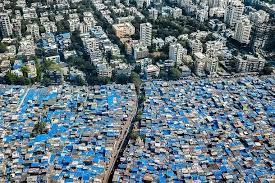
A Mumbai-based real estate developer known for long-term engagement in slum redevelopment has received international academic recognition at a formal ceremony held within the British parliamentary complex in London. The honour, conferred by a European higher education institution, highlights the growing global attention on India’s urban housing challenges and the role of private-sector participation in addressing informal settlements.
The recognition was awarded during an international academic convention hosted at the House of Lords, where professionals from multiple sectors were acknowledged for applied contributions to society. In this case, the citation focused on sustained involvement in affordable housing delivery and rehabilitation projects in one of the world’s most densely populated cities. Urban policy observers say such acknowledgements reflect a broader shift in how housing infrastructure is assessed not merely as real estate output, but as a social and economic stabiliser. Over the past three decades, the developer has worked extensively within Mumbai’s slum rehabilitation framework, delivering formal housing units through government-regulated schemes. Industry experts note that early participation in such projects carried financial and execution risks, particularly during periods when private developers largely avoided rehabilitation zones due to regulatory complexity and thin margins. Today, these projects form a critical part of Mumbai’s housing supply pipeline. Urban planners point out that slum redevelopment, when executed responsibly, can contribute to climate resilience by replacing unsafe structures with regulated buildings that improve access to sanitation, ventilation, water management and energy efficiency. However, they caution that outcomes depend heavily on design quality, density planning and long-term maintenance areas where policy oversight remains crucial.
The developer’s background having grown up in informal housing has shaped a business approach centred on legal literacy, compliance and long-term community engagement. Analysts say such lived experience can influence project execution by prioritising habitability, social dignity and access to services, rather than viewing redevelopment purely through a commercial lens. Beyond construction activity, the developer has also been involved in education support initiatives for low-income families and emergency logistical assistance during periods of urban disruption, including pandemic-related migration. While such efforts fall outside formal housing policy, urban economists argue that they reflect the interconnected nature of housing, livelihoods and social stability in megacities. As Mumbai continues to grapple with land scarcity, climate stress and housing inequity, the spotlight on redevelopment practitioners raises important questions.
The next phase of urban housing growth will require tighter environmental benchmarks, transparent rehabilitation timelines and stronger accountability mechanisms to ensure that redevelopment improves both living standards and urban sustainability. International recognition may validate past work, but experts agree that the real measure of success will lie in how future housing projects balance density, dignity and resilience in one of India’s most complex urban environments.
Also Read: UP Housing And Commercial Supply Expand Sharply In 2025
Mumbai Slum Redevelopment Leader Honoured At UK Parliament
