


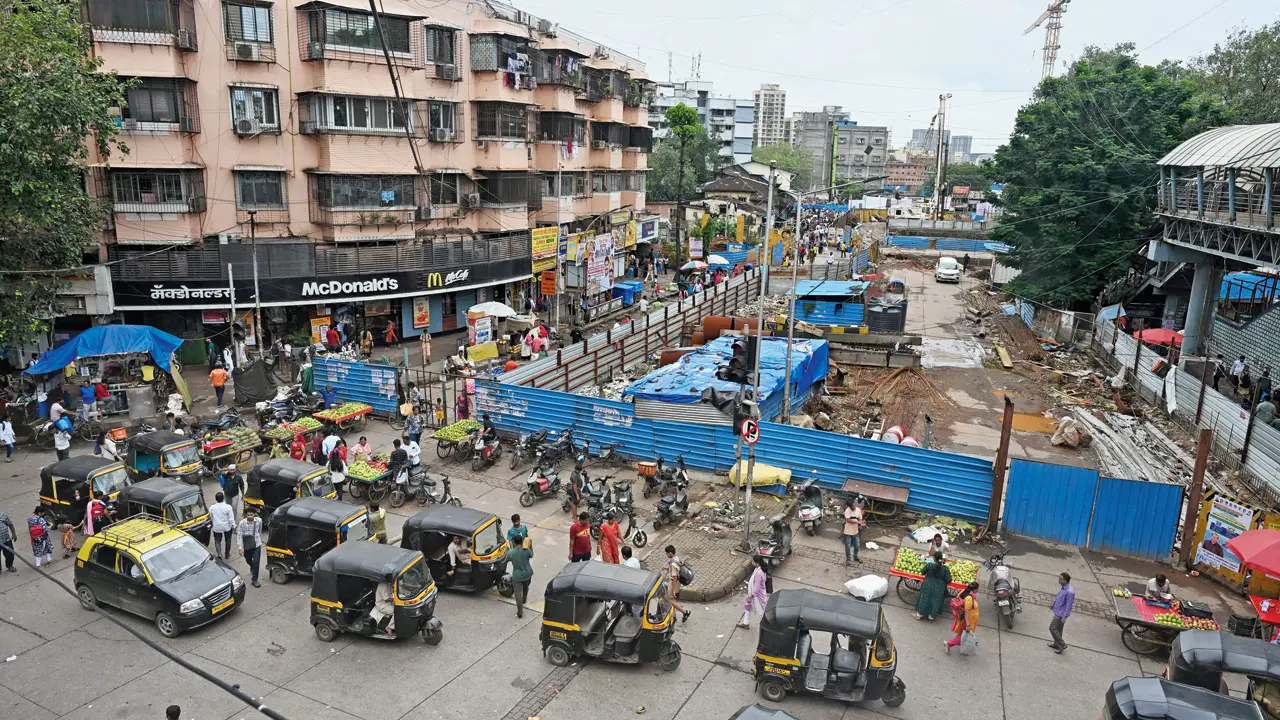
Mumbai commuters are once again grappling with extended travel times as reconstruction delays plague the city’s key bridges. While the Elphinstone bridge has been partially shut, work on the Sion bridge—closed for demolition since July 31, 2024—is still underway, leaving daily commuters navigating congested routes and limited alternatives. Officials now indicate that completion for both bridges may stretch toward the 2027 timeline, raising concerns over urban mobility.
On inspection, the Sion bridge’s north end has been partially dismantled, while a section on the south remains open to pedestrians. Railway teams are progressing with foundational work for a new foot overbridge, with piling underway on the west side and pillar construction completed on the east. This bridge, over 110 years old, connects the Eastern Express Highway with LBS Road and Dharavi, and was flagged as structurally unsafe in a 2020 IIT audit report. A railway official clarified that demolition was paused to ensure a new 56-metre-long, 3-metre-wide pedestrian overbridge is operational before fully dismantling the old structure. The overbridge will facilitate safe movement across the east and west sides of the station and is now in progress following land handover from the municipal authorities.
The partial closure of Elphinstone bridge compounds traffic challenges. Children and residents continue to navigate around barricades, while motorists and public transport face prolonged jams. The delays, coupled with the staggered closure schedules, have triggered frustration among daily commuters reliant on these arterial connections. Experts indicate that while the joint Central Railway and BMC initiative aims to modernise Mumbai’s infrastructure, the slow pace is reflective of complex urban constraints, including land acquisition, safety regulations, and integration with new rail lines. The revamped Sion bridge will expand the 40-metre span to 51 metres, accommodating two additional rail corridors while enhancing pedestrian and vehicular movement.
Commuter voices underscore the human impact of infrastructural delays. Daily travel times have reportedly increased by 30 minutes or more, with residents expressing concerns over accessibility to schools, bus depots, and office hubs. Activists emphasise that urban planning must balance long-term infrastructure growth with immediate commuter needs, especially in densely populated zones. The reconstruction of Mumbai’s Sion and Elphinstone bridges represents a critical effort to modernise city transport networks and expand rail capacity. Yet, officials face the dual challenge of executing large-scale infrastructure projects while mitigating immediate disruption to residents. As the city anticipates eventual completion, authorities are urged to prioritise sustainable, commuter-friendly solutions, ensuring safer, more efficient urban mobility in alignment with eco-friendly city development goals.
Also Read : Delhi Airport Conducts Counter Terror Mock Drill To Test Preparedness
