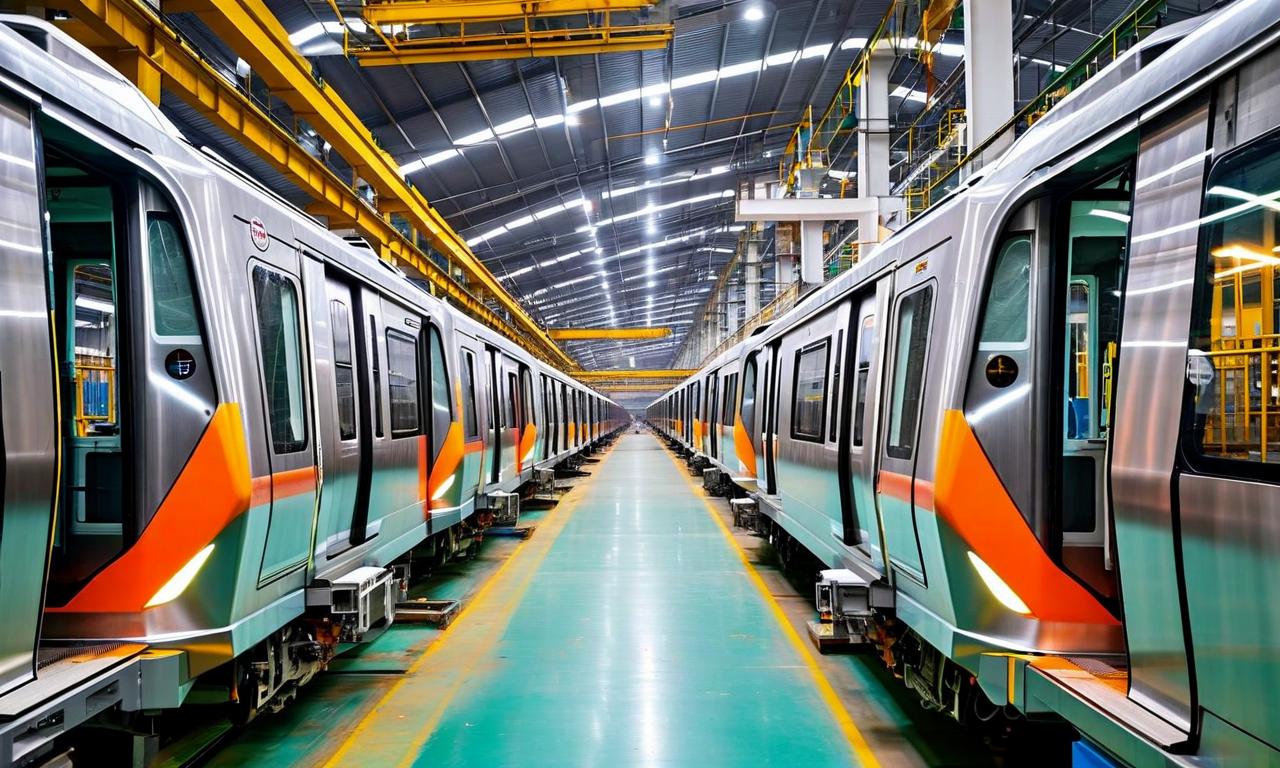
Mumbai’s public transport network received a significant push towards sustainable urban mobility as the Mumbai Metropolitan Region Development Authority (MMRDA) awarded a ₹2,481-crore contract to Titagarh Rail Systems Ltd (TRSL) for the design and supply of 132 metro coaches for Metro Line 5. The corridor, spanning 24.9 kilometres between Thane, Bhiwandi and Kalyan, aims to decongest regional traffic and promote low-emission travel options for commuters in the fast-growing metropolitan belt.
According to officials, the contract includes the manufacture, supply, and commissioning of the metro rakes, along with installation of advanced signalling and telecommunication systems across 16 stations. It also covers platform screen doors, depot machinery, and five years of comprehensive maintenance, ensuring operational efficiency and passenger safety. Metro Line 5, covering both Phase 1 (Kapur Bawdi–Kasheli–Dhamankar Naka) and Phase 2 (Dhamankar Naka–Bhiwandi–Kalyan APMC), will provide critical east–west connectivity in the Mumbai Metropolitan Region (MMR), easing the pressure on road networks. When operational, it is expected to serve thousands of daily commuters travelling between Thane and Kalyan, reducing dependence on fossil fuel-based vehicles and improving air quality in surrounding areas.
An MMRDA official said that the partnership with Titagarh Rail underscores the agency’s commitment to supporting local manufacturing under the ‘Make in India’ initiative. The coaches will be produced at TRSL’s Passenger Rail Systems facility in Uttarpara, near Kolkata, which has become a hub for indigenous metro production. This is the second major order Titagarh Rail has secured for Mumbai Metro after its earlier contract for Line 6 (Swami Samarth Nagar–Vikhroli), further consolidating its position as a key domestic supplier of metro rolling stock. Industry experts noted that such projects mark a growing shift in India’s urban mobility policy, where homegrown engineering capabilities and sustainable technology adoption are being prioritised.
Urban planners believe the expansion of metro networks in peripheral areas like Bhiwandi and Kalyan will drive equitable urban growth by improving accessibility to workplaces, education, and healthcare. The move aligns with Mumbai’s broader vision of achieving a low-carbon, multi-modal public transport ecosystem. As construction progresses, emphasis will likely remain on integrating renewable energy in metro operations, adopting energy-efficient rolling stock, and ensuring universal accessibility across stations — elements central to creating inclusive and climate-resilient cities of the future.
Mumbai Signs Rs 2481 Crore Agreement With Titagarh For Metro Expansion