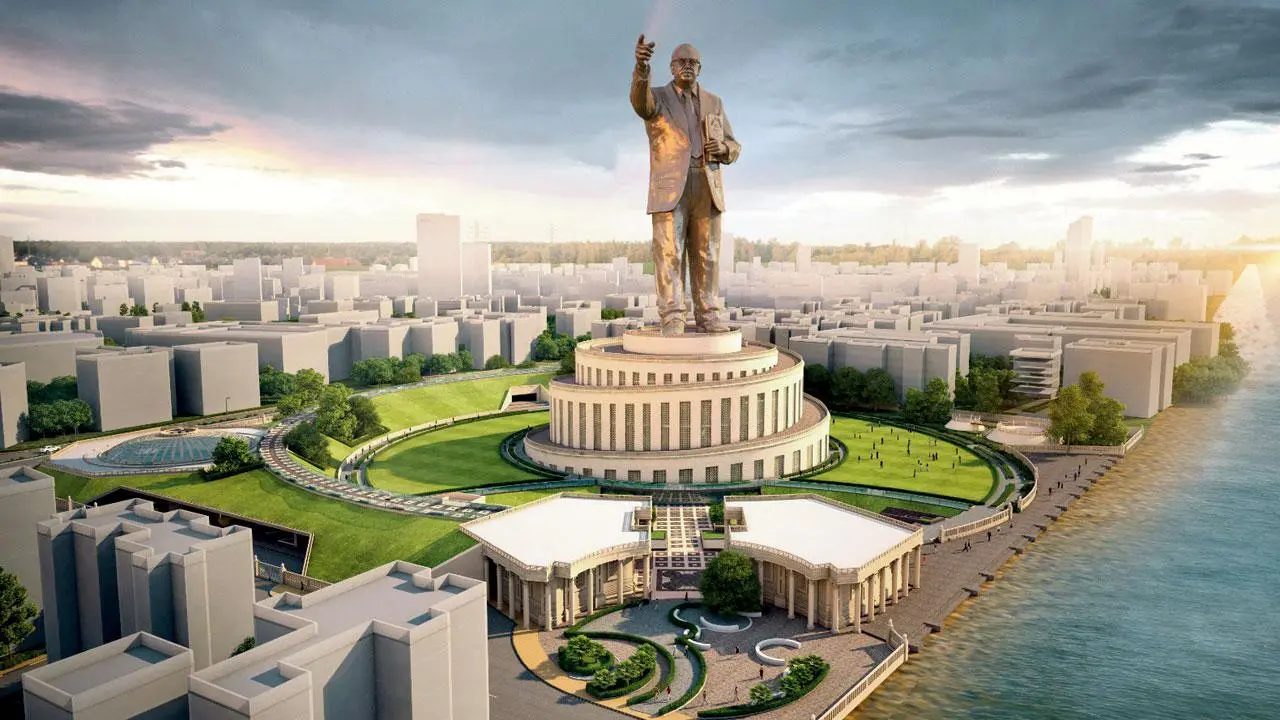
Mumbai is set to establish a dedicated coordination committee to accelerate work on the long-awaited Dr Babasaheb Ambedkar Memorial at the former Indu Mill site in Dadar. The move is aimed at resolving design, logistical, and stakeholder-related concerns that have slowed progress on one of the country’s most significant social and cultural landmarks. The announcement comes ahead of Mahaparinirvan Diwas, when lakhs of visitors gather at Chaityabhoomi to honour the architect of India’s Constitution.
The memorial, envisaged as the Statue of Equality, is designed to celebrate the legacy of the eminent social reformer and continues to be one of Mumbai’s most symbolic urban projects. The Mumbai Metropolitan Region Development Authority (MMRDA), which is executing the development, has been under pressure to ensure the site evolves into a modern, inclusive public space capable of hosting large crowds while also respecting the cultural traditions associated with it. According to officials, the new coordination panel will bring together representatives across departments responsible for planning, urban design, mobility, security, and citizen services. The aim is to streamline the decision-making process and integrate diverse suggestions received over recent months. An official noted that the committee will work as an “inter-departmental bridge,” ensuring that feedback from citizens, heritage specialists, and urban planners is assessed efficiently and incorporated where feasible.
The Indu Mill site, spread across 12 acres and located near the Arabian Sea, is being redeveloped into a large cultural precinct that will link seamlessly with Chaityabhoomi. The project was made possible through a tripartite land transfer agreement between the Union government, the state government, and the National Textile Corporation. Once completed, the memorial is expected to emerge as a major attraction for visitors seeking to understand the social movements and constitutional values shaped by Ambedkar. City administrators reviewed the preparations for Mahaparinirvan Diwas, with officials highlighting the importance of crowd movement, sanitation, medical support, drinking water, and weather-proof infrastructure at Chaityabhoomi. Authorities noted that improved public facilities are essential not only for the annual event but also for ensuring that Mumbai’s civic spaces remain accessible and inclusive throughout the year. This aligns with the broader shift towards people-centred urban design in India’s large metropolitan regions.
Urban planners say the memorial could significantly elevate Mumbai’s cultural infrastructure if the development prioritises sustainable construction, efficient energy use, and barrier-free access. They argue that projects of this scale must also reinforce the city’s commitment to equity by creating public spaces that welcome all communities. A heritage expert added that the integration of green elements and climate-resilient infrastructure would be critical given the site’s proximity to the coast. The proposed coordination committee is expected to serve as a long-term governance mechanism for the project, helping it progress steadily while balancing architectural ambition with social responsibility. For many citizens, the memorial represents not just a tribute to a historic figure but a step towards shaping a more inclusive urban future.
Mumbai Sets Up Coordination Body To Accelerate Work On Ambedkar Memorial Project