


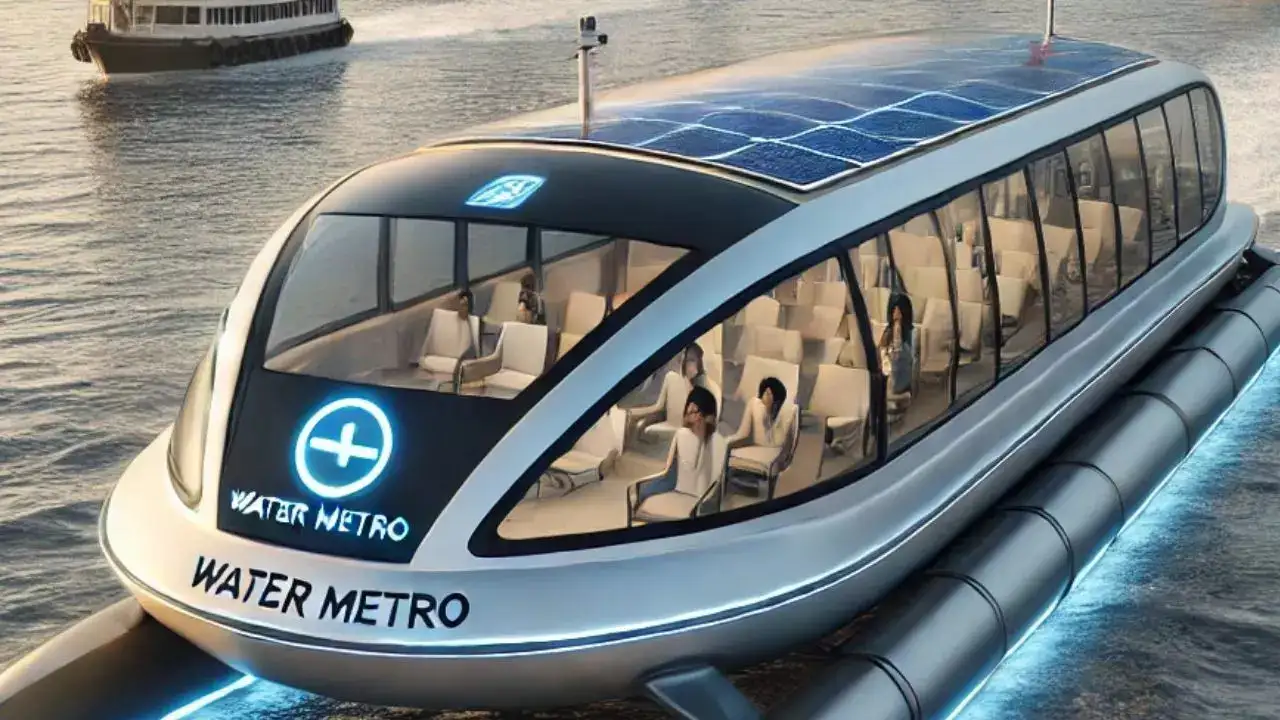
Maharashtra government has set a 90-day deadline to prepare a Detailed Project Report (DPR) for Mumbai’s proposed Water Metro system. The project, which aims to create an eco-friendly and congestion-free alternative to the city’s overburdened land transport network, could significantly transform daily commuting in the financial capital.
The announcement follows a high-level review meeting held at Mantralaya, where the roadmap for implementing a Water Metro service was discussed with strategic guidance from Kochi Metro Rail Limited (KMRL). KMRL, which pioneered the country’s first Water Metro in Kerala, is offering technical insights to help Mumbai emulate and adapt the model to its unique urban geography.
The Water Metro, envisioned as a modern, electric-powered ferry network, will operate along Mumbai’s vast and underutilised coastline. The system is expected to connect key locations such as Colaba, Gateway of India, Bandra, Versova, and Navi Mumbai, providing a low-emission, high-efficiency transport solution for millions of commuters.Officials confirmed that the Water Metro plan will not only reduce the load on Mumbai’s clogged roads and suburban trains but also promote cleaner modes of travel. With Mumbai’s vehicular density among the highest in the country, and daily train ridership exceeding 7.5 million, the need for sustainable alternatives has become urgent.
According to senior officials, the preliminary cost of the Water Metro is estimated to be around ₹3,000 crore. The DPR, to be submitted within the next three months, will determine the technical feasibility, route alignments, vessel types, ridership projections, and integration strategies with existing modes of transport. Once completed, the project will seek funding support from both state and central government sources, along with potential private partnerships.
Crucially, the Water Metro is not being positioned as a standalone initiative but as part of a broader sustainable mobility strategy. The state is looking to adopt green transport technologies, reduce dependence on fossil fuels, and enhance last-mile connectivity through seamless modal integration. The piers and terminals being considered are likely to be linked with metro stations, BEST bus services, and railway hubs, making multimodal journeys more accessible and time-efficient.Officials from the Maharashtra Maritime Board, the state urban development department, and KMRL are closely coordinating on the project framework. Experts from maritime infrastructure and environmental planning will also be engaged during the DPR preparation to ensure ecological safeguards and compliance with coastal regulation norms.
Urban mobility analysts say the Water Metro, if implemented thoughtfully, can help Mumbai decongest its surface infrastructure while providing more inclusive transport access to underserved waterfront communities. It is expected to reduce travel time, improve air quality, and offer a better commuting experience without the carbon cost associated with conventional modes.While enthusiasm around the project is growing, stakeholders have cautioned that execution timelines, environmental permissions, and inter-agency coordination will be critical to its success. Citizen groups and sustainability advocates are urging the government to prioritise transparency, community involvement, and climate resilience in the planning process.
If realised, Mumbai’s Water Metro could mark a turning point in the city’s quest for cleaner, smarter and more inclusive transport infrastructure—turning its natural coastline into a lifeline for future mobility.
Also Read : Hinjewadi Roads Under Repair Flood Relief Still Incomplete After Deadline
