


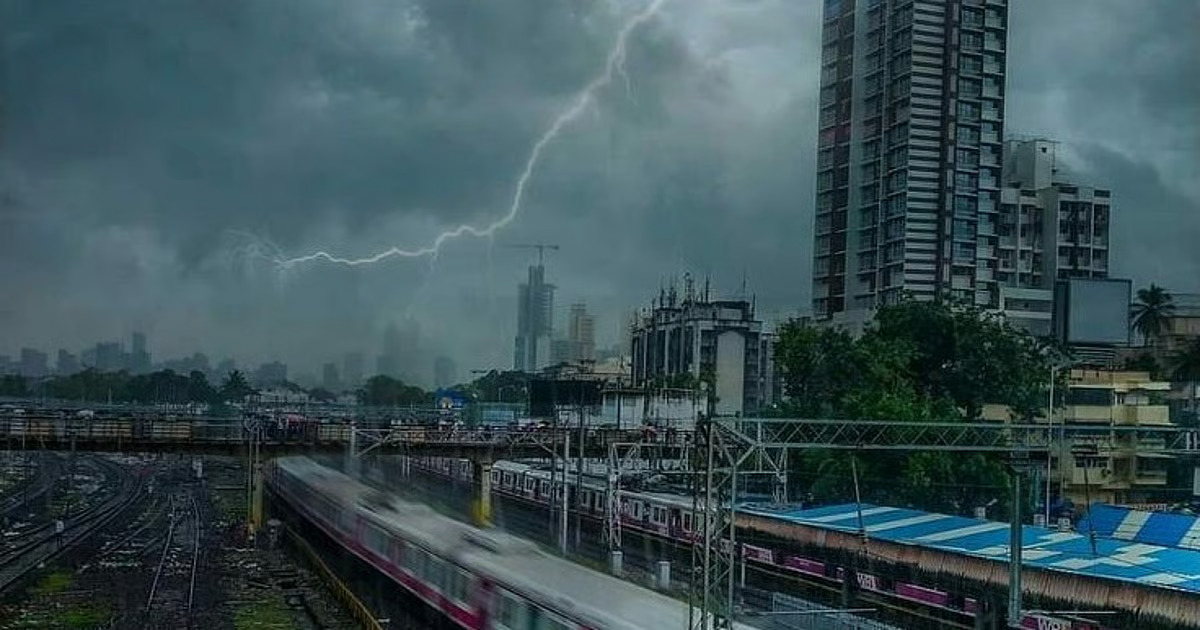
Mumbai and several parts of Maharashtra are likely to experience intermittent rain and thunderstorms till Wednesday, as two low-pressure systems and active sea depressions converge over the Arabian Sea. Meteorological officials have linked this unseasonal wet spell to rising ocean temperatures and evolving La Niña conditions, a combination intensifying rainfall across coastal and inland regions.
The India Meteorological Department (IMD) has issued advisories for Mumbai, Konkan, Vidarbha, and northern Maharashtra, warning of light to moderate rainfall accompanied by gusty winds reaching up to 55 kmph. Fisherfolk have been urged to avoid venturing into the sea, with authorities directing vessels already at sea to return to port immediately. The current rainfall pattern follows several days of intermittent showers across the Mumbai Metropolitan Region, an unusual phenomenon for late October. Experts have attributed this weather anomaly to the interaction between two pressure systems—one originating in the Bay of Bengal and another in the Arabian Sea. The system from the Bay of Bengal moved across southern India before merging with an existing depression in the Arabian Sea, amplifying the rainfall intensity over western India. Officials explained that while the Bay of Bengal traditionally retains more moisture due to its geography and river inflow, recent climatic trends have led to a similar moisture surge in the Arabian Sea.
Meteorological officials observed that both the Arabian Sea and the Bay of Bengal are now registering above-average surface temperatures. These warmer conditions foster cyclogenesis, or the formation of cyclones, by feeding energy into low-pressure systems. The Arabian Sea, which typically receives dry air from adjacent desert regions, has in recent years shown a notable rise in humidity and temperature, enabling the development of stronger post-monsoon weather systems. Experts say the underlying cause of this shift lies in broader climate variability. As sea surface temperatures rise globally, the Indian Ocean region is witnessing an increase in the frequency and strength of cyclonic activity. The ongoing La Niña phase, expected to persist until early 2026, has added complexity by influencing atmospheric circulation and rainfall distribution across the subcontinent. Such climatic oscillations, they note, have blurred the conventional boundaries of India’s monsoon calendar.
Environmental observers believe this evolving pattern is an indicator of deeper systemic change. The recurrence of late-season storms, they argue, calls for a stronger focus on coastal resilience, sustainable urban drainage systems, and climate-adaptive infrastructure. For coastal cities like Mumbai, which already face challenges of urban flooding, such unpredictable weather reinforces the urgency for climate-smart planning that can balance ecological stability with economic vitality. As Maharashtra continues to experience shifting weather behaviour, experts underline that these unseasonal rains are not isolated incidents but early warnings of a warming ocean system. The path ahead, they suggest, will demand stronger regional coordination, predictive climate modelling, and sustained investment in eco-resilient infrastructure to safeguard lives and livelihoods against the growing volatility of India’s coastal climate.
Also Read: Ahmedabad Launches 805 Crore Six Lane Sanand Khoraj Road Project
