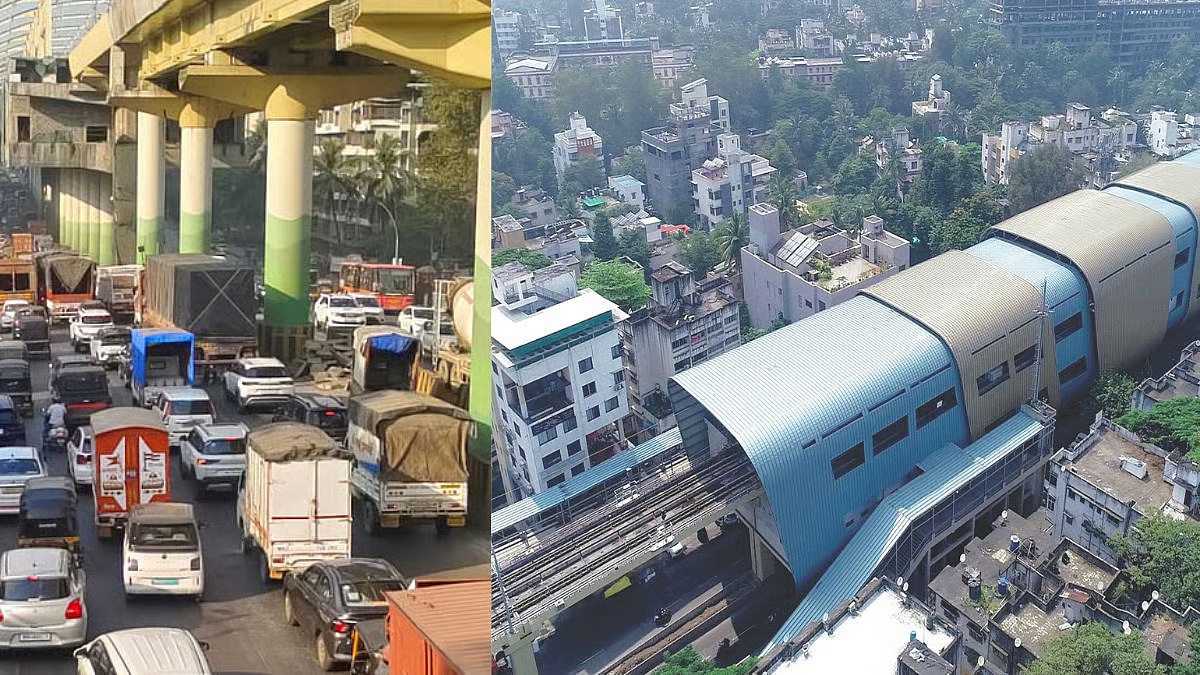
Mumbai’s metro network is set for another expansion by the end of December, with two new stretches expected to open in the western and eastern suburbs. The upcoming commissioning of sections on Metro Line 9 and Metro Line 2B is likely to ease traffic pressure and offer faster, low-carbon mobility for daily commuters, especially those travelling between dense residential clusters and business districts.
According to officials associated with the metropolitan transport authority, trials and safety checks are in their final stages, and both corridors are progressing towards operational readiness. The new links are expected to strengthen the city’s broader shift towards cleaner transport alternatives, complementing ongoing efforts to reduce congestion and reliance on private vehicles. The first upcoming stretch is on Metro Line 9, an extension of the existing north–south elevated corridor connecting Dahisar to Mira Bhayandar. The new segment, running between Dahisar East and Kashigaon, forms part of a larger 13.5 km alignment that will eventually link key residential pockets with the airport extension of Line 7. The route will include stations such as Pandhurang Wadi, Sai Baba Nagar and Meditiya Nagar, offering improved access for communities that currently depend heavily on road-based travel.
Urban planners note that Line 9 holds particular significance because it connects fast-growing zones in the north-western suburbs, where expanding housing density has placed significant pressure on road infrastructure. The new metro service is expected to shorten commute times, create safer last-mile connectivity options and support a gradual modal shift towards public transport. The second stretch expected to begin operations is part of Metro Line 2B, the long-delayed corridor designed to link the western suburbs with the eastern edge of the city. The initial section expected to open runs between Diamond Garden in Chembur East and Mandale in Mankhurd. This segment is part of a 23.6 km elevated alignment with 20 stations and is regarded as a central component of Mumbai’s east–west mobility strategy.
Officials working on the corridor stated that once the entire Line 2B is completed, it will provide continuous connectivity between Andheri West and Mankhurd, crossing major employment hubs in Bandra, Kurla and Chembur. The project is particularly important for reducing pressure on overburdened arterial roads such as the Western Express Highway and the Eastern Express Highway. Transport experts highlight that the phased opening of metro corridors—especially those linking underserved neighbourhoods—plays a critical role in building inclusive and equitable urban mobility. For many commuters in eastern Mumbai, the beginning of operations on the new stretch will offer a cost-effective, reliable alternative to road congestion and long bus journeys.
With both stretches expected to open by 31 December, the city’s metro network is inching closer to forming an integrated system that serves multiple socio-economic groups. As Mumbai continues its push towards sustainable and accessible transit, the expansion of metro connectivity remains a cornerstone of efforts to build a cleaner, more efficient, and climate-resilient urban future.
Mumbai Set To Open Two Metro Corridors To Ease Suburban Traffic Soon