


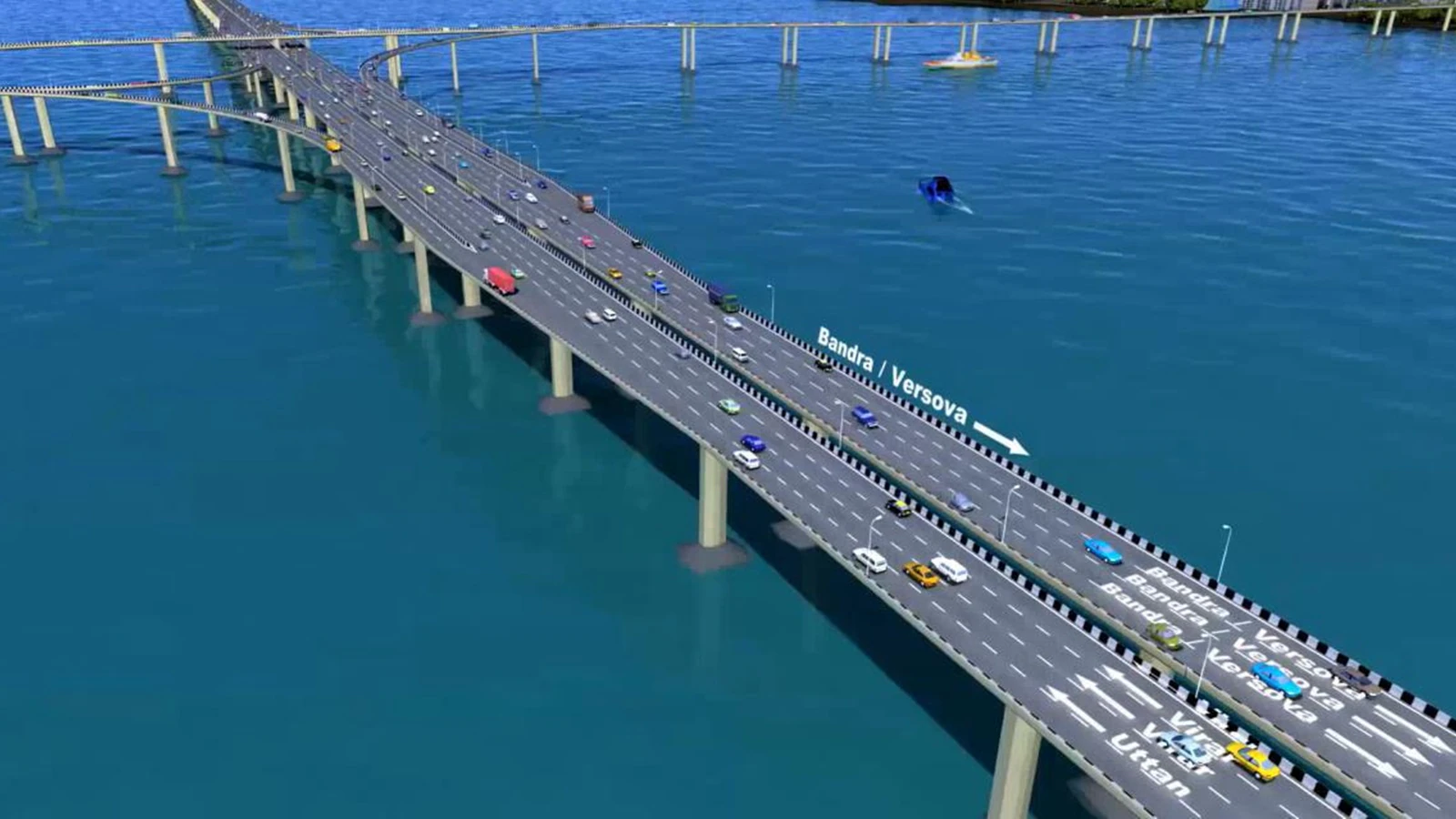
Maharashtra Coastal Zone Management Authority (MCZMA) has approved the ambitious Uttan-Virar Sea Link (UVSL) project, marking a major milestone in the city’s coastal infrastructure plans. Once ratified by the Union Ministry of Environment, Forests, and Climate Change, the project is expected to pave the way for faster commutes between Palghar and Thane, while alleviating pressure on Mumbai’s saturated road networks.
The proposed UVSL corridor will span approximately 55 kilometres, of which 24 kilometres will comprise an over-sea stretch. The rest will be made up of key approach roads connecting Virar, Vasai, and Uttan. As part of the new regional link, the corridor will serve as a vital arterial route connecting Mumbai’s northern suburbs with Thane, and eventually with major highways in the region. Officials involved in the project confirmed that the Mumbai Metropolitan Region Development Authority (MMRDA) will acquire 208.6 hectares of private land for the development. The project, however, comes at an ecological cost. Around 15.39 hectares of mangrove cover and 2.5 hectares of reserved forest are likely to be cleared, portions of which lie near the Tungareshwar Wildlife Sanctuary. Environmental assessments and mitigation plans are expected to follow stringent clearance procedures.
Earlier conceived as the Versova-Virar Sea Link, the project underwent a redesign after its southern leg was dropped in 2022 to avoid duplication with other planned coastal routes. This revision, along with optimisation of civil works, has led to a substantial reduction in the project’s estimated cost—from Rs 87,427 crore to Rs 52,652 crore. According to officials, 72 per cent of the funding will be sourced from the Japan International Cooperation Agency (JICA), with the remainder to be jointly borne by the state government and MMRDA. This funding structure is expected to ensure timely implementation while maintaining global standards of sustainable infrastructure. Experts involved in urban transport planning have termed the UVSL corridor a game-changer for commuters from Palghar and northern MMR zones. Once completed, the link will cut down travel time considerably, provide a reliable alternative to road congestion, and open up new economic corridors. The project is also anticipated to stimulate real estate growth and improve logistics flow in the extended metropolitan belt.
While the final implementation timeline will be subject to central clearances, groundwork including topographical surveys and social impact assessments are expected to begin soon. Officials said that design and construction protocols would incorporate climate-resilient features, efficient drainage, and eco-sensitive landscaping in line with green urbanism. As Mumbai transitions into a more integrated and sustainable transport ecosystem, projects like the Uttan-Virar Sea Link and Thane Coastal Road stand to redefine daily commutes, regional commerce, and coastal mobility planning for decades to come.
Also Read : Mumbai Metro Expansion to Add Four New Lines by 2025
