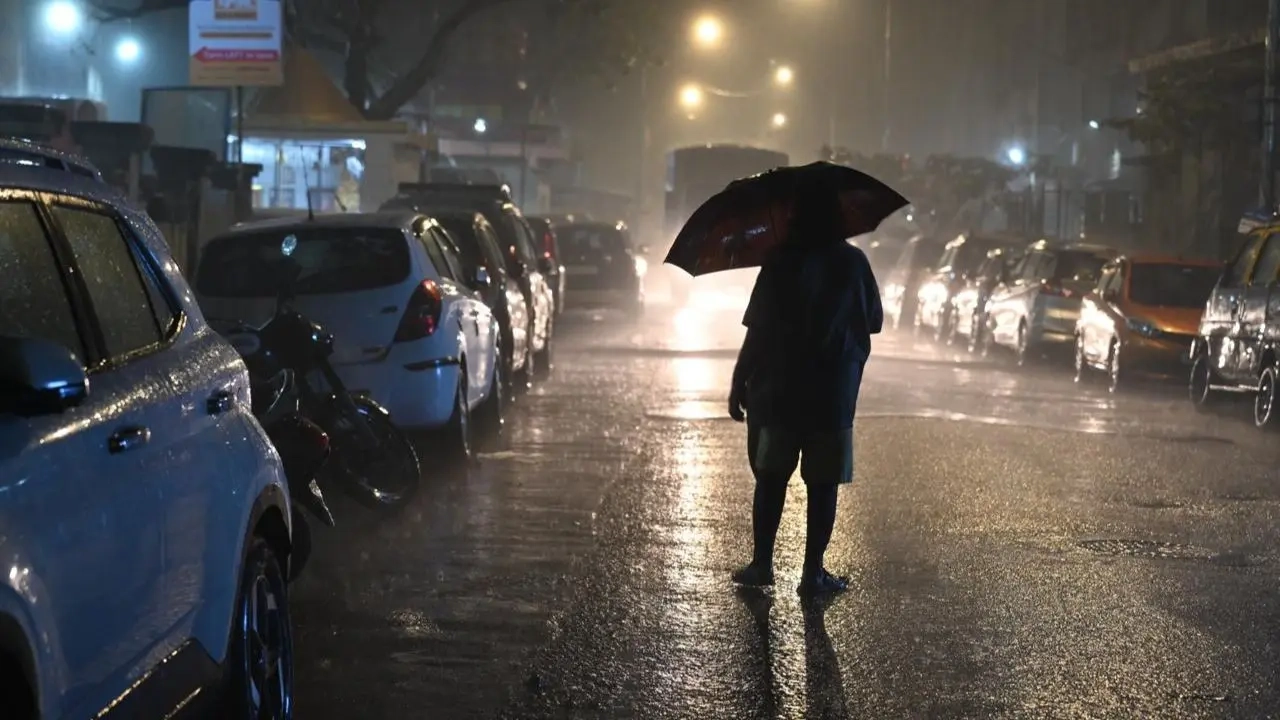
Mumbai experienced an unexpected burst of rainfall early Tuesday, with scattered showers affecting several western, central and eastern suburbs, introducing fresh uncertainty into the city’s winter weather pattern. The unseasonal rain, only the second such spell recorded this year, briefly altered morning commute conditions and highlighted the growing volatility of urban climate behaviour across the Mumbai Metropolitan Region.
Light to moderate showers were reported across multiple residential and commercial clusters in the city’s northern and central belt, while rainfall remained uneven across southern neighbourhoods. As roads turned damp during peak travel hours, civic agencies moved into a monitoring mode, particularly in low-lying zones and transport corridors vulnerable to traffic disruption. Weather officials issued a short-duration advisory for Mumbai and adjoining districts, warning of intermittent rainfall over the next few hours. The alert urged residents to exercise caution, especially motorists and pedestrians navigating reduced visibility and slippery road conditions. While the showers were brief rather than continuous, authorities cautioned that even short rain spells can strain surface drainage systems that are typically not prepared for winter precipitation.
Neighbouring urban centres, including parts of Thane and Navi Mumbai, also recorded similar weather activity, reinforcing concerns about region-wide atmospheric instability. Urban planners point out that such patterns are increasingly common as coastal cities experience shifts in humidity, wind flow and sea-surface temperatures, blurring the traditional boundaries between monsoon and dry seasons. Compounding the situation was the presence of haze across select industrial and high-density zones, despite the rainfall. Environmental experts explain that winter rain is often insufficient to fully disperse fine particulate matter, especially when combined with stagnant air layers. As a result, pockets of poor visibility persisted in certain areas even after showers subsided, affecting early-morning mobility and logistics operations.
From an urban infrastructure standpoint, the sudden rain underscores the importance of climate-responsive planning in a city undergoing constant construction and redevelopment. Transport planners note that brief but intense showers can disrupt road safety, slow freight movement and impact daily wage workers, even if flooding does not occur. The event also serves as a reminder of the need for resilient drainage networks capable of handling erratic rainfall outside the monsoon window. Looking ahead, officials are expected to continue tracking cloud movement and moisture levels across the region. While no prolonged rain spell has been forecast so far, experts warn that climate variability will likely make such winter weather events more frequent.
For Mumbai, adapting to these shifts will require coordinated action across weather forecasting, civic preparedness and infrastructure design, ensuring the city remains functional and safe amid changing environmental conditions.
Mumbai Sees Sudden Showers Across Suburbs