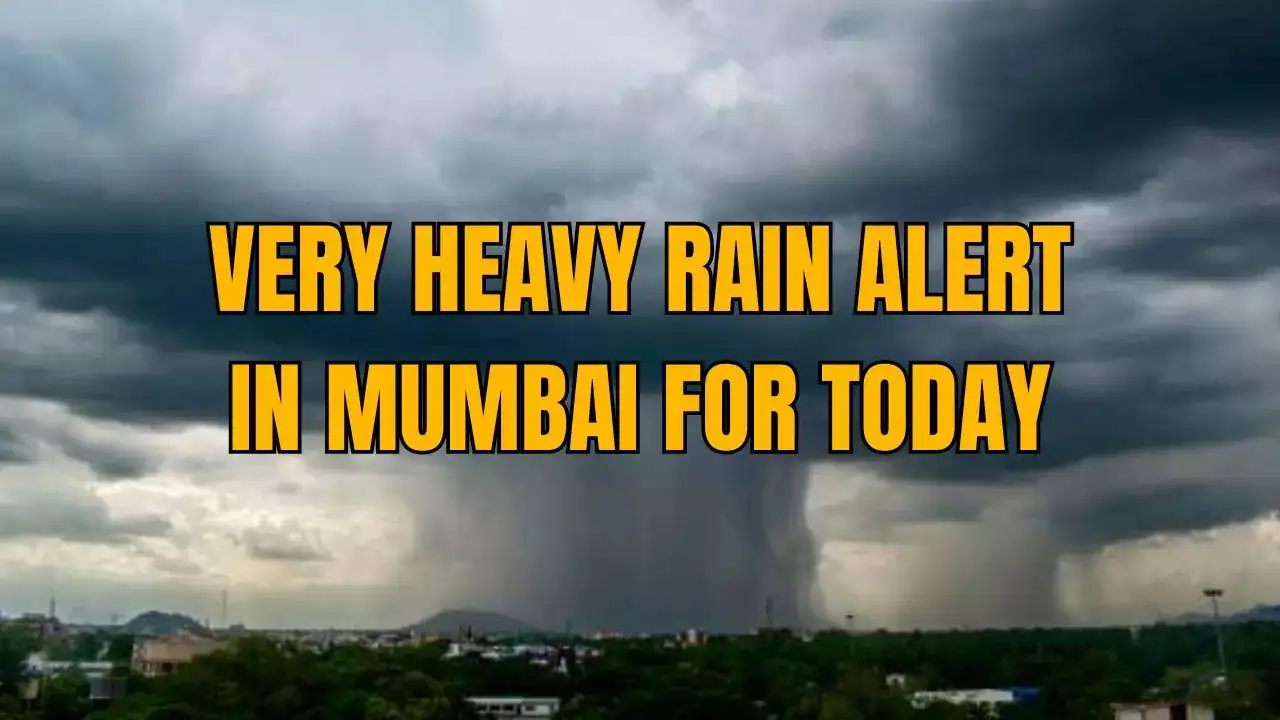
Mumbai Sees Heavy Rainfall from 8:30am to 5:30pm Today
Mumbai witnessed intense rainfall on Monday between 8:30 am and 5:30 pm, significantly impacting daily life across several parts of the city. The India Meteorological Department (IMD) reported that Santacruz recorded the highest rainfall during this period, followed closely by Juhu and Bandra, as monsoon showers drenched the city and suburbs.
The heavy downpour led to widespread waterlogging and severe traffic congestion across major arterial roads, including the Western Express Highway, SV Road, and key junctions in Andheri, Khar, and Dadar. Commuters were stranded in long traffic snarls during peak hours, prompting the Mumbai Traffic Police to issue diversions and emergency updates. Public transport services, especially BEST buses, also experienced delays due to submerged routes and slower vehicular movement. The IMD has issued an orange alert for Mumbai and surrounding districts, warning of moderate to heavy rainfall continuing throughout the evening and into the week. According to officials, rain activity is expected to intensify over the next 48 hours, particularly in isolated areas of the Konkan region and the ghat zones of central Maharashtra.
Airlines operating out of Chhatrapati Shivaji Maharaj International Airport issued advisories urging passengers to allow for extra travel time and to check flight statuses due to possible delays and diversions. The advisory came in response to early morning flight disruptions and increased travel time caused by traffic gridlocks en route to the airport. Weather monitoring services reported that rain bands which initially hit the western suburbs early morning gradually shifted towards the central and eastern suburbs later in the day. Localities like Kurla, Chembur, and Ghatkopar were affected as the intensity of showers moved across zones, indicating a broader coverage of the rain system.
Despite the challenges, the monsoon spells brought a silver lining for the city’s water supply. Data released by the Brihanmumbai Municipal Corporation (BMC) showed that the combined water stock in Mumbai’s seven reservoirs had risen to 81.86% of their total capacity, as of 19 July. This equates to approximately 11.84 lakh million litres of usable drinking water, which experts suggest could help Mumbai comfortably manage its supply through the remainder of the season. Urban planners and environmental experts highlighted that while monsoon rains are vital for the city’s water security, the ongoing flood-related disruptions reflect deeper issues in stormwater drainage and urban planning. With climate change intensifying rainfall patterns, they urge immediate investment in sustainable flood management systems and equitable infrastructure planning.
As rainfall continues into the night, civic authorities remain on alert, closely monitoring the situation and deploying additional resources to flood-prone areas. Mumbai, a city long shaped by its monsoon rhythms, once again finds itself navigating the fine line between seasonal necessity and infrastructural strain.