


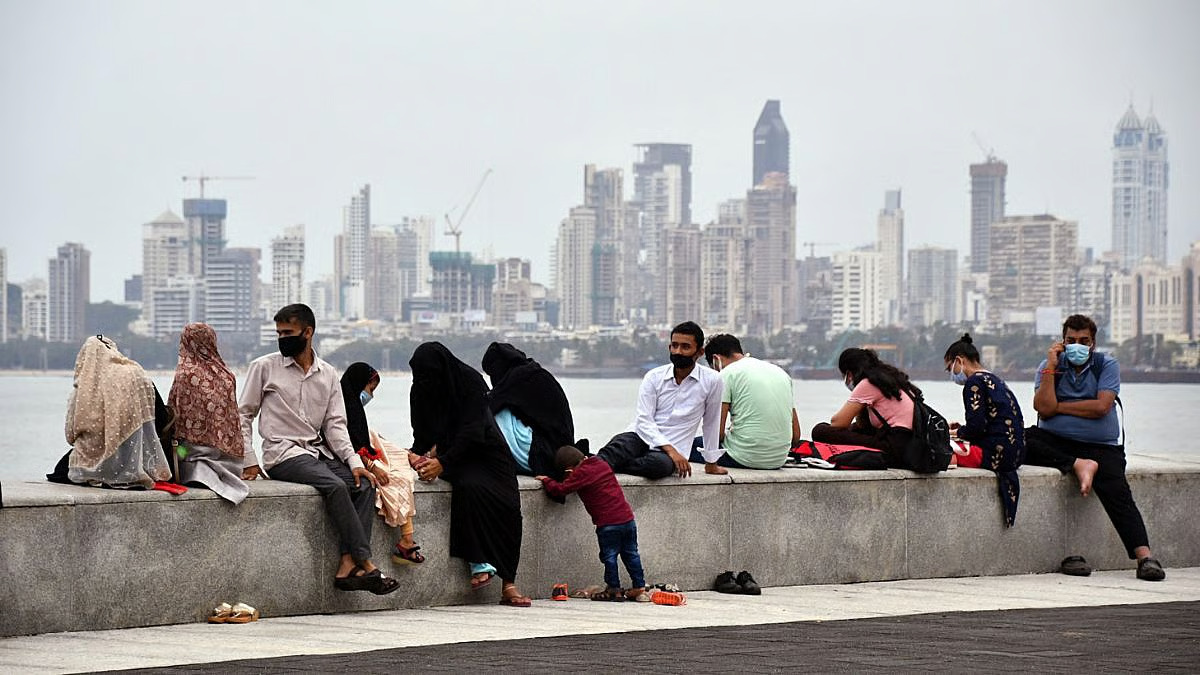
Mumbai witnessed a refreshing change on Friday as overcast skies and a spell of overnight rainfall cleared the haze that had blanketed the city in recent days. The rain not only cooled the air but also helped restore the city’s deteriorating air quality, offering residents a much-needed respite from the post-festive pollution build-up.
According to the India Meteorological Department (IMD), the city and its suburbs are expected to see partly cloudy conditions through the day with possibilities of moderate rain and isolated thunderstorms. Temperatures are forecast to hover between 25°C and 34°C, with mild humidity making the weather relatively pleasant after several warm, polluted days. The rainfall had a transformative impact on the city’s air quality. As per real-time data, Mumbai’s overall Air Quality Index (AQI) dropped to 47 on Friday morning, placing it in the ‘Good’ category for the first time this season. The improvement comes after days of “poor” to “unhealthy” air, triggered by festive emissions and stagnant wind conditions that trapped pollutants close to the surface.
Environmental experts pointed out that rainfall acts as a natural cleanser, washing out particulate matter and nitrogen oxides that typically accumulate in urban atmospheres. For a city that has been battling the dual challenges of rising vehicular emissions and construction dust, the sudden improvement signals how even short weather events can influence air quality dynamics in a coastal metropolis. Among Mumbai’s monitoring stations, Borivali West recorded the highest AQI at 92, while Parel–Bhoiwada reported the cleanest air with a remarkable reading of 18. Other neighbourhoods, including Chembur, Vile Parle, and Juhu, remained within the “Good” range. Residents across several parts of the city reported clearer visibility, lighter skies, and notably fresher morning air — a rare experience in the weeks following Diwali.
Officials from the weather department confirmed that Thursday’s showers, accompanied by gusty winds and lightning, were part of an unseasonal system that has affected several districts across Maharashtra. A yellow alert has been issued for most regions except Vidarbha, warning of continued thunderstorms and scattered rainfall in the coming days. Urban planners emphasise that such temporary weather-driven improvements must not overshadow the urgent need for systemic emission control in India’s financial capital. Sustainable transport, dust management, and stricter industrial monitoring remain key to achieving long-term air quality stability. The current improvement, they noted, offers a timely reminder that cleaner air is achievable — but only through consistent, climate-conscious urban policy.
Also Read : Mumbai Metro Lines 7 and 2A to Operate Separately for Expansion
