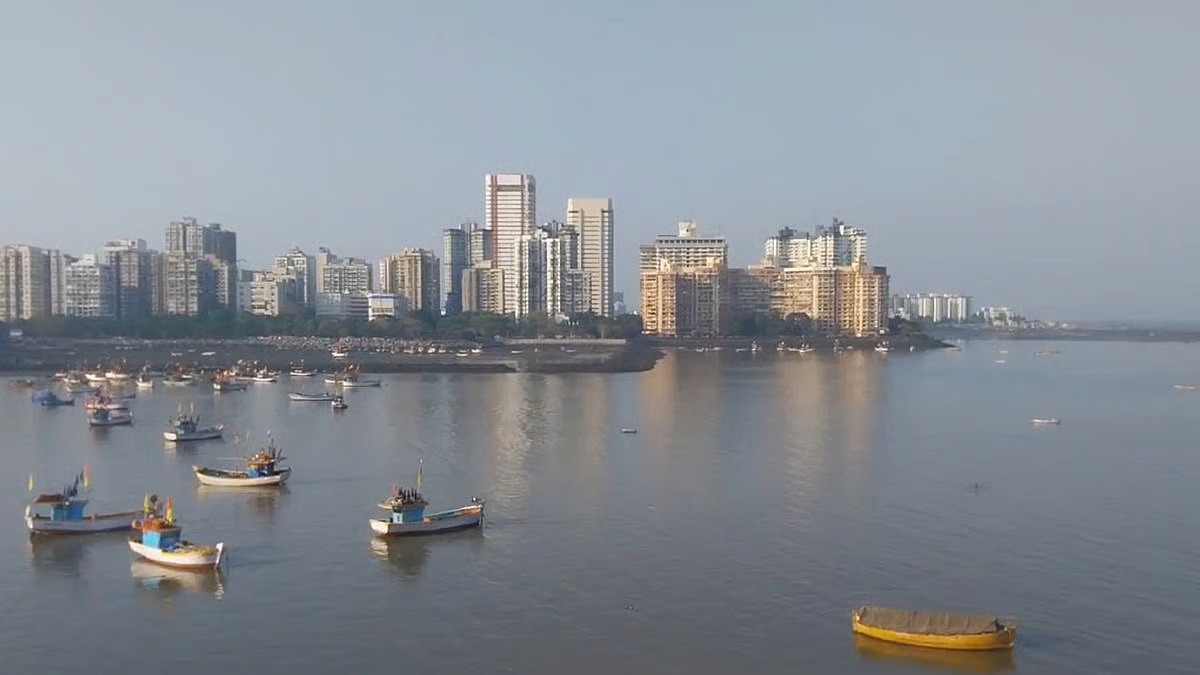
Mumbai experienced relatively stable weather conditions on March 21, with clear skies and moderate temperatures offering temporary relief from rising heat levels, even as uneven air quality across neighbourhoods continues to raise concerns about urban environmental management.
According to meteorological observations, the city remained largely cloud-free through the day, with temperatures staying within a manageable range compared to recent weeks. Early morning readings across key monitoring stations indicated consistent conditions, though peripheral areas such as Thane and Navi Mumbai recorded noticeably higher temperatures than the island city, reflecting microclimatic variations across the metropolitan region. The Mumbai weather update also highlighted a steady but cautious improvement in air quality. With an overall Air Quality Index (AQI) falling within the ‘moderate’ category, the city has seen some easing compared to earlier periods marked by higher pollution levels. However, environmental experts note that a ‘moderate’ AQI still carries health implications for sensitive groups, indicating that the city’s air quality remains far from optimal.
A closer look at localised data reveals significant disparities. While some monitoring stations reported ‘good’ air quality levels, indicating cleaner air and lower pollutant concentrations, others continued to record ‘unhealthy’ or even ‘severe’ conditions. These variations suggest that pollution in Mumbai is highly localised, influenced by factors such as traffic density, construction activity, and industrial emissions. Urban planners and climate specialists point out that such inconsistencies underscore the complexity of managing air quality in dense cities. Even when overall indicators show improvement, specific zones can remain pollution hotspots, requiring targeted interventions rather than uniform policy responses. The Mumbai weather update also reflects the broader seasonal transition, where relatively stable atmospheric conditions can limit pollutant dispersion in certain areas. Without strong wind patterns or rainfall to clear particulate matter, pollutants may accumulate locally, leading to sharp contrasts in air quality within short distances.
From an infrastructure and planning perspective, these patterns reinforce the need for integrated urban strategies that address both emissions and environmental resilience. Measures such as improved public transport, dust control at construction sites, and green buffers can play a critical role in mitigating localised pollution spikes. Looking ahead, as temperatures gradually rise towards peak summer levels, maintaining air quality will remain a challenge. Experts emphasise that sustained monitoring, combined with data-driven interventions, is essential to ensure that improvements in overall air quality translate into healthier living conditions across all neighbourhoods. For residents, the current spell of clear skies offers short-term comfort, but the mixed AQI readings serve as a reminder that long-term urban sustainability will depend on consistent and coordinated environmental management efforts.
Mumbai Sees Clear Skies With Mixed Air Quality Levels