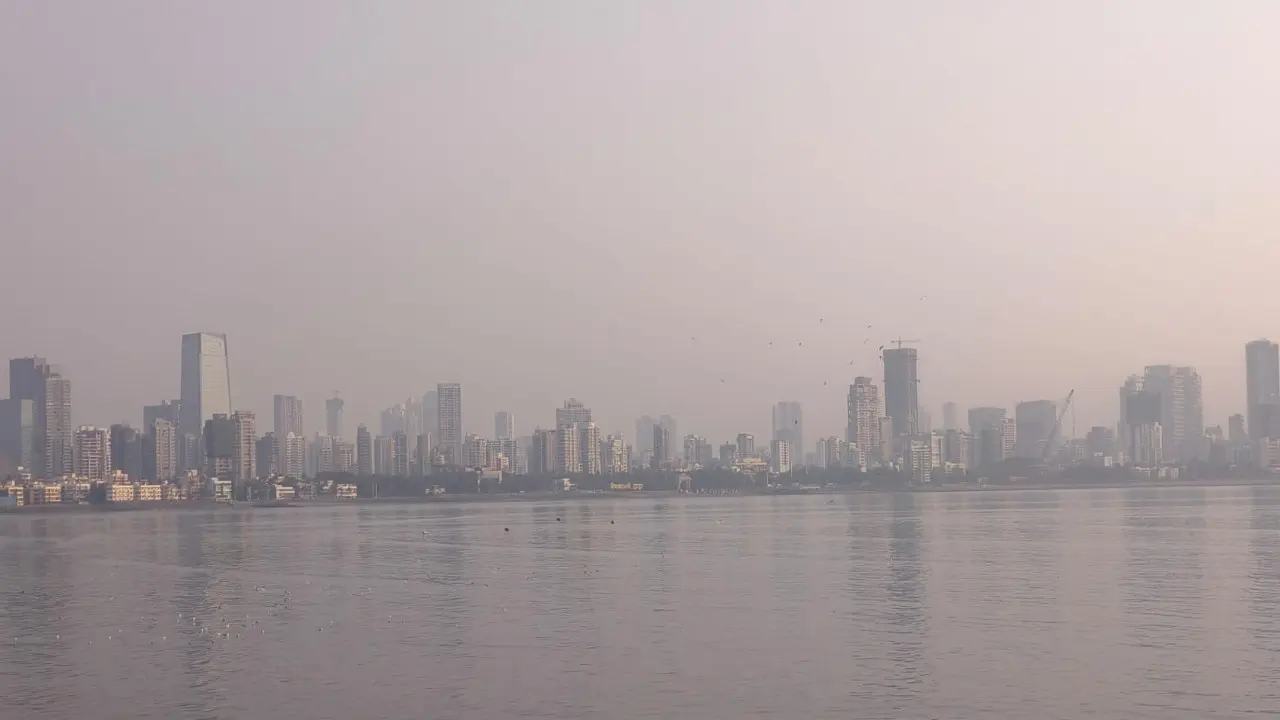
Mumbai began Tuesday with clearer skies and improved visibility, offering residents a brief respite from the dense smog that had dominated the city in recent days. While parts of the metropolitan region experienced light early-morning showers and patchy fog, air quality levels showed a measurable improvement, easing concerns for commuters, outdoor workers, and vulnerable populations.
According to meteorological assessments, the city remained within a stable temperature band, with daytime readings approaching the high twenties and cooler early-morning conditions. Weather officials indicated that largely clear skies are expected to persist, suggesting a temporary break from the atmospheric conditions that had trapped pollutants close to the ground earlier this week. For a city that frequently grapples with winter air stagnation, even modest shifts in wind and humidity can significantly influence pollution dispersion. The more consequential development, however, was the improvement in Mumbai air quality. Citywide readings indicated that the Air Quality Index (AQI) had retreated from the ‘severe’ category observed over the previous two days to the ‘unhealthy’ range. While still well above safe thresholds, the decline in pollution levels signals how short-term meteorological changes can provide temporary relief in a megacity with high vehicular density and ongoing construction activity.
Urban planners and environmental experts note that Mumbai air quality often fluctuates sharply during the winter months, when low wind speeds and cooler nights restrict the vertical movement of pollutants. Areas with dense traffic corridors and tightly packed residential clusters continue to record higher AQI levels, reflecting long-standing structural challenges linked to land use patterns, mobility choices, and uneven access to green buffers. At the same time, pockets of the city reporting comparatively clean air highlight the uneven distribution of pollution exposure across neighbourhoods. Officials tracking air quality data point out that localised improvements are possible where traffic volumes are lower, open spaces are preserved, and construction dust is better managed. These contrasts reinforce the need for ward-level interventions rather than citywide averages alone guiding policy responses.
From a broader urban development perspective, the latest Mumbai weather and pollution trends underline the importance of integrating climate-sensitive planning into infrastructure expansion. As the city continues to invest in transit corridors, housing redevelopment, and coastal resilience projects, managing emissions and construction-related pollution will remain central to safeguarding public health. Looking ahead, civic agencies are expected to maintain heightened monitoring as weather conditions stabilise. While the current improvement offers short-term comfort, experts caution that sustained progress in Mumbai air quality will depend on cleaner transport systems, stricter dust control norms, and long-term shifts towards low-carbon urban growth. For residents, the clearer morning serves as both relief and reminder of how fragile environmental gains can be without structural change.
Mumbai Sees Clear Skies Amid Pollution Relief