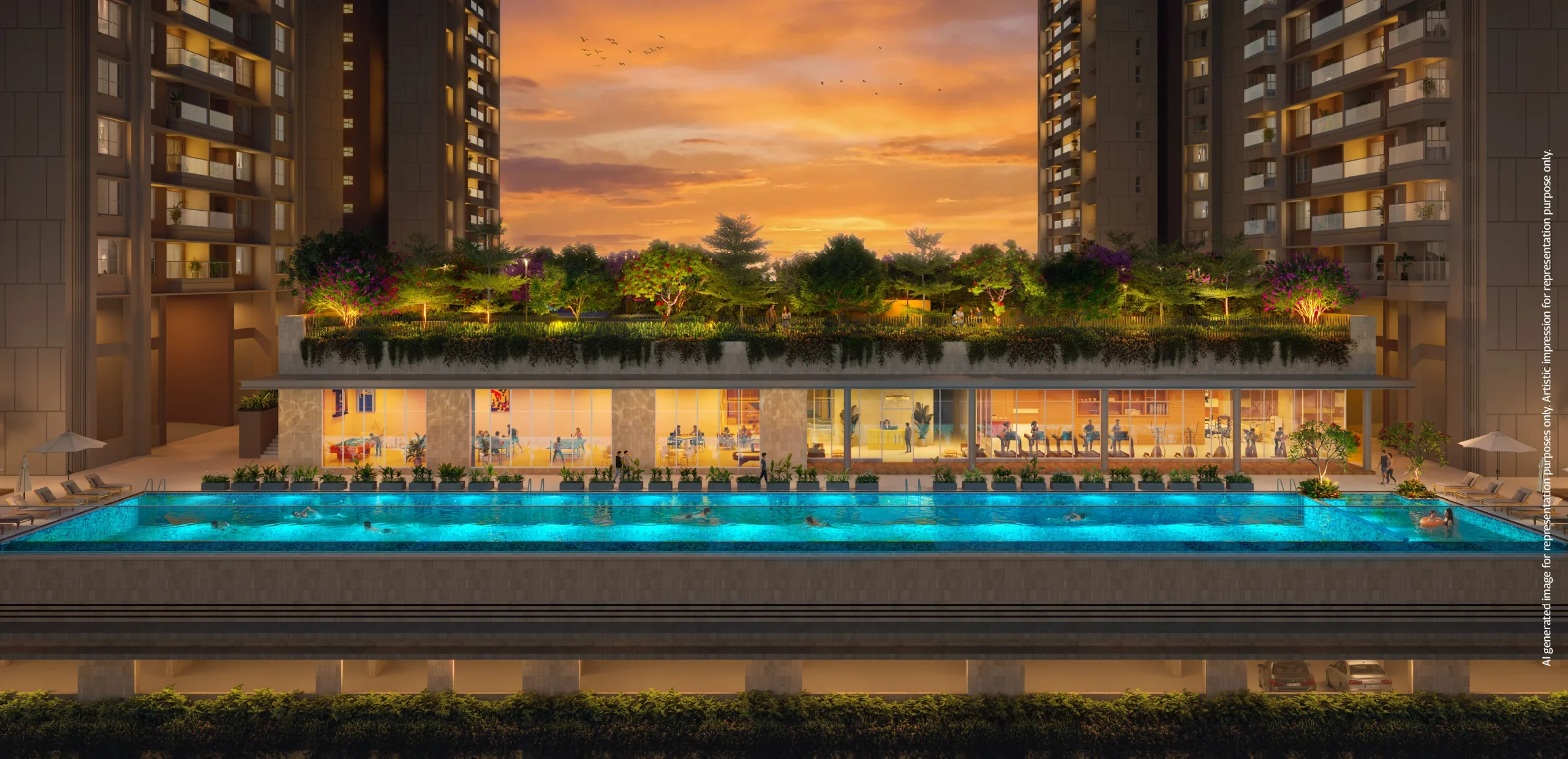
Mumbai Sees Boost From Mahindra Rainforest Housing
A new large-scale residential launch in Mumbai’s central suburbs is set to add momentum to the city’s evolving housing landscape, with Mahindra Lifespace Developers Ltd targeting around ₹3,000 crore in sales from the initial phases of its Mahindra Rainforest housing project in Mumbai.
The development, located along LBS Marg in Kanjur, spans over 25 acres and is being positioned as an integrated urban neighbourhood rather than a standalone housing cluster. With two residential phases now introduced, the company is estimating the Gross Development Value (GDV) a measure of projected sales realisation at approximately ₹3,000 crore, underscoring continued demand for well-connected suburban housing in India’s financial capital. Urban planners note that projects of this scale are increasingly shaping how Mumbai expands beyond its saturated core. The Mahindra Rainforest housing project sits within a corridor that has seen infrastructure upgrades and improved east-west connectivity, making it attractive for middle- and upper-income homebuyers seeking accessibility without central city congestion. Such developments are also expected to influence land use patterns, encouraging mixed-use planning that integrates residential, commercial, and social infrastructure.
The Mahindra Rainforest housing project reflects a broader shift among developers towards creating self-contained communities that prioritise liveability. Industry experts point out that integrated layouts combining open spaces, amenities, and mobility planning are becoming critical in a city grappling with density pressures and climate vulnerabilities such as flooding and heat stress. While specific sustainability features of the project have not been detailed publicly, large-format developments are increasingly being evaluated on their environmental performance and resource efficiency. From a market perspective, the ₹3,000 crore GDV projection signals confidence in absorption levels despite rising construction costs and macroeconomic uncertainties. Analysts suggest that suburban micro-markets like Kanjur are benefiting from a combination of relatively lower entry prices and proximity to emerging business districts, particularly along the eastern corridor.
The company’s wider portfolio spans multiple cities and includes both residential and industrial developments, reflecting a strategy that balances urban housing demand with long-term infrastructure-linked growth. Its presence in integrated townships and industrial clusters also aligns with policy efforts to decentralise economic activity and reduce pressure on metropolitan cores. For Mumbai, the Mahindra Rainforest housing project adds to a pipeline of large developments that could redefine suburban living if executed with attention to mobility, social infrastructure, and environmental resilience. As the city continues to expand outward, the effectiveness of such projects will depend not only on sales performance but on how well they contribute to more inclusive, climate-responsive urban growth.